
Reviewed · COPENHAGEN TOURS
Copenhagen: National Museum of Denmark Entry Ticket
The National Museum of Denmark puts 14,000 years of Danish life under one roof. You can move from Stone Age tools to Bronze Age gold, Viking beliefs, royal objects, and modern Danish society without changing museums. The Viking Sorceress exhibition is the star for many visitors, with objects linked to the Völva, the powerful seeress of the Viking Age.
I like the freedom to set your own pace, and I like the sheer range: this is not just a Viking museum. The Bronze Age sun chariot, curved lurs, Viking objects, and ancient human remains give you a fuller picture of Denmark. The catch is size. You can spend four or five hours here and still need to rush, while the layout can feel confusing in places.
The museum suits history fans, families who can handle a large collection, and anyone needing a solid rainy-day plan in Copenhagen. It is wheelchair accessible, has lockers, a café, toilets, and a shop, but you should plan your route before entering rather than simply wandering.
Key points worth knowing
- Fourteen thousand years in one museum: Follow Denmark from the Stone Age through the Bronze Age, Viking Age, and later periods.
- The Viking Sorceress exhibition: See the mystical world of the Völva through archaeological objects, scenes, and links to Norse stories.
- Major Bronze Age pieces: Look for the famous sun chariot, curved lurs, and helmets.
- A self-guided visit: Spend 2 to 5 hours, depending on how much you read and how many galleries you choose.
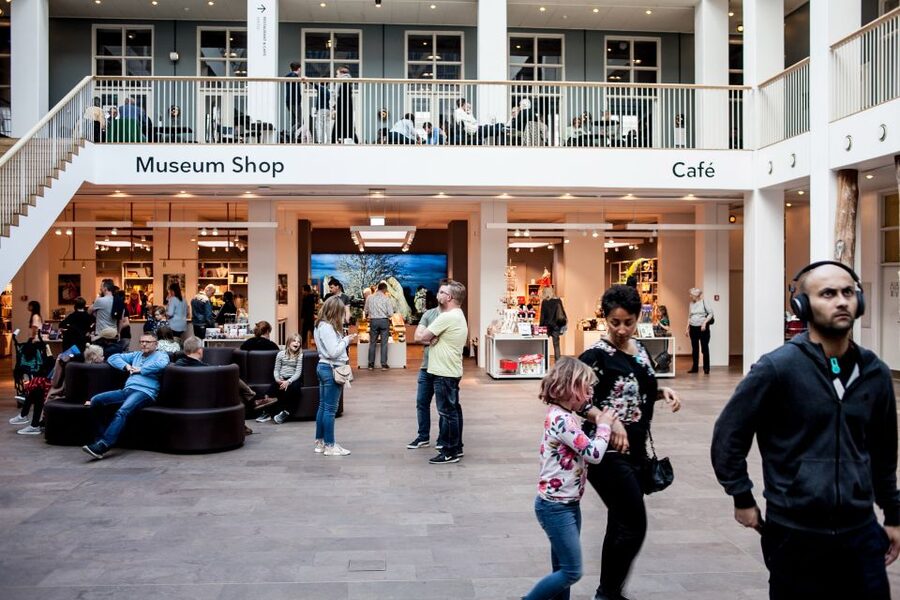
- Good rainy-day facilities: Use the lockers and wardrobe, then take a break at the café or browse the gift shop.
- Flexible admission: The $21 ticket is valid for 365 days, with cancellation up to 24 hours before your visit.
Entering the National Museum in central Copenhagen
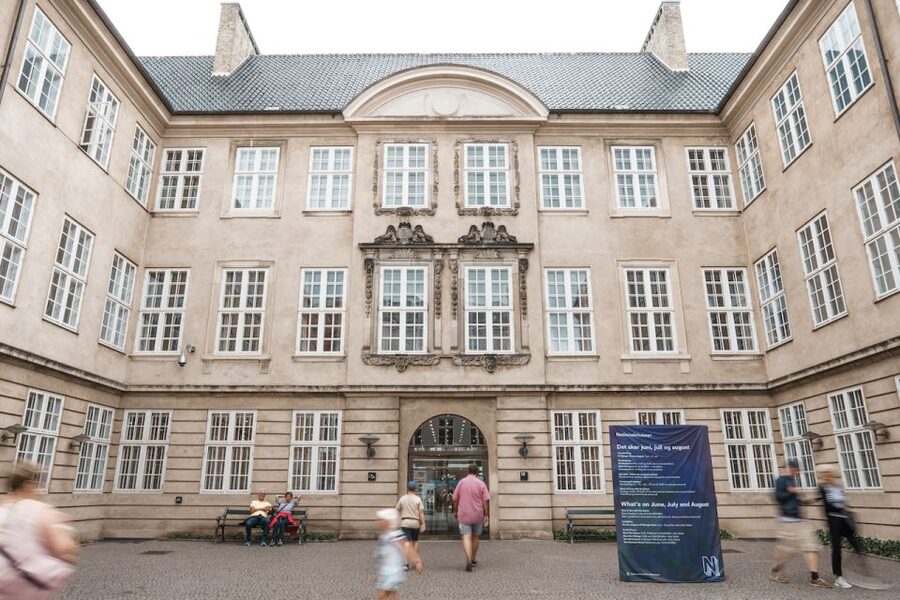
You show your voucher at the ticketing desk of the National Museum of Denmark. The museum is in the heart of Copenhagen and is easy to reach from the central station, making it a practical choice on your first or last day in town.
This is an entry ticket, not a guided tour. You do not follow a guide or fixed group route. That matters because the collection is large and your interests may be very different from those of the person standing next to you. You can give the Viking galleries your full attention, skim the modern sections, or do the reverse.
The building contains many connected rooms and floors. I recommend checking the museum layout at the start and choosing two or three priority areas. Without a plan, you might drift into one gallery after another, lose track of where you are, and spend your best energy before reaching the exhibits you came to see.
The ticket is wheelchair accessible. Facilities include lockers for personal belongings, a wardrobe for jackets, toilets, a café, and a museum shop. One practical weakness is that toilet capacity may feel limited when the museum is busy, so do not wait until the last minute.
More museums in Copenhagen:
- Copenhagen: Amalienborg Palace Museum Entry Ticket
★ 4.3 · 291 reviews - Exhibition – Home of Carlsberg
★ 4.5 · 281 reviews - Copenhagen: Danish War Museum Entry Ticket
★ 4.7 · 106 reviews
Stone Age Denmark and the first human stories
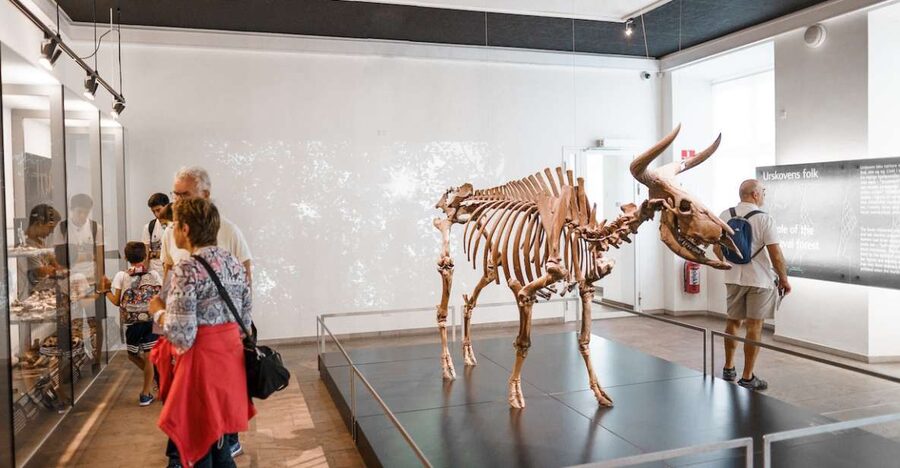
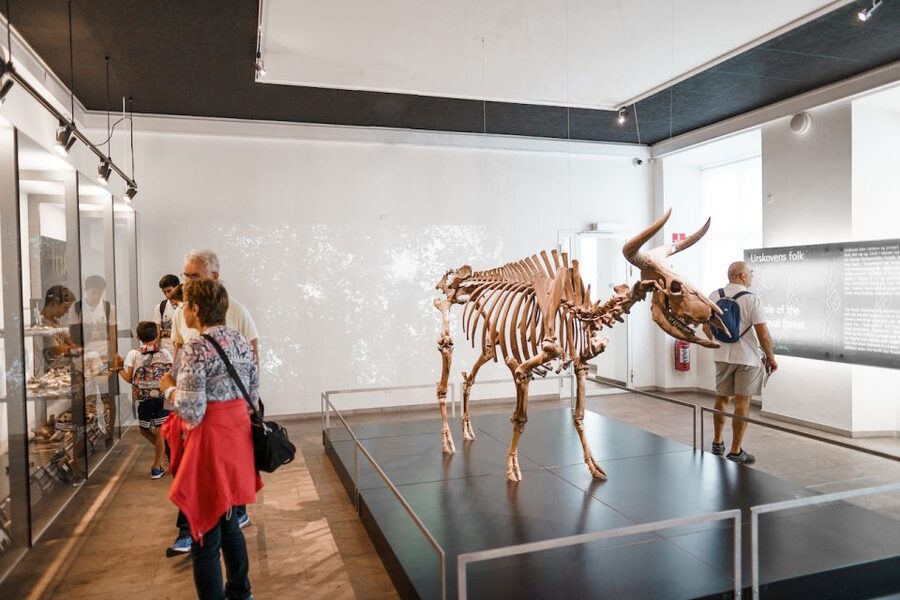
The earliest galleries take you far beyond the usual Viking focus. You will see remains and objects connected with the Stone Age, including pieces dating back thousands of years before Denmark had towns, kings, or written records.
These exhibits matter because they show Denmark as a place shaped by ordinary survival: tools, burial customs, food, trade, and changing ways of life. You are not simply looking at old objects in glass cases. You are tracing how people adapted to the climate and used what they had around them.
The museum covers a huge time span, so the amount of information can be intense. If you read every label from the beginning, you may spend much of your visit before reaching the better-known Bronze Age and Viking collections. I would skim the opening galleries on a first pass, then return to anything that catches your eye.
Families should judge their children’s patience carefully. There is a children’s area, which helps, but the museum can still feel overwhelming for younger visitors because there is so much to see.
Bronze Age treasures that deserve your time
The Bronze Age displays are among the museum’s strongest sections. Two highlights are the sun chariot and the large curved lurs, both objects with a powerful visual presence even if you know little about Scandinavian archaeology.
The sun chariot is especially useful for showing how people in Bronze Age Denmark imagined the movement of the sun and the order of the world. The lurs, with their unusual sweeping shapes, remind you that ancient objects were not always plain tools. They could carry ritual, social, and musical meaning.
You may also see Bronze Age helmets and other valuable pieces. These are not isolated curiosities. Together, they suggest a society with skilled metalworkers, long-distance connections, ceremony, and people able to commission objects that required time and expertise.
This is a good place to slow down. The objects are visually striking, but the short explanations help you understand why they matter. If you have only two or three hours, I would make this section one of your priorities along with the Viking galleries.
Viking power, belief, and the Völva
The Viking collection is the main draw for many people, and the Viking Sorceress exhibition gives it a strong focus. The Völva was a powerful female seer associated with prophecy and ritual. The exhibition explores the mystical side of Viking life rather than presenting the Vikings only as raiders and sailors.
You will find archaeological objects linked to Viking-age ritual, along with scenes connected to the Eddas and sagas. The presentation is more theatrical and interactive than some of the other galleries, which makes it easier to picture how people understood fate, magic, and the future.
I would not treat this section as a simple fantasy display. Its value comes from the way it connects material evidence with the stories and beliefs that shaped Viking society. You see how difficult it can be to interpret ancient religion when the surviving evidence is incomplete.
The audio element may not feel equally strong for everyone. If you are especially interested in Norse mythology, allow extra time for the objects and written material rather than relying only on the audio. The exhibition is a highlight, but it can also attract crowds, so arriving earlier in the day may make the experience calmer.
Beyond the Völva, the Viking displays cover voyages, conquest, exploration, and life at home. The museum presents the Vikings as sailors who reached distant parts of the world, not merely as warriors. That broader picture is useful because it places Denmark within a much wider network of movement and exchange.
A few more Copenhagen half-days to weigh up
- Copenhagen: Canal Cruise with Guide
★ 4.6 · 9,115 reviews - Copenhagen: Hop-On Hop-Off Bus Tour with Boat Tour Option
★ 3.9 · 4,122 reviews - Private Walking Grand Tour of Copenhagen
★ 5.0 · 3,953 reviews - From Copenhagen: Lund and Malmö 2-Country Tour
★ 4.7 · 2,772 reviews
Danish explorers and the wider world
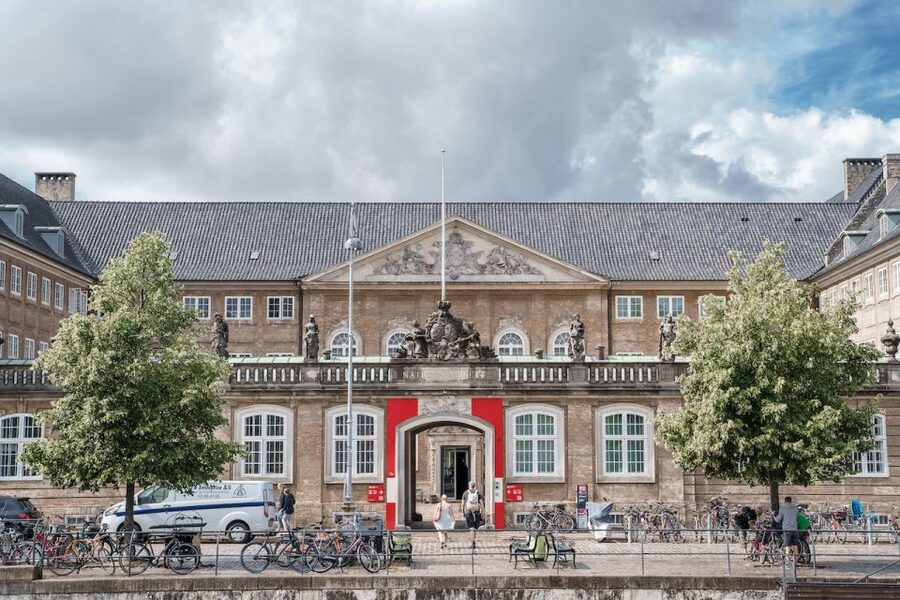
The National Museum does not stop at Denmark’s borders. Its collections also address exploration and the wider world, including the curiosity and ambition that pushed Danish explorers toward places unknown to them.
This section gives the museum a wider purpose. You can see how Danish history connects with global encounters, trade, travel, and the collection of objects from other cultures. It is also where the museum asks you to think about intangible cultural heritage, meaning traditions, beliefs, skills, and stories that cannot be reduced to a single object.
The subject matter can be broad, and the route does not always feel perfectly clear. Some rooms connect naturally, while others may make you wonder if you have skipped a section. I would use the museum’s highlight audio tour if it is available during your visit, especially if you want guidance without joining a group.
A free docent tour may also be available, according to visitor information connected with the museum. Since times can change, check on arrival rather than planning your day around it.
Modern Denmark and the scale of the collection
The museum continues beyond ancient history into later Danish society and the modern age. That helps turn the visit into a story about a country changing over time, rather than a collection of Viking relics followed by a quick exit.
The strength here is variety. You can spend your morning with prehistoric remains and Viking ritual, then move into galleries that explain how Danish people lived in more recent periods. The weakness is the same variety. If you expect a small, tightly focused museum, the National Museum may feel sprawling.
Some visitors can cover the main highlights in two or three hours. I would allow four hours for a comfortable visit, and five hours if you read carefully or want to see most of the collection. One visitor returned the next day because there was still so much to explore. Since admission remains valid for 365 days, a repeat visit is possible if your Copenhagen plans bring you back.
That long validity is unusual value for a single $21 entry. It is less useful if you are in Copenhagen for only a short time and will visit once, but it removes pressure for people staying longer or returning to the city.
Taking a break at the café and shop
The café is more than an emergency coffee stop. It gives you a useful pause in the middle of a long museum visit, with meal and drink options and a comfortable setting. If your feet need a rest after several galleries, plan the break rather than trying to push through.
The gift shop is also well stocked. It carries museum-related items and souvenirs connected with Danish history, Vikings, and Norse mythology. Set a spending limit before you browse. The selection can be tempting, especially after an afternoon spent looking at Viking objects and Bronze Age treasures.
The museum’s practical facilities help make a long visit manageable. Lockers and a wardrobe let you move through the galleries without carrying every layer and bag, while the children’s area gives families a change of pace.
How much time should you allow?
For a fast visit, plan two to three hours and focus on the Viking Sorceress exhibition, the Viking galleries, and the Bronze Age highlights. This gives you a solid taste without trying to cover every room.
For a normal visit, allow three to four hours. You can read selected labels, see the main historical periods, stop for a drink, and still leave before the museum becomes a test of endurance.
History fans should plan four to five hours. The collection is large enough that you may need to speed through a floor near closing time if you try to see everything in one session.
Wear comfortable shoes. The exhibits are beautiful, but a long museum visit can tire your feet. Also, do not assume the route will explain itself. Pick your priorities at the beginning and keep an eye on signs as you move between adjoining rooms.
Is the $21 ticket good value?
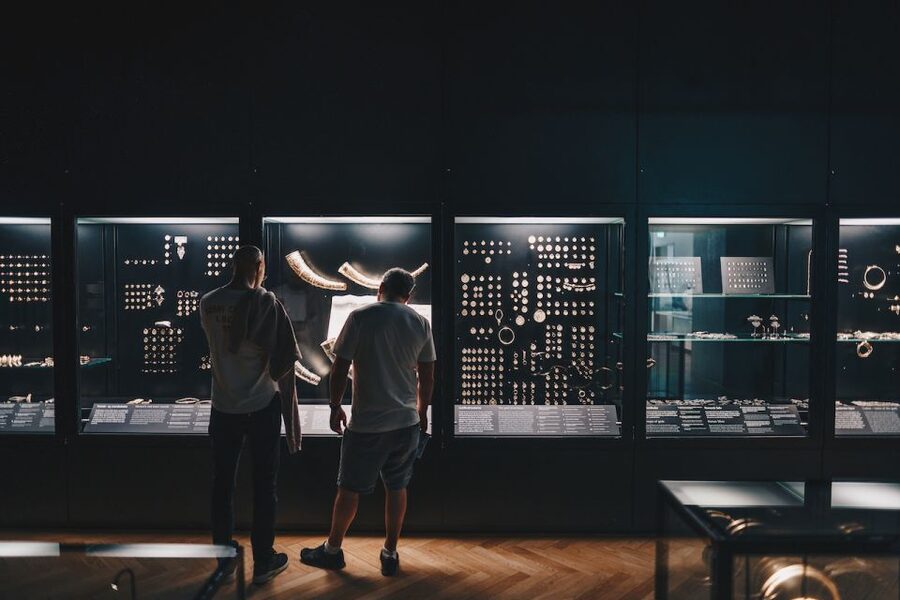
At $21 per person, the ticket is a fair buy for anyone who enjoys history and plans to spend at least half a day inside. The combination of prehistoric objects, Viking material, later Danish society, a café, and a central location gives you plenty for the price.
The value is strongest if you use the flexible admission. A ticket valid for 365 days gives you the option to return, though a short-stay visitor may not have time to take advantage of that feature.
The value is weaker if you have only one free afternoon in Copenhagen and prefer a small, tightly edited museum. In that case, the National Museum’s size and less obvious route may feel like work. The city offers many other attractions, so this should be a deliberate choice rather than an automatic stop.
Free cancellation up to 24 hours before the visit and reserve-now, pay-later booking add useful flexibility. The entry itself remains self-guided, so you are paying for access to the collection rather than a personal guide.
Who should book this experience?
I would choose this museum if you want a broad introduction to Denmark, especially if you are curious about the country before the Viking Age as well as during it. The Bronze Age sun chariot, lurs, helmets, Stone Age objects, and Völva exhibition give you several memorable anchors.
It is also a smart rainy-day plan. You can spend several hours indoors, eat at the café, and return to the galleries after a break.
Families may enjoy the children’s area, but younger children could tire quickly because the collection is large and information-heavy. The interactive Viking Sorceress section is likely to hold attention better than the more traditional displays.
I would hesitate only if your schedule is extremely tight, you dislike large museums, or you want a guided experience with a clear route. You can use audio material or possibly join a free docent tour, but the basic ticket does not include a private guide.
Should you book the National Museum of Denmark?
Book it if you want one place that explains Denmark across thousands of years. Give priority to the Viking Sorceress exhibition, Bronze Age treasures, and the Viking galleries, then use the remaining time for Stone Age and modern Denmark displays.
Skip it if you have just a few hours in Copenhagen and already know you prefer smaller, highly focused museums. For everyone else, $21 buys a substantial cultural visit, with enough material for a half-day and, thanks to the long validity, the option to return.
FAQ
Where is the National Museum of Denmark located?
It is located in central Copenhagen in Denmark’s Zealand Region.
How much does admission cost?
The listed price is $21 per person.
How long is the ticket valid?
The ticket is valid for 365 days. You should check availability for current starting times.
Is this a guided tour?
No. The ticket provides entry, and you explore the museum independently at your own pace.
What should I see first?
Prioritize the Viking Sorceress exhibition, the Viking galleries, and the Bronze Age displays with the sun chariot and curved lurs if you have limited time.
How long should I spend at the museum?
A quick visit takes about two to three hours. Allow four to five hours if you want to see a large part of the collection and read more of the information.
Is the museum wheelchair accessible?
Yes, the museum is wheelchair accessible.
Where do I show my voucher?
Show your voucher at the ticketing desk of the National Museum of Denmark.
Can I cancel the booking?
Yes. You can cancel up to 24 hours in advance for a full refund.
Do I have to pay when I reserve?
No. The reserve-now, pay-later option lets you keep your plans flexible and pay nothing at the time of booking.
Just added around Copenhagen
- Copenhagen: Express Walk with a Local in 60 minutes★ 4.6 · 3 reviews
- Copenhagen: 3 Hour Extended Grand E-Bike Guided Tour★ 4.6 · 3 reviews
- The Forgotten Giants Private Tour★ 5.0 · 3 reviews
- Castles of Kronborg and Frederiksborg from Copenhagen by Car★ 4.5 · 3 reviews
- Departure by Luxury Vehicule Copenhagen to Copenhagen airport CPH★ 5.0 · 3 reviews
- Copenhagen: Self Guided Scavenger Hunt and Tour★ 4.0 · 3 reviews
- Private Transfer Copenhagen Airport CPH to Copenhagen by Sedan★ 4.5 · 3 reviews
- Copenhagen: Evening Gourmet Walk with Food & Drinks Tasting★ 5.0 · 3 reviews
Copenhagen Tours, compared.

Hop-On Hop-Off Bus Tour with Boat Tour Option
Read our review →

Highlights 3 Hour Bike Tour with a Local Guide
Read our review →
Hamlet and Sweden Tour – Two Countries in one day !
Read our review →
Browse the lists this tour appears in