
Reviewed · NYHAVN & CHRISTIANSHAVN TOURS
Sights & Gems: Medieval Copenhagen & Nyhavn with a local host
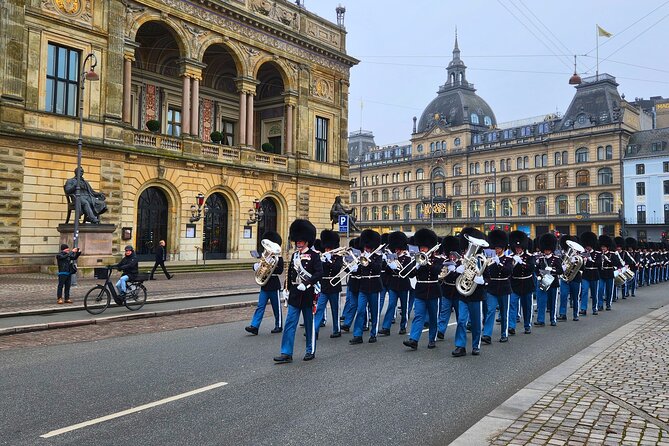
Copenhagen packs royal palaces, old naval homes, grand squares, and a famous canal into a remarkably walkable center. This two-hour small-group tour gives you a quick but useful orientation, starting at the Marble Church and ending beside the cafés and colored houses of Nyhavn.
I like the route’s variety, especially the quiet lanes of Nyboder and the graceful old squares between the major sights. I also like the small group limit of 12, which leaves more room for questions and makes it easier to hear a guide such as Maybritt, whose clear English and strong city knowledge have earned special praise. The main consideration is that most stops last only about five minutes, and the tour mainly views major buildings from outside.
Key points to know before you book
- A smart first look at central Copenhagen: The route links royal Copenhagen, the old town, Nyboder, and Nyhavn without wasting time on transport.
- A small group capped at 12 people: You get a more personal walk than on a large city tour.
- Several sights are exterior visits: The Marble Church, Rosenborg Castle, the Round Tower, and Christiansborg are admired from outside rather than toured indoors.
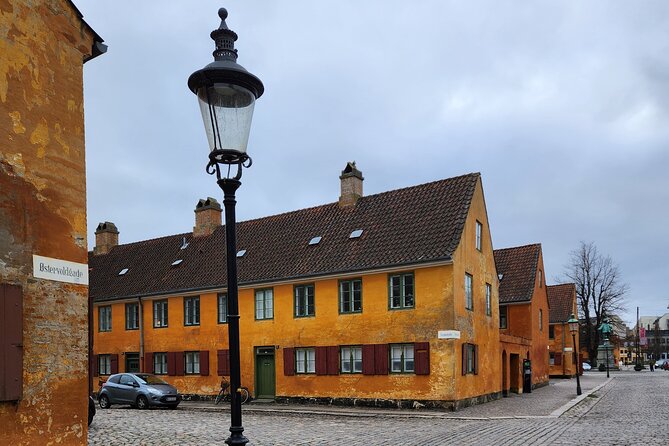
- Nyboder adds a local-history pause: Its former naval housing and Krusemyntegade bring everyday Copenhagen into a route filled with grand landmarks.
- The finish at Nyhavn is useful: You can continue with coffee, a pastry, lunch, or a canal-side stroll after the guide says goodbye.
- Weather can change the feel of the walk: In poor conditions, a guide may adapt by moving part of the discussion into a warm café.
Starting beneath the Marble Church
Meet between the stairs leading down to the Marble Church Metro Station, beside a 7-Eleven. This is a practical meeting point, especially if you are new to Copenhagen and want an easy place to find your guide.
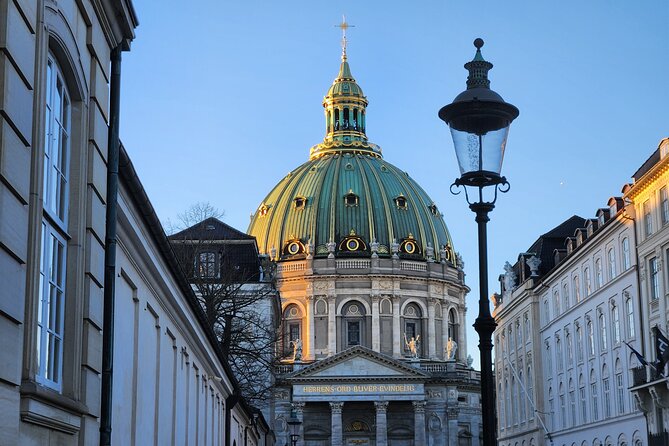
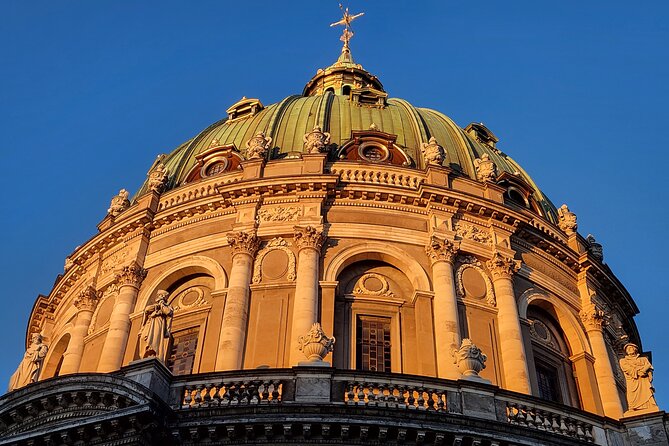
The tour begins at Frederiks Kirke, better known as the Marble Church. Its huge dome, the largest in Scandinavia, gives the surrounding Frederiksstaden district a strong sense of scale. The church was inspired by St. Peter’s Basilica in Rome and took more than 150 years to complete.
You will have about five minutes here, enough to take in the dome, the Norwegian marble, and the ordered royal quarter around it. Admission is free, but this walk does not include a full visit inside the church. If the interior matters to you, set aside separate time before or after the tour.
The Marble Church is a good opening stop because it quickly introduces the two themes running through Copenhagen: royal ambition and careful design. Your guide can give the building context without asking you to spend the first part of the morning inside a museum.
More Nyhavn and Christianshavn walks:
- Hippies & Christianshavn Walking Tour
★ 5.0 · 249 reviews - Private Walking Tour of Christianshavn
★ 5.0 · 122 reviews - Copenhagen: Christiania & Christianshavn Guided Walking Tour
★ 4.7 · 119 reviews
Nyboder and the quiet lane of Krusemyntegade
From the royal district, the route shifts toward Nyboder, founded in 1631 by King Christian IV to house Danish naval families. The low historic homes offer a more ordinary view of the city than the palaces do. This was housing for sailors and their families, not a royal stage set.
The stop at Nyboder’s Memorial Rooms is brief, around five minutes, and admission is not included. You may look through the windows toward preserved rooms containing old objects, uniforms, and maritime items. The tour does not promise an extended museum visit, so think of this as a short glimpse into domestic and naval life.
I especially like the nearby walk along Krusemyntegade. Its colorful historic houses and calm pace make a pleasant contrast with Copenhagen’s grand avenues. You get a sense of how the city’s past survives in small streets, not only in famous monuments.
This is one of the route’s most useful sections for people who want more than a checklist of postcard sights. At the same time, the short timing means you should not expect a detailed museum tour or a long stop for photographs.
Rosenborg Castle in Denmark’s oldest royal garden
Rosenborg Castle brings you back to royal Copenhagen. Christian IV built this Renaissance castle in the early 1600s, and it sits in Kongens Have, known as the King’s Garden and described as Denmark’s oldest royal garden.
The castle has the storybook appearance many people hope to see in Copenhagen: towers, ornate details, and a formal setting in the middle of the city. The walk pauses for about five minutes, mainly to admire the exterior and the garden.
Admission is not included, and the tour does not take you through the castle rooms or treasury. That keeps the overall experience short and affordable, but it also means you will need a separate ticket and more time if you want the crown jewels or the indoor royal collections.
For a first orientation, the outside view works well. Your guide can explain Christian IV’s role in shaping Copenhagen while you get photographs and a quick look at the park. If Rosenborg is your main reason for visiting, book this walk as an introduction, not as a substitute for a castle visit.
The Round Tower and Copenhagen’s old center
The Round Tower, or Rundetårn, was built in 1642 under Christian IV. It was created as an observatory and is presented here as Europe’s oldest functioning observatory. Its unusual spiral design and copper-covered roof make it easy to pick out above the old town.
Again, the stop lasts about five minutes and takes place outside. You can admire the shape, hear about the building’s scientific purpose, and take a photograph, but admission is not included. The tour will not give you the interior ramp or an observatory visit.
The value here is the connection between royal Copenhagen and the city’s interest in science and learning. Christian IV’s building program was not limited to palaces and churches. The Round Tower shows another side of his era, one aimed at observation and discovery.
If you want city views from the tower, plan a return visit. The guided walk gives you the story and the location, then keeps moving through the old center.
More photo walks with a local:
- Copenhagen: Highlights 3 Hour Bike Tour with a Local Guide
★ 4.8 · 2,312 reviews - Copenhagen Highlights 3 Hour Bike Tour with local Guide
★ 5.0 · 1,125 reviews - Copenhagen: City Highlights Walking Tour With Local Guide
★ 4.5 · 270 reviews - Copenhagen Welcome Tour: Private Tour with a Local
★ 4.6 · 232 reviews
Gråbrødretorv and the Stork Fountain
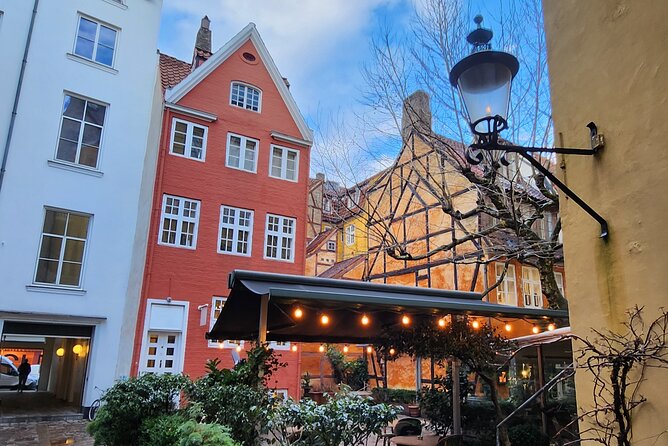
Gråbrødretorv is one of the more restful pauses on the route. Historic, colorful townhouses surround the square, while large trees shade its cafés and restaurants. It is a good place to slow down for a moment and notice the scale of old Copenhagen.
The square is free to visit, and the tour allows about five minutes. That is enough for a quick explanation and a look around, but not enough for a proper café stop. You can return later if the square catches your interest.
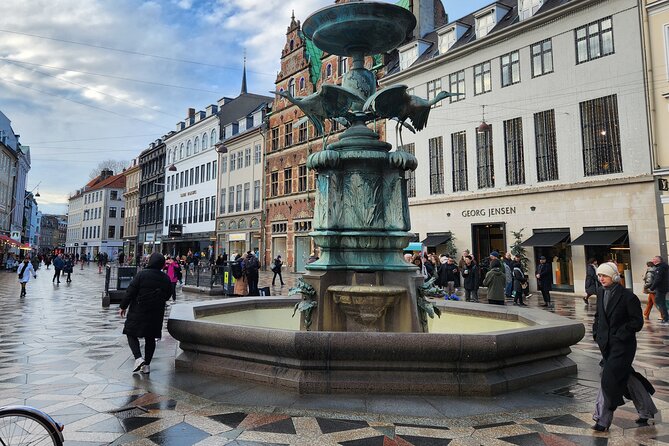
The next stop is Amagertorv, part of Strøget, Copenhagen’s major shopping street. The Stork Fountain gives the square its name and visual focus, while the surrounding buildings and mosaic pavement add detail to an otherwise active city-center setting.
These two stops help break up the palace-heavy part of the walk. You move from royal gardens to places where people shop, meet, eat, and pass through town. I find that useful because it shows Copenhagen as a lived-in city rather than a collection of preserved monuments.
Christiansborg Palace, where monarchy meets government
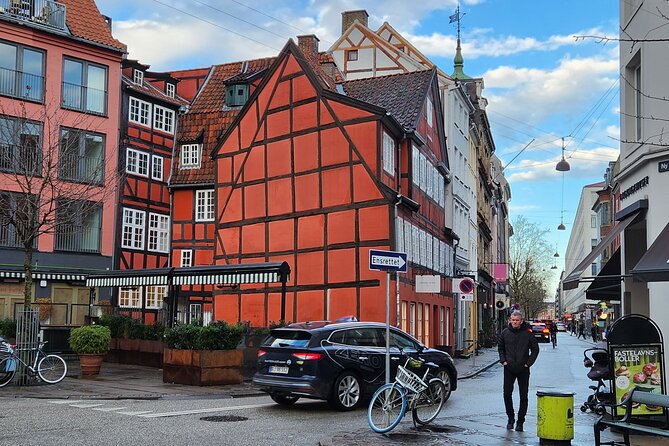
Christiansborg Palace occupies Slotsholmen Island and carries more than 800 years of royal history. The current building is linked to earlier palaces and has been shaped by fires, rebuilding, changing rulers, and political life.
Today, Christiansborg houses Denmark’s Parliament, Supreme Court, and Royal Reception Rooms. That combination gives the site unusual importance: royal tradition and modern government operate in the same complex.
You will spend roughly five minutes viewing the palace from outside. The grand façade and copper spire provide an impressive setting, while the guide explains stories of kings, queens, fires, and political conflict. Admission is not included, so you will need separate arrangements for the reception rooms or other indoor areas.
This is one of the route’s strongest history stops. Even a short explanation can help you understand why Copenhagen’s center feels both royal and civic. You are not simply looking at a palace. You are looking at a working symbol of Denmark’s government.
Nikolaj Church and the city’s changing identity
Nikolaj Kunsthal occupies a former church dating to the 1200s. The old church’s spire remains one of the recognizable features of the Copenhagen skyline, even though the building now serves as an art venue.
The tour views Nikolaj from outside for about five minutes, and admission is not included. That makes this another quick architectural pause rather than an art-gallery visit.
I like this stop because it shows how Copenhagen reuses old buildings. A medieval church can retain its visual role in the city while taking on a new cultural purpose. If the art center interests you, you can return independently when you have more time.
Kongens Nytorv and the final approach to Nyhavn
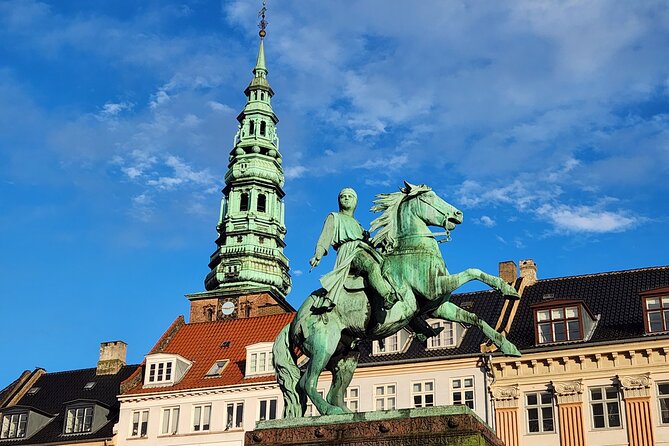
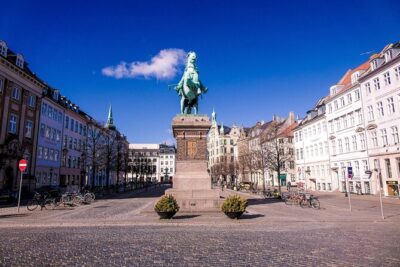
Kongens Nytorv is Copenhagen’s grand central square. The Royal Danish Theatre, Hotel d’Angleterre, and the equestrian statue of Christian V frame the space, which also serves as a natural gateway to Nyhavn.
The square blends formal architecture with daily city activity. You can use it later as a reference point when exploring the center on your own. The tour pauses here for about five minutes, with free admission.
From Kongens Nytorv, the route heads toward Nyhavn. The transition is satisfying because the walk moves from broad civic space into the narrow, colorful waterfront most associated with Copenhagen.
Finishing beside the colorful canal at Nyhavn
Nyhavn is the tour’s final stop and its most photogenic one. Colored 17th-century townhouses line the canal, while historic wooden ships recall the area’s working-port past. The waterfront once served sailors and traders. Today, it is a social center filled with cafés, restaurants, and places to sit near the water.
Your guide will explain how Nyhavn changed from a busy harbor into one of Copenhagen’s best-known streets. You will also hear about Hans Christian Andersen, who lived here. The stop lasts about five minutes, but the tour ends at Nyhavn 28, so you can easily continue exploring afterward.
This ending is particularly practical. You do not finish beside an isolated monument and then need to work out where to eat. You can stop for coffee or a pastry, choose a restaurant, take photographs, or simply walk along the canal at your own pace.
Keep in mind that Nyhavn is popular and can feel much busier than Nyboder or Gråbrødretorv. That contrast is part of the route’s appeal. You see a quiet residential quarter first, then finish at Copenhagen’s most social waterfront.
What the two-hour format really gives you
The listed price is about $28.43 per person. For two hours with a live local guide, that is a fair price if you want orientation, context, and a well-planned route through central Copenhagen. You are paying for the guide’s explanations and the time saved connecting the sights, not for museum admission.
The cost looks less attractive if you expect to enter several buildings. Tickets for the Marble Church, Rosenborg, the Round Tower, and Christiansborg are not part of the experience, and the route views most of these places from outside. You should compare the tour with your own priorities before booking.
The small group limit matters. With no more than 12 people, you have a better chance of hearing the guide clearly and asking a question without holding up a large crowd. The walk is offered in English, and Maybritt has been singled out for speaking clearly and making the city easy to understand.
Guides also appear willing to adapt. During wet and windy weather, Maybee moved the history discussion into a warm coffee lounge rather than allowing the group to struggle outside. That kind of flexibility is useful in Copenhagen, where weather can change the comfort of a walking tour quickly.
You should have a moderate level of physical fitness. The experience is on foot and lasts around two hours, with repeated stops rather than long indoor breaks. Wear shoes suited to city streets and check the forecast before you set out.
Who will get the most from this walk?
I would choose this tour for a first visit, a short stay, or a day when you want to understand Copenhagen before exploring on your own. It covers enough landmarks to help you get your bearings, while the Nyboder section adds a quieter side of the city.
It also suits people who enjoy architecture and stories more than long museum visits. You will see churches, castles, government buildings, old homes, squares, and the canal, but you will not spend much time inside any one attraction.
Families and couples may appreciate the manageable two-hour length, while cruise passengers or people on a tight schedule can use the route as a compact introduction. The group discount may also improve the value for a larger party, though the exact discount is not specified.
I would not pick it as your only Copenhagen activity if you want detailed access to Rosenborg Castle, the Round Tower, Christiansborg, or Nikolaj Kunsthal. In that case, use the walk to identify the places worth revisiting, then return with separate admission and more time.
Should you book Sights & Gems?
Book it if you want a short, guided introduction to Copenhagen’s central sights, with a genuine neighborhood stop in Nyboder and a convenient finish at Nyhavn. The route is especially useful when you have only a few hours or prefer a guide to explain what you are seeing.
Skip it if you want lengthy indoor visits or a slow photography walk. The five-minute stops keep the route moving, but they limit time at each landmark.
At about $28.43, the tour offers solid value for a small-group city orientation. Free cancellation is available up to 24 hours before the start time, which gives you some flexibility. For a first morning in Copenhagen, I would consider it a sensible way to begin, then use the rest of your day to return to the buildings that caught your eye.
FAQ
Where does the Copenhagen walking tour begin?
It begins at the Marble Church, at 1264 Copenhagen, between the stairs leading down to the Marble Church Metro Station and next to a 7-Eleven.
Where does the tour finish?
The tour ends at Nyhavn 28 in central Copenhagen, close to cafés and restaurants along the famous canal.
How long does the experience last?
It lasts approximately two hours.
How much does the tour cost?
The listed price is $28.43 per person.
Is the tour offered in English?
Yes. The tour is offered in English with a live local guide.
How many people can join the group?
The group has a maximum of 12 people.
Are attraction admission tickets included?
Admission is free at some outdoor stops, but tickets are not included for places such as Nyboder’s Memorial Rooms, Rosenborg Castle, the Round Tower, Christiansborg Palace, or Nikolaj Kunsthal.
Is the tour suitable for people with limited fitness?
Participants should have a moderate level of physical fitness because the experience is a walking tour lasting about two hours.
Can you cancel for a full refund?
Yes. You can cancel at least 24 hours before the experience start time for a full refund. Cancellations or changes made less than 24 hours before the start are not accepted for a refund.
Just added around Copenhagen
- Copenhagen: Express Walk with a Local in 60 minutes★ 4.6 · 3 reviews
- Copenhagen: 3 Hour Extended Grand E-Bike Guided Tour★ 4.6 · 3 reviews
- The Forgotten Giants Private Tour★ 5.0 · 3 reviews
- Castles of Kronborg and Frederiksborg from Copenhagen by Car★ 4.5 · 3 reviews
- Departure by Luxury Vehicule Copenhagen to Copenhagen airport CPH★ 5.0 · 3 reviews
- Copenhagen: Self Guided Scavenger Hunt and Tour★ 4.0 · 3 reviews
- Private Transfer Copenhagen Airport CPH to Copenhagen by Sedan★ 4.5 · 3 reviews
- Copenhagen Craft BeerWalk City Center★ 4.4 · 3 reviews
Nyhavn & Christianshavn Tours, compared.

Christiania & Christianshavn Guided Walking Tour
Read our review →
Private Hippies & Christianshavn Politically Incorrect Tour
Read our review →
Copenhagen Alternative Private Tour: Vesterbro & Christianshavn
Read our review →
Copenhagen Canal Boat Cruise and City, Nyhavn Walking Tour
Read our review →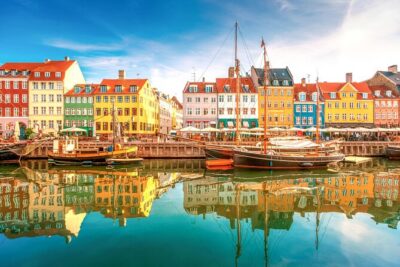
Copenhagen Christiania: Hidden Stories Self-Guided Adventure
Read our review →
Browse the lists this tour appears in