
Reviewed · COPENHAGEN TOURS
Copenhagen: Guided Architecture and Sustainability Tour
Copenhagen’s best architecture tour is not a walk around famous buildings. It is a 17-kilometre bike ride through harbour districts, former industrial zones, new housing, and open spaces where design is tied to daily life. You’ll see how Copenhagen turns old places into useful public areas and how cycling fits into the city’s plans.
I like the mix of modern design and practical sustainability, and I like that the route leaves the postcard centre for places you might not reach on your own. Guides including René, Jörn, and Josephine have been singled out for clear explanations, humour, and careful attention to bike safety. The main drawback is simple: 17 kilometres is a serious ride, and one report noted that group management could be better when riders spread out.
Why this Copenhagen bike tour is worth your time
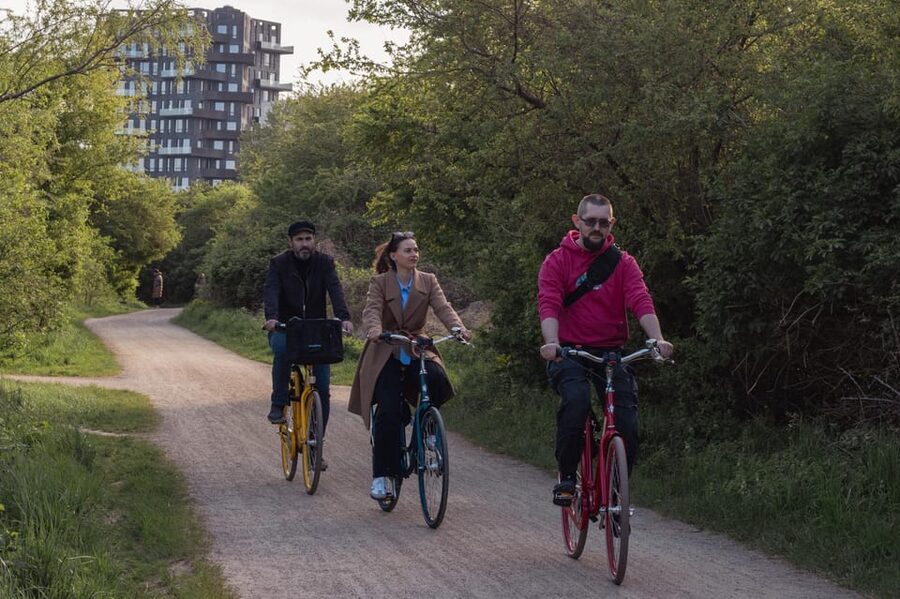
- 17 kilometres by bicycle: You cover a wide slice of Copenhagen in three hours, far more ground than on foot.
- Architecture with a purpose: The tour links buildings to cycling, public space, housing, environmental choices, and city planning.
- Harbour and former industrial districts: Blox, Lille Langebro, Islands Brygge, and Gemini Residence show how the waterfront has changed.
- Ørestad’s bold new design: See large-scale modern projects, student housing, green spaces, and the Kaktus Towers.
- A useful local perspective: English- and German-speaking guides explain not just what buildings look like, but why the city made certain choices.
- Good practical setup: Bikes, helmets, rain ponchos, luggage storage, toilets, and a lounge are included.
Copenhagen by bike, with the city’s ideas in view
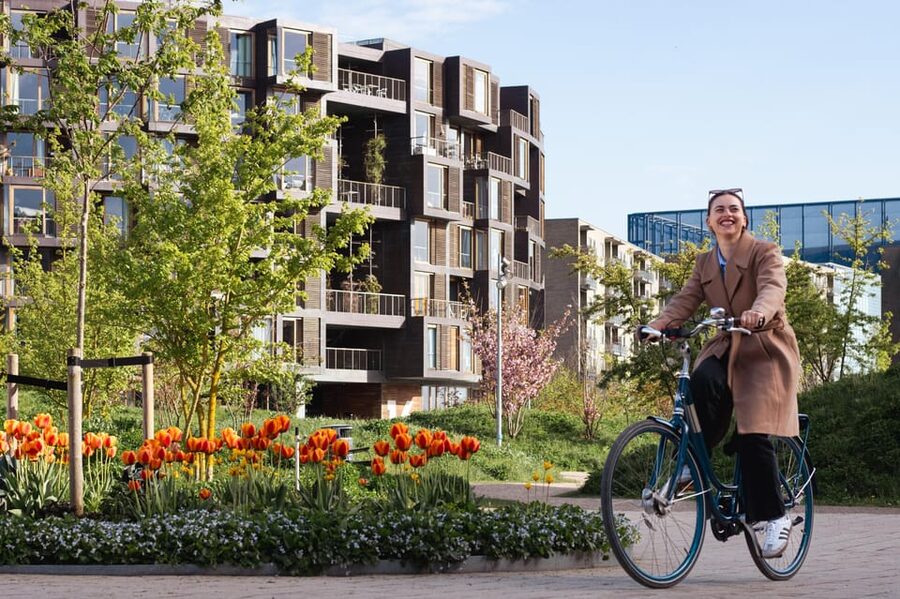
This tour is about more than architecture as decoration. Copenhagen’s buildings and public spaces are presented as part of a bigger effort to make urban life cleaner, easier, and more pleasant for residents.
That makes the bicycle the right tool. You move between districts at street level, crossing bridges and using cycle routes instead of watching the city pass from a bus window. You can see how a harbour promenade connects to housing, how a former industrial area becomes a social space, and how a new district tries to combine striking buildings with greener habits.
The three-hour length works well for a first look at Copenhagen’s newer side. You get enough time to visit many locations without giving up an entire day. The tradeoff is that most stops are short, usually around five to ten minutes. You’ll hear the main story and take in the setting, but this is not a slow architecture seminar at every building.
You begin from one of the available meeting options, with Tropical Bikes at Vester Voldgade 2A listed as the principal location. The ride finishes at Tropical Bikes, though the exact start and drop-off point depends on the option you book. Allow a little time before departure to get fitted to your bike and listen closely to the safety instructions.
A few more Copenhagen half-days to weigh up
- Copenhagen: Canal Cruise with Guide
★ 4.6 · 9,115 reviews - Copenhagen: Hop-On Hop-Off Bus Tour with Boat Tour Option
★ 3.9 · 4,122 reviews - Private Walking Grand Tour of Copenhagen
★ 5.0 · 3,953 reviews
Blox and Lille Langebro: a strong start by the harbour
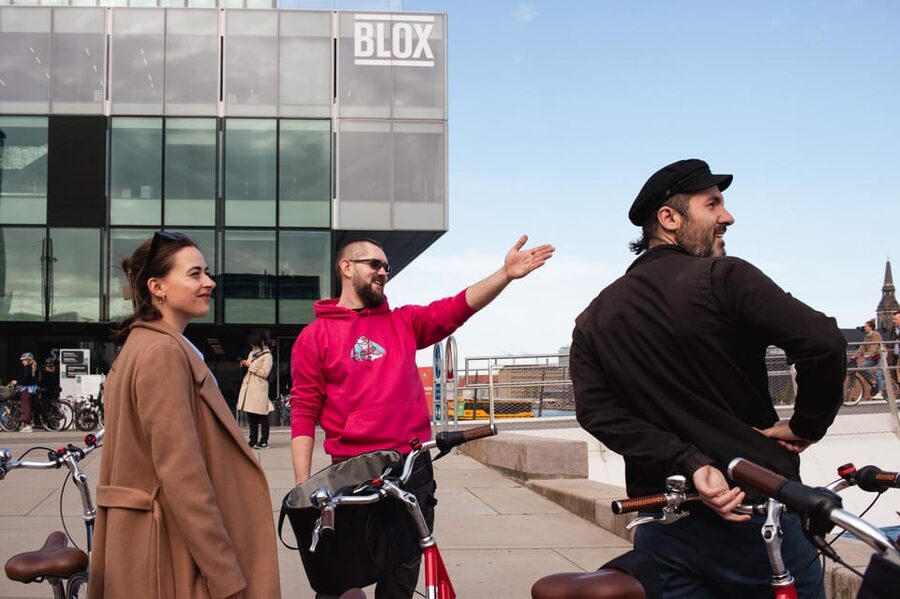
Blox is an early highlight because it introduces the tour’s central idea: architecture can support public life rather than simply provide offices or apartments. You’ll spend about ten minutes here with the guide, looking at the building and its position beside the harbour.
The stop is useful because it sets up the contrast between Copenhagen’s historic centre and its newer waterfront. This part of the city has seen major change, and the ride helps you see that change as a connected plan rather than a collection of unrelated buildings.
A short ride brings you to Lille Langebro, the elegant pedestrian and cycling bridge across the harbour. The stop lasts about five minutes, so expect a quick explanation and time to view the bridge from the route rather than a long pause.
The bridge matters on this tour because it is infrastructure with a human scale. It gives cyclists and pedestrians a direct connection while also acting as a piece of modern design. You’ll see why Copenhagen’s bridges are part of the city experience, not just a way to get from one bank to another.
Islands Brygge and the changing harbour
At Havnebadet Islands Brygge, the focus shifts from buildings to public use. The harbour bath shows how Copenhagen’s waterfront has become a place for recreation and everyday city life.
You spend around ten minutes here. The stop is especially helpful if you want to understand the connection between clean urban waterways, public access, and city planning. Instead of treating the harbour as a back door for industry, Copenhagen has made parts of it a destination for residents.
The tour does not present every project as perfect. It is more useful when you listen for the choices and compromises behind the changes. The city has had to decide how to reuse old industrial areas, add housing, create public space, and keep the waterfront accessible. Your guide adds the local angle that a photograph or online map cannot provide.
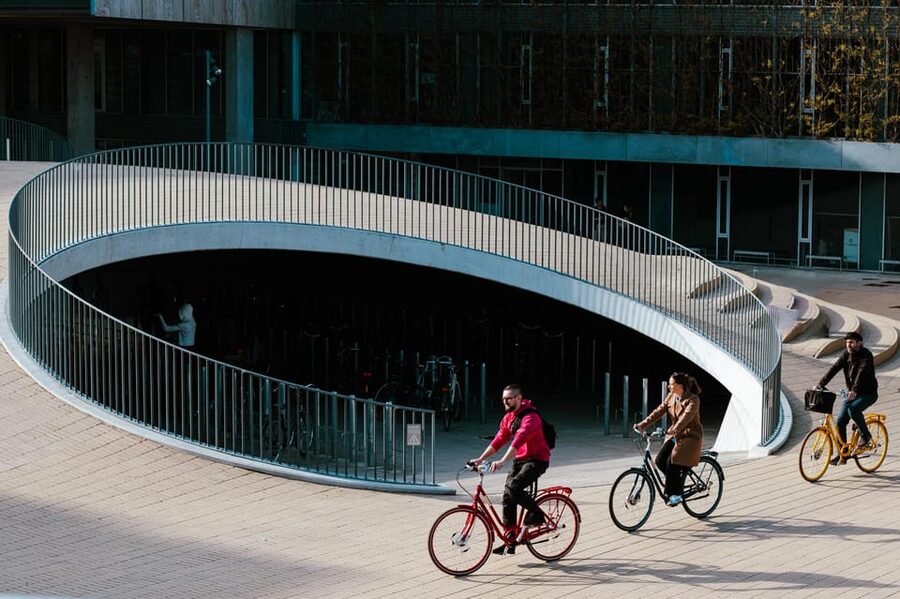
The route then moves toward Karen Blixens Plads. This large public square is connected with the University of Copenhagen and is known for its distinctive terrain and open design. The stop gives you another example of how a public area can be built for movement, gathering, and daily use instead of being designed only to look impressive.
Ørestad: bold buildings and big planning decisions
Ørestad is one of the most important parts of the ride. You get scenic views along the way, followed by a closer look at the district’s architecture and planning.
This is Copenhagen at a much larger scale. The area is known for contemporary buildings and new residential development, so it feels quite different from the older streets near the centre. You’ll see how a planned district tries to combine homes, education, open areas, and transport links.
The value here is comparison. Copenhagen’s older quarters grew over many generations, while Ørestad reflects more recent planning decisions. Riding through both helps you judge what a new district gains from clear planning and what it may lose when buildings and spaces feel less traditional.
Because this section covers ground, you’ll likely appreciate the bike even more. Walking between these districts would take much longer, while cycling lets you see the relationship between the individual buildings and the wider plan.
Same neighbourhood, a completely different afternoon:
- From Copenhagen: Lund and Malmö 2-Country Tour
★ 4.7 · 2,772 reviews - Copenhagen Highlights Walking Tour
★ 5.0 · 2,324 reviews - Copenhagen: Highlights 3 Hour Bike Tour with a Local Guide
★ 4.8 · 2,312 reviews - Hamlet and Sweden Tour – Two Countries in one day !
★ 5.0 · 2,223 reviews
Tietgen Residence Hall and Amager Fælled
The Tietgen Residence Hall is one of the tour’s most memorable architectural stops. You’ll spend about ten minutes here, enough to hear why the building is important and to take in its unusual circular form.
It is a student residence, but the point is not simply its shape. The building offers a chance to discuss shared living, private rooms, communal areas, and the way architecture can encourage contact between residents. The guide’s explanation is important, since the outside alone does not tell you how the building works.
Several people who took the tour praised guides for making architecture easy to follow, even when the subject became technical. Josephine was noted for combining strong subject knowledge with humour, while René was praised for explaining the city’s environmental efforts clearly and keeping riders comfortable on the road.
From there, the route reaches Amager Fælled. This open natural area gives the ride a welcome change of pace after the large buildings of Ørestad. You’ll spend around ten minutes here, looking at the relationship between a growing city and the open land beside it.
This is where the tour’s idea of sustainability becomes broader. It is not only about energy-efficient buildings or cycle routes. It is also about what a city protects, how much open space remains, and how urban growth affects the surrounding area.
Gemini Residence and Cykelslangen
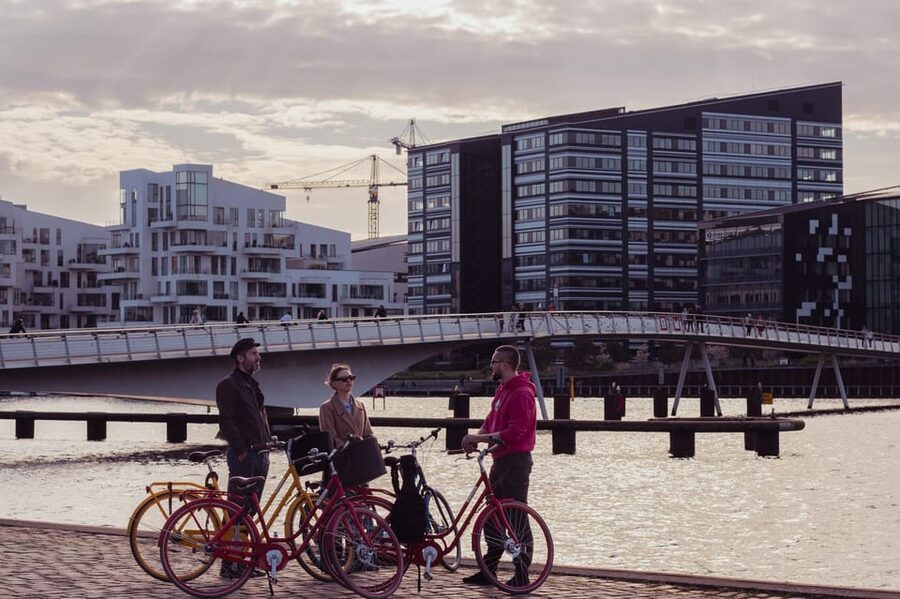
The E/F Gemini Residence brings you back to the harbour and the reuse of industrial structures. The building is associated with the conversion of former industrial infrastructure into housing, making it a useful example of adaptation rather than demolition and replacement.
You get about ten minutes at the site. Pay attention to how the building’s past affects its present use. The appeal is not just visual. It shows how an old structure can be given a new purpose while keeping some connection to the area’s working waterfront.
Next comes Cykelslangen, the bicycle bridge and ramp that has become a well-known part of Copenhagen’s cycling network. This is listed as a scenic ride rather than a long guided stop, so you should expect to experience it while moving.
That is part of the fun. You are not merely hearing about Copenhagen’s bike culture. You are using the infrastructure yourself. The route makes clear why cycling works so well here: dedicated paths and bridges can make everyday journeys direct, safe, and pleasant.
Still, stay alert. The route is designed for people who can already ride a bike, and the group may spread out at times. One four-star account raised a concern about riders getting separated. Keep the guide in sight, follow instructions, and avoid stopping suddenly in the cycle lane.
Kaktus Towers and Enghave Plads
The Kaktus Towers provide another look at Copenhagen’s newest residential architecture. You’ll stop for around ten minutes to discuss the design and its place in the city.
The towers are visually unusual, which makes them easy to remember, but the better question is how such buildings function for the people who live there. Listen for the guide’s comments on compact urban housing and the effort to build more homes without pushing the city ever farther outward.
The tour then heads to Enghave Plads, a public square in the Vesterbro area. This stop brings the focus back to the reuse and renewal of older urban districts.
Enghave Plads is useful as a contrast to Ørestad. Here, the setting feels more connected to an established neighbourhood, while the square shows how public space can be improved without erasing the character of the area. You’ll spend around ten minutes, giving the guide time to explain how Copenhagen combines older city fabric with newer environmental goals.
The route also includes Kødbyen, the former meatpacking district, as part of the wider ride. Its conversion into a social and cultural area helps explain Copenhagen’s fondness for giving industrial places a second life. You do not need a separate stop to understand the basic lesson: old buildings can remain useful when a city allows new activities to take root inside them.
Israels Plads and the ride back
The final major stop is Israels Plads, where the tour again looks at public space and urban renewal. You’ll have about ten minutes here before returning to the starting area.
This is a good place to end because the square brings together several themes from the ride: movement, recreation, city history, and practical design. By this point, you have seen waterfront redevelopment, new housing, cycling bridges, student residences, open land, and older districts with new uses.
The return ride gives you time to connect the pieces. Copenhagen’s approach is not one single style. Some projects are sleek and new, while others work by adapting what already exists. The common thread is the effort to make the city easier to move through and more useful to the people who live there.
What the $70 price really gives you
At $70 per person, this is not the cheapest way to rent a bicycle for three hours. It is a reasonable price if you want a guided route, a fitted bike, safety equipment, and access to districts that would take planning to connect on your own.
The value comes from the interpretation. A self-guided ride could take you past Blox, Ørestad, Cykelslangen, and the Kaktus Towers, but you would miss much of the reasoning behind them. The guides explain how Copenhagen’s leaders have tried to improve daily life through cycling, public space, redevelopment, and environmental policy.
The tour also includes bikes in 48, 51, and 56 centimetre frame sizes, plus helmets and rain ponchos. Children’s bikes with 24-inch and 26-inch frames are available, but you need to reserve them in advance.
Small extras cost more. Baskets and phone holders are available on site for 49 DKK each. An e-bike costs 249 DKK extra, a cargo or tandem bike costs 449 DKK, an e-cargo bike costs 649 DKK, and a child seat costs 119 DKK. Reserve special upgrades ahead of time.
Luggage storage and a lounge with toilets are included, which is handy if you arrive with bags or want a place to regroup before and after the ride.
Who should book this architecture ride?
I would recommend it to anyone who enjoys cities as working places, not just collections of monuments. You do not need to be an architect. If you like asking why a bridge is placed somewhere, how an old factory becomes housing, or what makes a cycle route practical, you’ll get a lot from the ride.
It suits first-time visitors who want to see more than the central sights, and it works well for returning visitors who have already covered the main museums and palaces. It is also a good match for people who prefer active sightseeing and want a local guide to connect the pieces.
Families can consider it, but the children must be able to ride. Reserve the correct children’s bikes or a child seat beforehand. The 17-kilometre distance means this is not a casual spin around the block.
You should also dress for the forecast. The tour runs in all weather, and comfortable shoes and suitable clothing matter. Copenhagen’s wind and rain can make a long bike ride feel much harder than the same distance on a calm, sunny day.
The language options are English and German. Private groups are available if you want a more personal format or need a pace that works better for your party.
Should you book the Copenhagen architecture and sustainability tour?
Book it if you want to understand how Copenhagen’s modern buildings connect to cycling, public life, and environmental planning. The strongest parts are the variety of districts, the chance to ride through the city like a local, and the guides’ personal explanations. René, Jörn, and Josephine have each been praised for bringing warmth, humour, and clear detail to the subject.
Skip it if you want a relaxed sightseeing ride with little physical effort, or if your main interest is Copenhagen’s older architecture. One account found the tour stronger on 21st-century design than earlier periods, and the 17-kilometre route requires confidence on a bicycle.
For most active visitors, $70 buys a useful introduction to the city’s newer side. You leave with more than a list of buildings. You gain a practical sense of how Copenhagen uses bridges, squares, housing, harbour space, and bike routes to shape everyday life.
FAQ
How long is the Copenhagen architecture and sustainability tour?
The tour lasts three hours, including approximately 17 kilometres of cycling through Copenhagen.
What languages are available?
The tour is available with a live guide in English or German.
Do I need to be able to ride a bicycle?
Yes. The experience is not suitable for people who cannot ride a bike.
Are bikes and helmets included?
Yes. Bikes in 48, 51, and 56 centimetre frames and helmets are included. Children’s bikes are also available, but they must be reserved beforehand.
Does the tour run in bad weather?
Yes. The tour starts in any weather. Rain ponchos are included, but you should wear suitable clothing and comfortable shoes.
Can I use an e-bike or child seat?
Yes. E-bikes, cargo bikes, tandem bikes, e-cargo bikes, and child seats are available as paid upgrades. Special bikes and seats should be reserved in advance.
What is the cancellation policy?
You can cancel up to 24 hours before the tour for a full refund. You can also reserve now and pay later, subject to availability.
Just added around Copenhagen
- Copenhagen: Express Walk with a Local in 60 minutes★ 4.6 · 3 reviews
- Copenhagen: 3 Hour Extended Grand E-Bike Guided Tour★ 4.6 · 3 reviews
- The Forgotten Giants Private Tour★ 5.0 · 3 reviews
- Castles of Kronborg and Frederiksborg from Copenhagen by Car★ 4.5 · 3 reviews
- Departure by Luxury Vehicule Copenhagen to Copenhagen airport CPH★ 5.0 · 3 reviews
- Copenhagen: Self Guided Scavenger Hunt and Tour★ 4.0 · 3 reviews
- Private Transfer Copenhagen Airport CPH to Copenhagen by Sedan★ 4.5 · 3 reviews
- Copenhagen Craft BeerWalk City Center★ 4.4 · 3 reviews
Copenhagen Tours, compared.
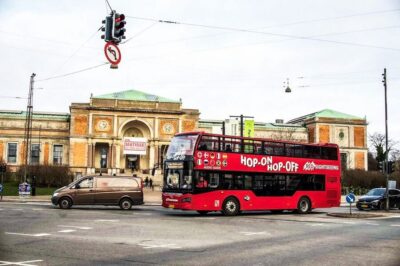
Hop-On Hop-Off Bus Tour with Boat Tour Option
Read our review →

Highlights 3 Hour Bike Tour with a Local Guide
Read our review →
Hamlet and Sweden Tour – Two Countries in one day !
Read our review →
Browse the lists this tour appears in