

Reviewed · COPENHAGEN TOURS
Copenhagen: Danish-Jewish History Tour
The remarkable fact at the heart of this tour is simple: 97 percent of Denmark’s Jews survived the Nazi occupation. Over 2.5 hours, you follow the story behind that figure, from the community’s arrival in 1622 to the rescue operation that moved most Danish Jews to safety in Sweden.
I like the private format, which gives you room to ask about family names, religious life, or the October 1943 rescue without being lost in a large crowd. I also like the way the tour connects Jewish history with everyday Danish culture, including Tuborg beer, Bang & Olufsen porcelain, Niels Bohr, Victor Borge, and Georg Brandes. The main limitation is that entrance to the Great Synagogue is not included, so this is chiefly an outdoor walking experience rather than a full synagogue visit.
Key points to know before booking

- The 1943 rescue is the emotional center: Learn how Danish Jews were hidden and smuggled to safety during a few tense weeks.
- The route covers central Copenhagen: Expect former Jewish districts, old prayer rooms, synagogue history, and important city streets.
- The Great Synagogue is viewed as part of the walk: Its Egyptian Revival design is included, but admission inside costs extra if access is available.
- You get a private guide: The tour is designed for your own group, with guides available in English, German, Danish, Swedish, and French.
- Gitta is a strong guide choice: She is described as passionate and highly informed, with a clear presentation and an easy willingness to take questions.
- Food advice comes as a useful bonus: Your guide may point out nearby places such as a bakery or sausage food truck, including a vegetarian sausage sandwich.
Why Copenhagen’s Jewish story matters
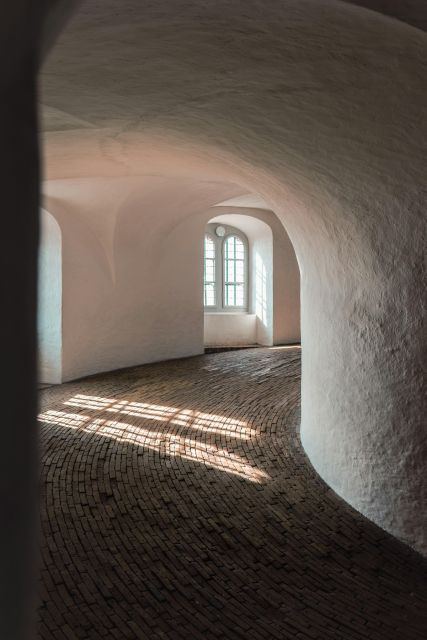
Copenhagen can seem like a city of royal palaces, canals, bicycles, and polished design. This tour asks you to look at the city through another lens: the people who built Jewish homes, businesses, schools, prayer rooms, and cultural institutions in the Danish capital.
The story begins in 1622, when Jewish people started arriving in Denmark. The tour follows how the community established itself in Copenhagen and how its presence became part of Danish public life. You are not simply given a list of dates. You are shown how Jewish residents contributed to science, music, literature, art, manufacturing, and trade.
That broader approach is one of the tour’s best features. Niels Bohr, the physicist, is part of the story. So are Victor Borge, the celebrated entertainer, and Georg Brandes, the influential literary critic. The tour also points to familiar Danish names and products, including Tuborg beer and Bang & Olufsen porcelain.
This matters because it keeps the Jewish community from being presented only through persecution and rescue. You see a community that helped shape Denmark before, during, and after the war. The wartime story is powerful, but it is one chapter in a much longer account.
A few more Copenhagen half-days to weigh up
- Afternoon Hamlet Castle Tour to a UNESCO World Heritage Site.
★ 4.5 · 7 reviews - Copenhagen’s Royal History: A Self-Guided Walking Tour
★ 4.5 · 7 reviews - Private E-Biking Copenhagen History and Nature Adventures
★ 5.0 · 5 reviews
Walking through former Jewish districts
The route takes you through central Copenhagen on foot, linking streets, buildings, and religious sites connected with Jewish life. You can expect a city walk rather than a museum-style presentation. The guide explains what you are seeing and fills in the parts that are no longer obvious from the street.
Former Jewish ghettos and earlier Jewish neighborhoods help show how the community developed within the city. The exact stops and order may vary, but the aim is clear: to trace where Jewish people lived, worshiped, worked, and gathered.
This walking format is valuable because Copenhagen’s history is spread through ordinary-looking streets. A plaque, building facade, narrow lane, or former prayer space can carry more meaning once you know what happened there. You will need to pay attention, though. This is not a tour built around grand interiors at every stop.
Wear comfortable shoes. The tour lasts 2.5 hours, and you should be prepared to walk outdoors in changing Danish weather. Bring water and dress for the conditions. The route is wheelchair accessible, which makes the private arrangement especially helpful if you need a steady pace or occasional pauses.
The Great Synagogue and its Egyptian Revival design

The Great Synagogue of Copenhagen is one of the main visual points of the walk. Its Egyptian Revival style makes it unlike many of the city’s better-known religious buildings, and the guide explains its place in Copenhagen’s Jewish story.
The exterior gives you an architectural anchor for the tour. It is also a reminder that Jewish life in Copenhagen was not hidden away from the city. Religious buildings helped define the community’s identity and public presence.
Admission to the Great Synagogue is not included in the $129 tour price. That is an important detail if you expect a full indoor visit. The supplied information does not promise interior entry, so think of the synagogue as a scheduled part of the walking route, with any additional access handled separately.
If seeing the inside is important to you, ask about current opening arrangements before booking. Synagogue access can depend on security and scheduling, and you should not assume that a walking tour ticket includes entry.
H.C. Andersen, the Melchiors, and Copenhagen culture
The tour adds literary and social connections that make the history feel less confined to religious buildings. One example is H.C. Andersen’s friendship with the Melchior family.
The Melchiors cared for Andersen toward the end of his life, and he died in their care. This story places a Jewish family within the personal and cultural circle of one of Denmark’s most famous writers. It also gives you a more human way to understand how Jewish and non-Jewish Copenhagen families interacted.
The tour also discusses Heinrich and Pauline Hirschsprung, art patrons whose support helped the Danish Impressionist movement develop. Their story connects Jewish philanthropy with the growth of Danish art.
These are useful stops for anyone who wants more than a wartime account. The tour shows how Jewish Copenhagen formed part of the city’s creative and social life. If you are interested in literature, painting, music, or the people behind Denmark’s cultural institutions, these details add welcome breadth.
Same neighbourhood, a completely different afternoon:
- Copenhagen: Canal Cruise with Guide
★ 4.6 · 9,115 reviews - Copenhagen: Hop-On Hop-Off Bus Tour with Boat Tour Option
★ 3.9 · 4,122 reviews - Private Walking Grand Tour of Copenhagen
★ 5.0 · 3,953 reviews - From Copenhagen: Lund and Malmö 2-Country Tour
★ 4.7 · 2,772 reviews
October 1943 and the rescue of Danish Jews
The most serious part of the tour concerns the German occupation and the rescue of Danish Jews in October 1943. In just a few weeks, most of Denmark’s Jewish population was hidden, moved, and smuggled out of German-controlled territory to safety.
The figure of 97 percent is extraordinary, but the tour helps give it human meaning. You learn about the risks taken by ordinary Danes and the efforts that allowed Jewish neighbors to escape. The story is not presented as a neat fairy tale. It involves fear, secrecy, urgent movement, and the constant danger of discovery.
This part of the walk calls for a thoughtful guide. Sensitive subjects can be flattened into slogans, but Gitta is particularly well suited to this kind of presentation. Her style is described as clear, passionate, and open to questions, with a logical flow that helps you follow the events without losing sight of the people involved.
The tour’s balance is important here. It does not treat the rescue as a reason to ignore the danger of Nazi occupation. Nor does it reduce Danish Jews to victims. You learn about their lives before the war and their continuing place in Danish society afterward.
A private tour changes the experience
The private group format is the strongest practical reason to choose this tour. You are not trying to hear a guide over a large crowd or waiting for a dozen people to finish each stop. The guide can adjust the pace and spend more time on the subjects that matter to your group.
That is useful if you have a family connection to Danish Judaism, an interest in genealogy, or a particular focus on architecture, wartime history, literature, or art. The booking information asks you to mention if you are seeking relatives or historical records during your visit. That does not promise a genealogy service or access to records, but it gives the guide a chance to understand your purpose.
You should be realistic about what 2.5 hours can cover. Copenhagen’s Jewish past is extensive, and a short walking tour cannot explain every institution, family, or wartime event. The private setting helps, but you will still get a carefully selected route rather than a complete archive-based research session.
A private tour also makes the price easier to assess. At $129 per person, it is not the cheapest way to walk around Copenhagen. For one or two people, the cost may feel high. For a small family or group, the per-person value improves because you are paying for a dedicated guide rather than a standard public walk.
What the guide adds beyond the buildings
The buildings are only half the experience. The guide’s interpretation turns a street walk into a story with connections between religion, business, science, art, and daily life.
You might hear how Jewish families contributed to Danish society through products and companies, then move to a discussion of scientists or artists who shaped the country’s public culture. A prayer room can lead into a conversation about changing community needs. A synagogue facade can open a discussion about identity and visibility.
The strongest guide style for this experience is conversational but well organized. One description of Gitta’s approach emphasizes a logical presentation and a readiness to answer questions. That combination matters. You need enough structure to follow several centuries of history, but you also need room to pause when a particular person or event catches your attention.
A local food suggestion can be a pleasant extra at the end or along the route. Guide advice has included a bakery and a nearby sausage food truck, with a vegetarian sausage sandwich worth considering if you do not eat meat. Treat this as a useful local tip, not a central feature of the tour.
Language, timing, and comfort
Live guiding is available in English, German, Danish, Swedish, and French. Confirm your preferred language when you book, especially if the historical detail will be easier for you in something other than English.
The duration is 2.5 hours, with starting times based on availability. That makes the tour easy to fit into a Copenhagen sightseeing day, but you should avoid placing a tight appointment immediately afterward. Walking routes can run close to their full scheduled time, and extra questions are one of the benefits of a private group.
Hotel pickup is offered. The information does not spell out the exact pickup area or transport arrangement, so check the details for your accommodation before assuming pickup is available everywhere in the region.
The tour is wheelchair accessible and is not suitable for children under six. Families with older children should consider the subject matter as much as the walking distance. The rescue story and Nazi occupation are serious topics, and young children may not get much from the presentation.
Free cancellation is available up to 24 hours before the start for a full refund. You can also reserve and pay later, which is useful when Copenhagen plans are still changing.
Is $129 per person good value?
The price makes sense if you want a focused, private history lesson with a walking route built around Jewish Copenhagen. You are paying for a guide’s time, interpretation, and flexibility, not for entry tickets or a long list of included attractions.
The value is strongest for people with a clear interest in Jewish history, Danish culture, World War II, architecture, or family research. The guide can connect the major themes in a way that is difficult to reproduce with a pamphlet or self-guided walk.
The value is weaker if you only want a quick look at the Great Synagogue or a general overview of Copenhagen. Since synagogue entry is not included, and the experience lasts 2.5 hours, casual sightseers may prefer to spend their budget on a broader city tour.
For a private group, the cost can be reasonable. For a solo visitor, it is a larger splurge. I would compare the price with the number of people in your party, then decide how much personal attention you want.
Who should book this Copenhagen walk?
I would recommend this tour to:
- People with Danish-Jewish family connections or questions about relatives
- Visitors who want World War II history presented with care and context
- Anyone interested in the Jewish figures who influenced Danish science, art, literature, and business
- Couples and small groups who prefer a private guide and flexible questions
- Repeat visitors to Copenhagen seeking a subject beyond the usual royal and canal sights
- Wheelchair users looking for an accessible private walking experience
I would hesitate if you are traveling with children under six, dislike walking, or want a tour focused mainly on entering historic buildings. I would also ask about synagogue access in advance if an interior visit is essential to your plans.
My verdict on the Danish-Jewish History Tour
Book this tour if you want to understand how Jewish life became part of Copenhagen and why the 1943 rescue remains such a defining chapter in Denmark’s story. The combination of former Jewish districts, synagogue history, cultural figures, and wartime events gives the walk more substance than a simple list of memorials.
The best reason to choose it is the private guide format, especially if you can arrange a guide such as Gitta. You get a clear route, time for personal questions, and a careful presentation of painful history. Just remember that the Great Synagogue entrance is not included, and that the tour is primarily a walking experience.
If the subject speaks to you, $129 is a fair price for a dedicated 2.5-hour introduction. If you want only a general Copenhagen orientation, spend your money elsewhere.
FAQ
How long does the Danish-Jewish History Tour last?
The tour lasts 2.5 hours.
How much does the tour cost?
The listed price is $129 per person.
Is the tour private?
Yes. It is offered as a private group experience with a private tour guide.
Which languages are available?
Live guiding is available in English, German, Danish, Swedish, and French.
Is hotel pickup offered?
Yes, hotel pickup is offered. Check the booking details for information about pickup at your accommodation.
Is entrance to the Great Synagogue included?
No. Entrance to the Great Synagogue of Copenhagen is not included in the tour price.
Is the tour wheelchair accessible?
Yes. The activity is listed as wheelchair accessible.
Can children join the tour?
Children under six are not permitted to join this experience.
What is the cancellation policy?
You can cancel up to 24 hours in advance for a full refund. The tour also offers a reserve-now, pay-later option.
Just added around Copenhagen
- Copenhagen: Express Walk with a Local in 60 minutes★ 4.6 · 3 reviews
- Copenhagen: 3 Hour Extended Grand E-Bike Guided Tour★ 4.6 · 3 reviews
- The Forgotten Giants Private Tour★ 5.0 · 3 reviews
- Castles of Kronborg and Frederiksborg from Copenhagen by Car★ 4.5 · 3 reviews
- Departure by Luxury Vehicule Copenhagen to Copenhagen airport CPH★ 5.0 · 3 reviews
- Copenhagen: Self Guided Scavenger Hunt and Tour★ 4.0 · 3 reviews
- Private Transfer Copenhagen Airport CPH to Copenhagen by Sedan★ 4.5 · 3 reviews
- Copenhagen Craft BeerWalk City Center★ 4.4 · 3 reviews
Copenhagen Tours, compared.

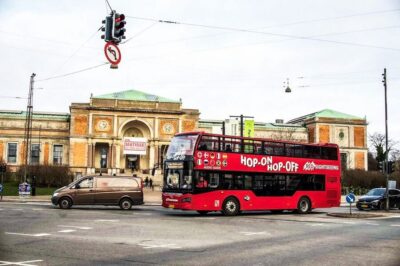
Hop-On Hop-Off Bus Tour with Boat Tour Option
Read our review →

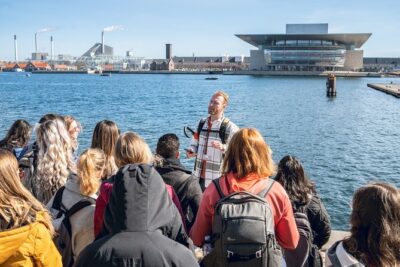
Highlights 3 Hour Bike Tour with a Local Guide
Read our review →
Hamlet and Sweden Tour – Two Countries in one day !
Read our review →
Browse the lists this tour appears in