
Reviewed · COPENHAGEN TOURS
Copenhagen Architecture and Sustainability Tour with local Guide
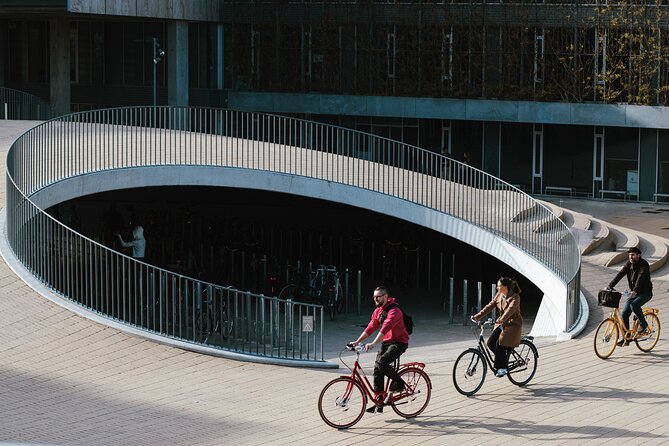
Copenhagen’s best ideas are often found away from the postcard center. This three-hour bicycle tour takes you from modern buildings and harbor bridges to student housing, rain-control parks, old industrial streets, and reclaimed nature.
I like two things right away: you cover about 11 kilometers without rushing through a long walking route, and the small group is capped at 15 people. Guides such as Jörn and Julia bring a clear interest in recent city development, not just old dates and royal names.
The trade-off is that this is a real bike ride, not a gentle roll between two nearby sights. You need moderate fitness, and busy summer areas near the harbor can feel crowded, especially around the first stops.
Key points to know before you book
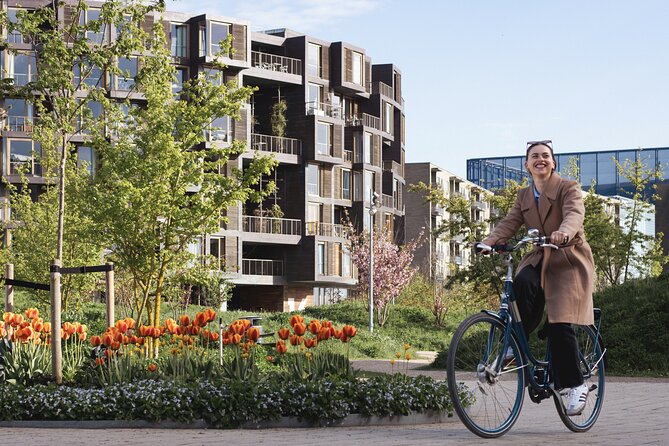
- About 11 kilometers of cycling: Most of the three hours is spent moving between stops, so you see a broad slice of Copenhagen.
- A modern view of the city: The route focuses on architecture, climate planning, public space, and social sustainability.
- Small-group format: The maximum group size is 15, a useful balance between personal attention and a social ride.
- Strong mix of stops: You visit Blox, Lille Langebro, Amager Fælled, Cykelslangen, Enghave Park, and the Meatpacking District.
- Bike included: Standard bicycle use is part of the price, while e-bikes, child seats, baskets, and phone holders cost extra.
- Weather matters: The tour requires good weather, with a new date or full refund offered if poor conditions cancel it.
A Copenhagen tour built around how the city works
This is not a greatest-hits ride. You will not spend the morning ticking off palaces and famous church towers. Instead, you will look at the practical choices that shape daily life in Copenhagen: bridges that give bikes priority, parks that hold storm water, buildings that share facilities, and former industrial areas given new life.
That focus makes the tour a good choice early in your stay. You begin to understand why Copenhagen feels so easy to move through, and later sights make more sense because you have seen the planning behind them.
The price is $72.57 per person. That is more than a basic bicycle rental, but the comparison is not quite fair. The bike, local guide, route planning, and interpretation are included, and you reach far more of the city than you could on foot in three hours. For a visitor with limited time, the value comes from seeing several districts without arranging the route yourself.
The starting point is Tropical Bikes at Vester Voldgade 2, near public transportation. The ride returns there at the end. Toilets are available at the shop, and free helmets can be requested.
More photo walks with a local:
- Copenhagen: Highlights 3 Hour Bike Tour with a Local Guide
★ 4.8 · 2,312 reviews - Copenhagen Highlights 3 Hour Bike Tour with local Guide
★ 5.0 · 1,125 reviews - Copenhagen: City Highlights Walking Tour With Local Guide
★ 4.5 · 270 reviews
From Blox to Lille Langebro: Copenhagen opens toward the harbor
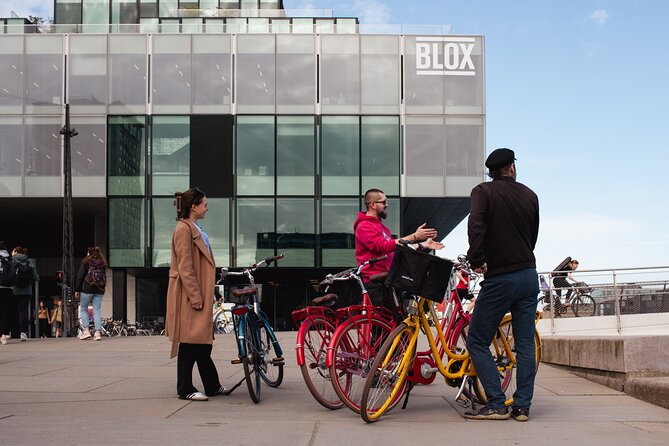
The first stop is Blox, a mixed-use building designed with both technical and social sustainability in mind. The Danish Architecture Center, often called DAC, is its best-known occupant, with exhibitions about Copenhagen architecture.
You should ask your guide what DAC is showing during your visit. Exhibitions change, and the tour’s short stop is primarily for looking at the building and discussing its role rather than for a full museum visit. Admission to the tour stop is free, but a separate exhibition visit is not listed as part of the experience.
From Blox, you continue to Lille Langebro. This compact bridge links the harbor for cyclists and pedestrians and belongs to a newer family of crossings that has changed the waterfront from a working merchant and naval harbor into a place for everyday recreation.
The bridge is a useful example of the tour’s approach. Rather than simply pointing out a handsome structure, the guide can explain what it does: it gives people on foot and bikes a direct connection across the water. You will spend only about five minutes here, so the value comes from the explanation and the wider view, not from a long photo stop.
The harbor can be crowded in summer, particularly around the central waterfront. If you dislike busy paths, stay alert and follow the guide’s line through the area. That is one reason a guide is useful on a bicycle tour, though it also means the opening section may feel less relaxed at peak times.
Islands Brygge and Tietgen Residence Hall
At Havnebadet Islands Brygge, the subject changes from bridges to public access. When the harbor bath opened in 2003, it marked a major shift in Copenhagen’s relationship with its water. A harbor once associated with work and industry became a place where people could spend free time.
The stop is brief, around 10 minutes. You should not expect a swimming session, and the tour information does not include time to use the bath. Instead, you get a quick look at the site and the larger idea of opening the waterfront to residents.
The Tietgen Residence Hall offers a different lesson in sustainability. The building houses about 400 people, with small private rooms and shared kitchens, living rooms, and other facilities. Its design aims to support both personal development and community life.
I find this one of the more useful stops for understanding social sustainability. The point is not only energy use or building materials. It is also how a building can encourage people to share space and resources while keeping private rooms for retreat.
You will spend about 10 minutes there, most likely viewing the exterior and hearing the design explained. If you are hoping to tour student rooms, that is not part of the stated experience.
DR Koncerthuset and the open ground of Amager Fælled
DR Koncerthuset brings the route back to major public architecture. The concert hall seats 1,800 people and is home to the Royal Symphony Orchestra. The complex also includes smaller stages and recording studios.
This is a quick architectural stop rather than a concert visit. You will need to be content with hearing about the building and seeing it from the outside unless your guide indicates otherwise. No performance ticket is included.
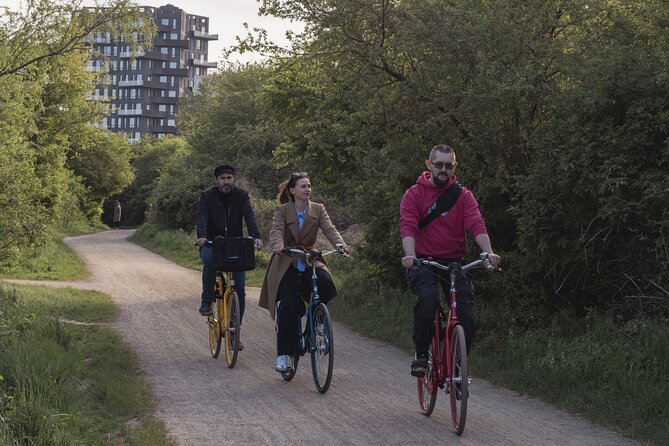
Then the ride reaches Amager Fælled, one of the tour’s sharpest changes of mood. The area was used by the military as a training ground and shooting range from the 1700s until the 1950s. It later became a garbage dump, part of an old Amager joke that gave the island a crude nickname.
Today, it is a rare patch of relatively untouched nature within Copenhagen, even though much of the ground is artificially reclaimed land. The contrast is the point. City planning is not always a clean story of new construction and polished public spaces. Amager Fælled shows how land with an unpromising past can become valuable open ground.
The stop lasts about 15 minutes, the longest pause so far. You will appreciate it most if you want a break from streets and buildings. It is still only a short visit, so do not expect a long nature walk.
A few more Copenhagen half-days to weigh up
- Copenhagen: Canal Cruise with Guide
★ 4.6 · 9,115 reviews - Copenhagen: Hop-On Hop-Off Bus Tour with Boat Tour Option
★ 3.9 · 4,122 reviews - Private Walking Grand Tour of Copenhagen
★ 5.0 · 3,953 reviews - From Copenhagen: Lund and Malmö 2-Country Tour
★ 4.7 · 2,772 reviews
Cykelslangen makes Copenhagen’s bike culture visible
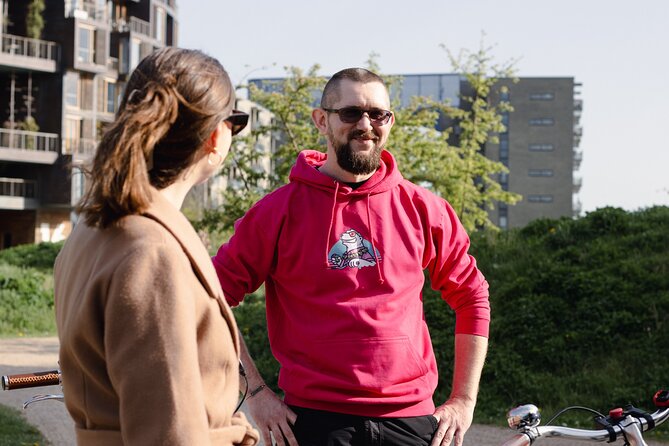
Cykelslangen, or the Bicycle Snake, is one of the most memorable pieces of infrastructure on the route. Along with Bryggebroen, it was among the first new harbor crossings built exclusively for cyclists.
The design gives cyclists a direct route rather than forcing them to mix with cars or climb awkwardly through pedestrian space. It is also a good place to see the city’s cycling priorities in physical form. Copenhagen’s bike culture is not just about people choosing bicycles. It depends on routes designed to make cycling practical.
You will ride across or along the cycling infrastructure, so this section feels more active than a normal sightseeing stop. Keep your attention on the path and on the group. A camera can wait until you are safely stopped.
The route’s cycling distance matters here. Roughly 11 kilometers over three hours is not a race, but the riding is a major part of the experience. You need to be comfortable steering, stopping, and riding in an urban setting.
Enghave Park turns rain into public space
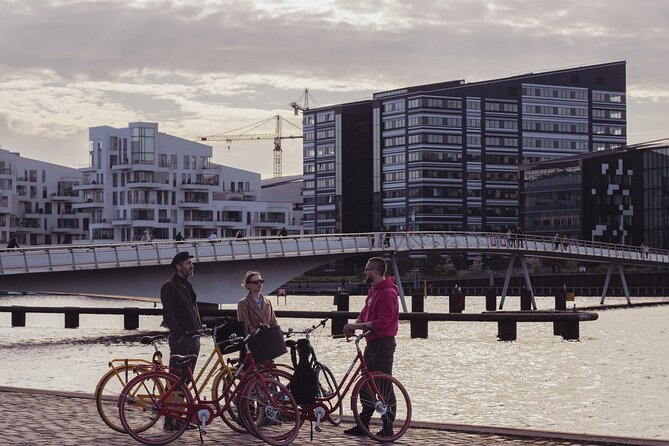
Enghave Park was laid out in the late 1920s on the site of former allotment gardens. Its original design followed a neoclassical plan, with a bandstand, playground, sports fields, and formal structure.
Between 2017 and 2019, the park received a complete redesign. Its newer role is practical as well as recreational: it helps control torrential rain in Copenhagen.
This is one of the clearest examples of the tour’s sustainability theme. A park can be pleasant on a sunny day and still perform important work during extreme weather. The redesign shows how public space can serve several purposes instead of being treated as decoration alone.
You will spend about 10 minutes here. The stop is especially helpful if you are interested in climate adaptation, but the short timing means you will not explore every part of the park.
Absalon and the Meatpacking District tell a social story
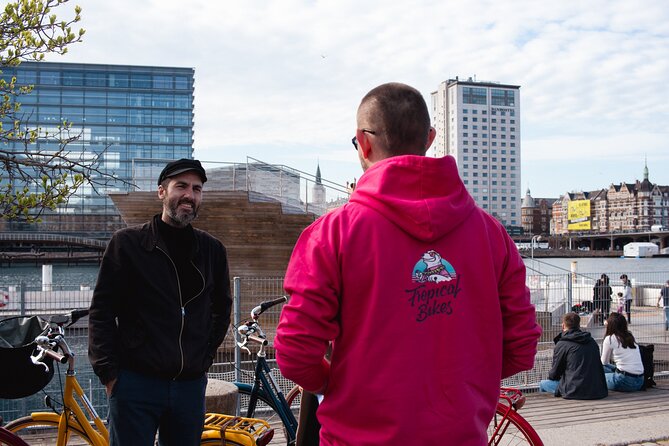
Folkehuset Absalon occupies a former church that has been converted into a privately run community center. It is a small stop, about five minutes, but it adds a human scale to the tour.
After the large buildings and citywide infrastructure, Absalon shows a different approach to shared life. A building that once served one purpose now supports community use. The tour does not include a scheduled meal or activity there, so think of it as a quick architectural and social example.
The Meatpacking District, known as Kødbyen, gives you a longer look at industrial Copenhagen. The city planned the area to create cleaner and healthier conditions for the meat trade as Copenhagen grew. It expanded through several additions, with the architecture changing across the 19th and 20th centuries.
That history makes the district more than a collection of fashionable restaurants and bars. Its buildings record changing ideas about sanitation, industry, and urban growth. The stop lasts about 10 minutes, enough for an introduction and a look at the different sections of the district.
You may find this part particularly rewarding if you like places where old working functions remain visible beneath newer uses. The tour does not promise time to eat or shop, so plan a separate visit if you want to explore the district at leisure.
Israels Plads and Ørstedsparken complete the urban lesson
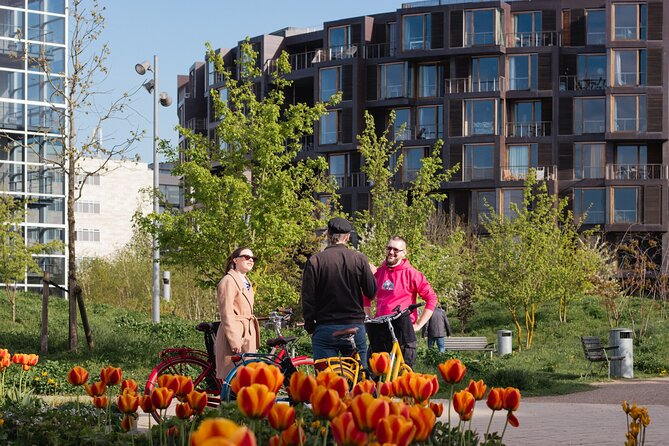
Israels Plads, beside Torvehallerne, is now a meeting point for Copenhagen food lovers. Its older story is just as interesting. A farmers’ market occupied the area from the end of the walled city’s strict building rules in the 1890s until the 1950s. After that, the space became a huge parking lot.
That shift from market to parking lot and then public gathering place is a compact lesson in changing city priorities. You will see how public space can be claimed, lost, and reclaimed over time.
Ørstedsparken offers an early example of reuse. The site was once part of Copenhagen’s defenses outside the city walls. After the walls were demolished, it became a park, retaining parts of the old moat as a lake.
The park’s dramatic hills and irregular paths differ from the formal order of Enghave Park. Together, the two parks show how Copenhagen has repeatedly adapted old land for new public purposes.
This final section also makes clear why the tour needs three hours. Each stop is short, usually five to 15 minutes, but the connections between them are where the city’s scale becomes clear. About one hour and five minutes of the stated time is spent cycling from place to place.
What the $72.57 price includes, and what costs extra
The standard bicycle is included, as is the local guide. Children’s bikes in different sizes are available, but you should contact the provider about availability before booking. Free helmets are available on request rather than automatically supplied.
Baskets and phone holders cost 49 DKK each. Special upgrades are also available at added prices:
- E-bike: 249 DKK
- Child seat: 119 DKK
- Cargo or tandem bike: 449 DKK
- E-cargo bike: 649 DKK
These choices can change the value calculation. If you are comfortable on a standard bike, the base price is easier to justify. If you need an e-bike or cargo setup, add that cost before comparing this tour with other options.
A small group capped at 15 helps keep the ride manageable. It also gives you a better chance to ask about buildings or city policy than you would in a large coach group. Still, the group must stay together on urban bike paths, so the pace will not be fully your own.
The tour is offered in English. Recent guides have included Jörn, who presents Copenhagen’s recent city development in a clear and engaging way, and Julia, whose guiding has been described as both technically strong and easy to follow. Guide assignments can vary.
Who will enjoy this ride most?
I would choose this tour if you have already seen the central sights, or if you want your first view of Copenhagen to include more than old-town architecture. It suits anyone curious about urban design, cycling, public spaces, climate planning, and the way old buildings receive new uses.
It is also a smart option for a short visit. You cover several districts and get a working sense of the city in one morning or afternoon.
You should think twice if you dislike cycling, have difficulty with moderate physical activity, or want long visits inside museums and buildings. The experience is primarily outdoors, and much of the time is spent riding.
Weather is another real consideration. The tour requires good conditions. If poor weather causes cancellation, you are offered another date or a full refund. You can cancel for a full refund up to 24 hours before the start time, but changes or cancellations inside that window are not accepted.
Should you book the Copenhagen Architecture and Sustainability Tour?
Book it if you want to understand Copenhagen as a living city rather than a set of famous facades. The combination of Lille Langebro, Cykelslangen, Tietgen Residence Hall, Enghave Park, and Amager Fælled gives you a useful range of ideas, from bicycle access and shared housing to flood control and reclaimed land.
The best reason to go is the route itself. You will see places that are easy to miss on a standard city walk, while a local guide connects them into one clear story.
Skip it if you want a slow architectural walk with lots of indoor access, or if 11 kilometers on a bicycle sounds tiring. For active visitors with limited time, the $72.57 fee offers solid value, especially with a small group and the bicycle included.
FAQ
How long is the Copenhagen Architecture and Sustainability Tour?
The tour lasts about three hours. The timing is approximate, and roughly one hour and five minutes is spent cycling between the stops.
How far do you cycle?
You will cycle about 11 kilometers between the various stops.
What is included in the price?
The price includes use of a bicycle and a local English-speaking guide. Children’s bikes are available in different sizes, subject to availability. Toilets are available at the shop, and free helmets can be requested.
Does the tour include an e-bike or other special bike?
No. The standard bicycle is included, while an e-bike, cargo bike, tandem, e-cargo bike, or child seat requires an extra fee and should be reserved in advance.
Is the tour suitable for children?
Children’s bikes in different sizes are available, but you need to contact the provider about availability. A child seat can also be reserved for an extra fee.
Where does the tour start and finish?
The tour starts at Tropical Bikes, Vester Voldgade 2, 1552 København, Denmark. It finishes back at the same meeting point.
How many people can join the tour?
The maximum group size is 15 people.
What happens if the weather is poor?
The experience requires good weather. If it is canceled because of poor conditions, you will be offered a different date or a full refund.
Just added around Copenhagen
- Copenhagen: Express Walk with a Local in 60 minutes★ 4.6 · 3 reviews
- Copenhagen: 3 Hour Extended Grand E-Bike Guided Tour★ 4.6 · 3 reviews
- The Forgotten Giants Private Tour★ 5.0 · 3 reviews
- Castles of Kronborg and Frederiksborg from Copenhagen by Car★ 4.5 · 3 reviews
- Departure by Luxury Vehicule Copenhagen to Copenhagen airport CPH★ 5.0 · 3 reviews
- Copenhagen: Self Guided Scavenger Hunt and Tour★ 4.0 · 3 reviews
- Private Transfer Copenhagen Airport CPH to Copenhagen by Sedan★ 4.5 · 3 reviews
- Copenhagen Craft BeerWalk City Center★ 4.4 · 3 reviews
Copenhagen Tours, compared.
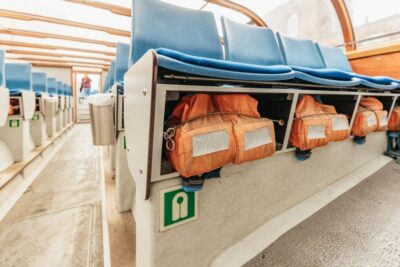
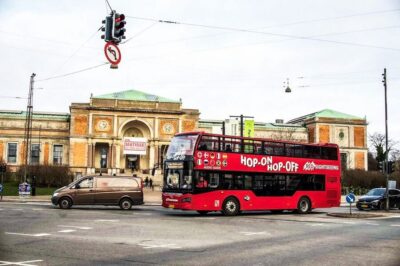
Hop-On Hop-Off Bus Tour with Boat Tour Option
Read our review →

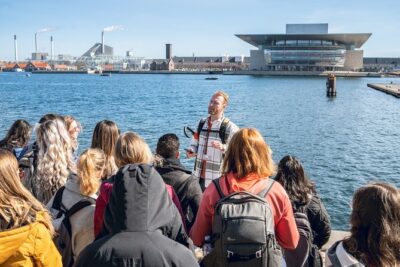
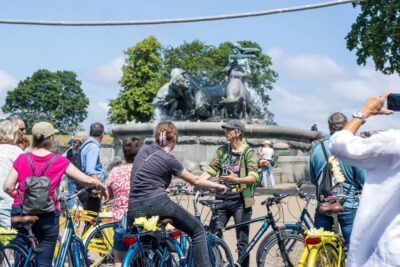
Highlights 3 Hour Bike Tour with a Local Guide
Read our review →
Hamlet and Sweden Tour – Two Countries in one day !
Read our review →
Browse the lists this tour appears in