
Reviewed · COPENHAGEN TOURS
2-Hour Walking Introduction to Copenhagen and its Main Sights
Copenhagen’s story comes into focus on foot, and this tour covers a surprising amount in two hours. You begin beneath the statue of Hans Christian Andersen at City Hall Square, then pass Tivoli, Christiansborg, the old harbor, Nyhavn, and Amalienborg Palace. Along the way, the guide connects grand buildings with tales of rulers, war, royal customs, and everyday Danish life.
I like the small group limit of 10, which gives you a fair chance to ask questions. I also like the practical finish: your guide explains how to reach Nyhavn, Amalienborg, the Little Mermaid, and other sights after the walk. The main drawback is pace. You cover a lot of ground, and you do not enter the castles or museums.
Key points to know before you book
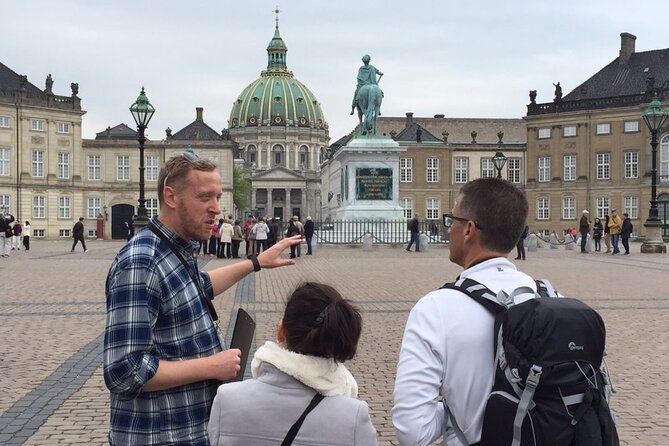
- A fast introduction to central Copenhagen: The route links City Hall Square, Christiansborg, Holmens Kirke, Kongens Nytorv, Nyhavn, and Amalienborg.
- Local guides with personality: Jens, Rasmus, Nick, George, Thomas, and others have led this walk, with guides praised for clear English, humor, and personal stories.
- Limited group size: The tour accepts a maximum of 10 people, making questions and conversation easier.
- History with useful context: You hear how Copenhagen began, how the harbor served the navy, and how royal and civic power shaped the city.
- Good first-day choice: Your guide can suggest food, bakeries, museums, and further sights after the walk.
- Outdoor sightseeing only: Entry to palaces, museums, and some paid sites is not included, and Holmens Kirke is entered only if church activity allows.
Why this works as a first look at Copenhagen
The best use of this walk is as an orientation. Copenhagen’s center is compact, but its buildings can feel disconnected when you first arrive. This route gives you a simple mental map: the city’s civic heart at City Hall Square, the political center at Christiansborg, the old harbor, the shopping district, and the royal quarter toward Amalienborg.
I like tours that explain not just what a building is, but why it matters. Here, Christiansborg is more than a palace facade. It houses Denmark’s Parliament, Supreme Court, and prime minister, while the surrounding ministries and central bank help explain how much national power is concentrated in this part of town.
The guides also bring a personal touch. Jens has been praised for detailed accounts of Copenhagen and family ties to the city reaching back to the 15th century. Rasmus has provided extra suggestions for food and sightseeing, while Nick has helped tailor plans when a visitor wanted to reach a place outside the easy walking route. These details matter because the tour is not only a moving history lesson. It is also a chance to ask what you should do next.
The walk is conducted in English, and a headset is supplied so you can hear the guide clearly. You do not have to use it, but it can help when the group is spread out around a square or beside a busy street.
More walking tours in Copenhagen:
- Private Walking Grand Tour of Copenhagen
★ 5.0 · 3,953 reviews - Copenhagen Highlights Walking Tour
★ 5.0 · 2,324 reviews - Politically Incorrect Private Highlights Walking Tour
★ 5.0 · 1,244 reviews
City Hall Square and the city’s public heart
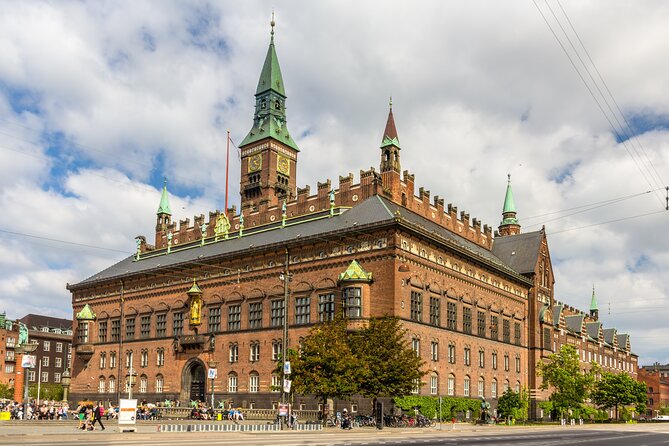
The meeting point is the statue of Andersen at Rådhuspladsen, or City Hall Square. This is a sensible starting place. The square is the center of Copenhagen’s public life, a broad gathering place used for major celebrations, including large sporting victories and national events.
You begin with the square’s role in modern Denmark, then look at Copenhagen City Hall, completed in 1905. It is the seat of city administration, and its size and decorative style give you an immediate sense of the city’s civic pride.
Tivoli Gardens is nearby. The famous amusement park is unusual because it sits in the middle of a major capital rather than outside town. The tour does not include admission, so you should treat the stop as an introduction rather than a park visit. If Tivoli is on your list, plan a separate visit when you can give it more time.
The route also touches the world’s longest pedestrian shopping street, according to the tour description. This gives you a useful contrast: Copenhagen is not only royal squares and old churches, but also a working shopping center filled with daily city life.
The guide then points out the equestrian statue of the bishop associated with Copenhagen’s founding in 1189. This is the sort of detail that can slip past you when walking alone. A short explanation turns a statue into a marker of the city’s earliest development.
Christiansborg and the power center of Denmark
The next major stop is Christiansborg Slot. From here, you get one of the clearest explanations of Copenhagen’s political structure. Parliament, the Supreme Court, and the prime minister all have a connection to this huge palace complex.
You do not go inside, and that is important to understand before booking. The value here comes from the guide’s explanation and the exterior setting, not from palace rooms or museum displays. If you want to see the interiors, you will need to return on your own and pay any required admission.
This is also where you hear the story of Copenhagen’s beginnings. The tour places the city’s founding at this site, helping you understand why the area became such an important seat of power. Ministries, the central bank, and other notable buildings are pointed out nearby.
I find this kind of stop especially useful because it connects the architecture to the modern city. You are not simply looking at a grand facade. You are learning where Denmark’s government works and how the old royal center still serves the country today.
The guide’s style can make a real difference here. Several guides have been described as lively and easy to understand, with humor mixed into the historical material. That is useful during a walking tour because two hours of dates and names can become tiring without a good story.
Christian IV’s Brewhouse and the old harbor
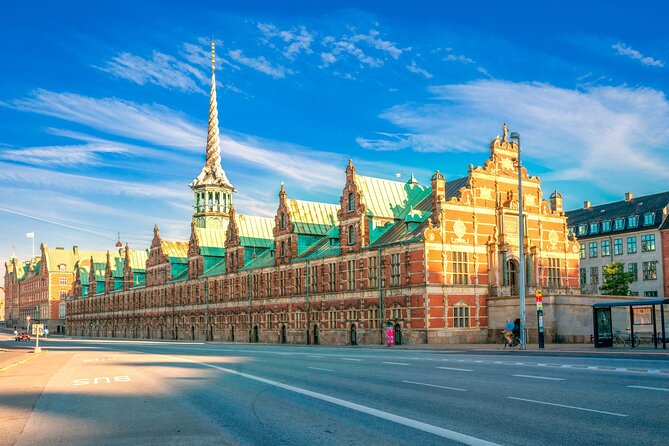
The walk continues toward Christian IV’s Brewhouse, a huge brick building beside the harbor. Built in 1618, it reflects Copenhagen’s Renaissance era and the scale of royal building projects at the time.
This stop focuses on the harbor as a naval base. That context helps you read the waterfront differently. The harbor was not merely a place for colorful boats and pleasant strolls. It was tied to Denmark’s military strength, trade, and royal ambitions.
Admission to the Brewhouse is not included, and the tour does not promise an interior visit. You see the building from the outside while the guide explains its role. For many people, that is enough for a first orientation, but history fans may want to return later for a closer look at sites open to the public.
The old stock exchange comes next. Its distinctive tower is formed by the tails of three dragons, a memorable feature that gives you an easy visual marker for Copenhagen’s older commercial district. The building dates from the early 1600s and adds another layer to the harbor story: government, navy, trade, and royal power all operated close together.
This portion of the tour is a good reminder to look up. Copenhagen’s most interesting details are often on towers, statues, and rooflines rather than at street level.
A few more Copenhagen half-days to weigh up
- Copenhagen: Group Walking Tour – City Highlights – 2 Hours
★ 4.7 · 1,088 reviews - Segway Tours Copenhagen w. Guide & Concierge Service. 2 Hours+
★ 5.0 · 550 reviews - 2 Hour Copenhagen Segway Tour
★ 5.0 · 404 reviews - 2 Hours Copenhagen E-Bike Guided Tours
★ 5.0 · 276 reviews
Holmens Kirke and Copenhagen’s royal traditions
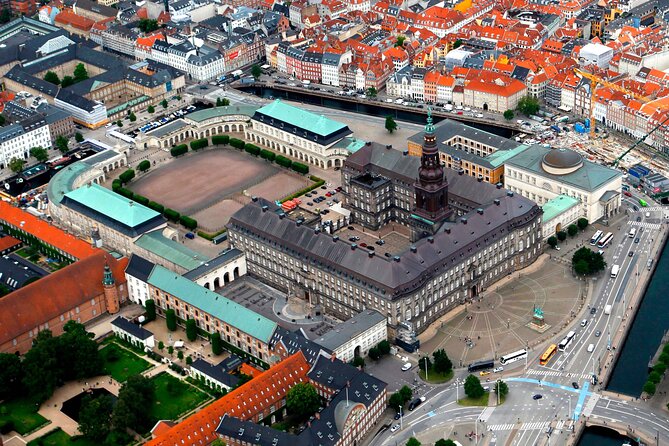
Holmens Kirke dates from the 1500s and remains tied to Denmark’s national and royal life. Prime ministers are buried here, and royal weddings have taken place inside.
The guide enters the church only if it is open and church activities permit. That means you should not count on an interior visit, but the exterior still fits naturally into the route. If the doors are open, you may get a quiet break from the street and a closer look at a working place of worship.
I like that the tour treats the church as part of living Copenhagen rather than a museum object. Its importance comes from both its age and its continuing use. Church schedules can change, so the flexible wording is realistic.
The stop is brief, about six minutes. That keeps the walk moving, but it also means you will not have much time for a long architectural inspection or private reflection. If churches are a priority for you, make a note to return later.
Kongens Nytorv and the route’s main crossroads
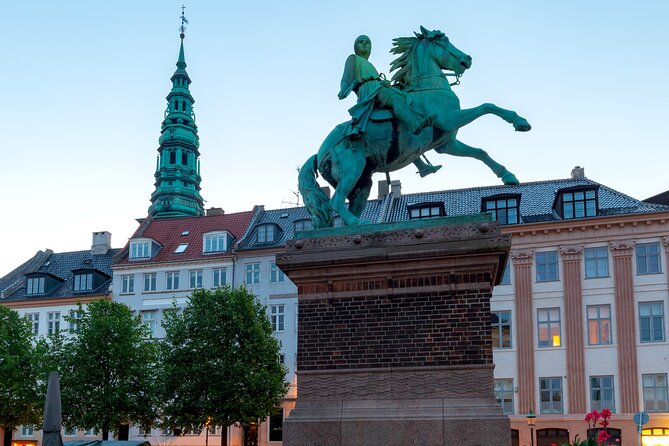
Kongens Nytorv, or King’s New Square, is one of the most attractive open spaces in central Copenhagen. It was laid out in the Renaissance period and surrounded by impressive 18th-century buildings.
This is where the walk’s central orientation comes together. The square links the older city with Nyhavn, the royal quarter, major shopping streets, and several important cultural sites. Your guide explains how to continue from here, which is useful if you want to split up after the official route.
The published timing gives this area about 10 minutes, but the full route continues toward Nyhavn and Amalienborg. In practical terms, you should expect a continuous walk rather than a series of long stops. Wear comfortable shoes and be prepared to remain on your feet for most of the two hours.
The square is also a good point to ask for recommendations. Guides have suggested bakeries such as Hart and places for cakes and hot chocolate, including La Glacé. These are personal suggestions rather than included stops, so you pay for anything you choose to eat afterward.
Nyhavn’s colorful waterfront and an old engineering feat
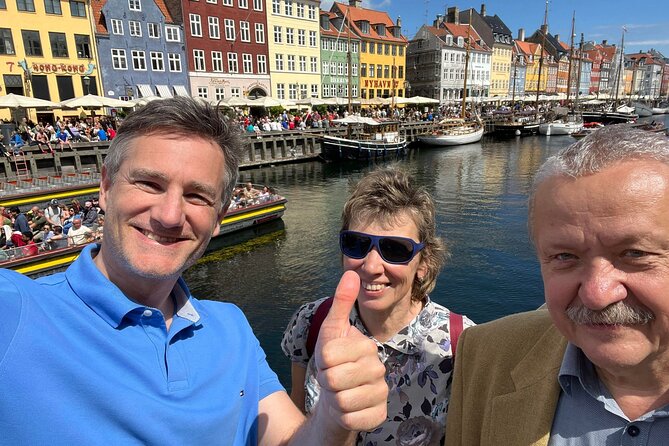
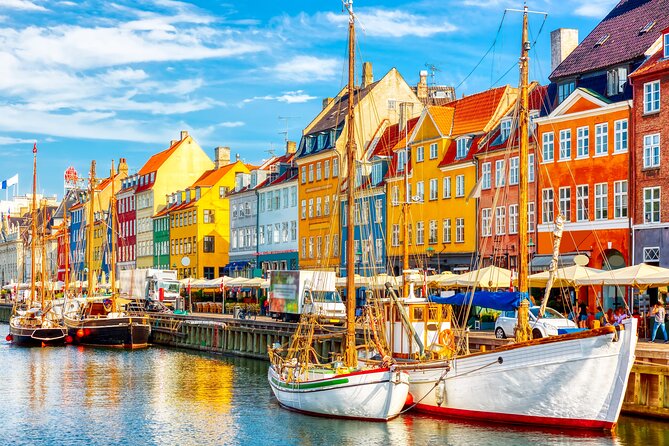
Nyhavn is Copenhagen’s postcard view: narrow harbor water lined with colorful historic houses. It is easy to photograph and easy to understand at a glance, but the guide adds a useful piece of background. The harbor was dug in the 1600s by Swedish prisoners of war.
That fact gives the pretty waterfront a harder edge. Nyhavn was built for practical shipping needs, not simply for decoration. The stop also lets you see how Copenhagen has reused its old harbor spaces as places for dining, walking, and sightseeing.
The tour allows roughly 10 minutes here. That is enough for an explanation and quick photographs, but not enough for a relaxed meal or a long cafe stop. If you want time beside the canal, return after the walk.
One useful detail from the experience is the guide’s willingness to adjust for conditions. On a hot day, a guide arranged a short rest for a cold drink at Nyhavn. You should not assume refreshments are included, but the route has a natural place for a brief pause if needed.
Amalienborg Palace and the royal finish
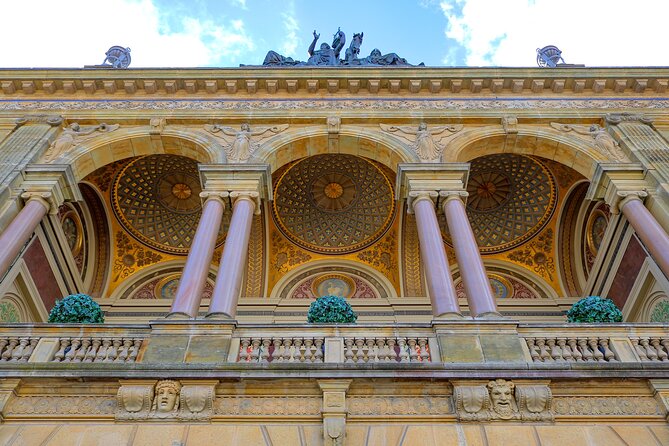
The walk ends at Amalienborg Palace, the royal residence where the King and his family live in four large mansions dating from the mid-1700s. The palace square is an impressive final scene, with the four buildings arranged around an open central space.
The tour also touches on dramatic events that took place here during World War II. This helps keep the royal quarter from feeling like a polished backdrop. The buildings have been part of tense political and military moments, as well as ceremonies and daily royal life.
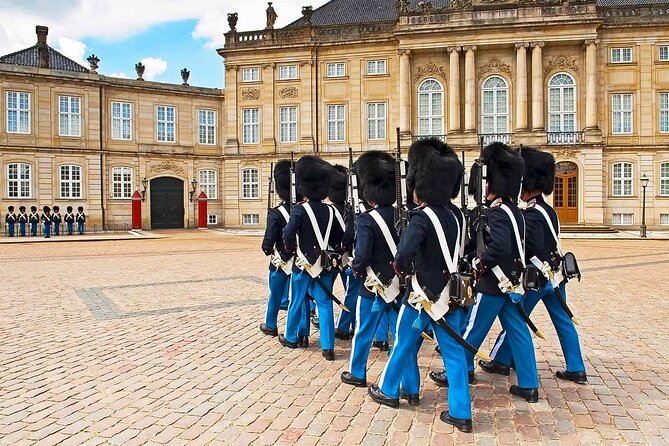
Palace admission is not included, and you do not tour the interiors. The guide’s role is to explain the setting and help you decide if you want to return for more. The tour may also end at a useful time for the changing of the guard, though you should not treat that as guaranteed. Some walks have been timed so participants could watch it, and one group even saw the King drive past on the way to the opening of Parliament.
The official end point is Amalienborg Slotsplads. From here, you can continue toward the Little Mermaid or explore the royal district on your own. Your guide provides directions and a small city map, which makes this a practical place to begin the rest of your day.
What the two-hour format really gives you
Two hours is long enough for a strong overview, but too short for deep visits inside the city’s main attractions. You will see many landmarks from the outside, hear their stories, and learn how the central districts fit together.
I would book this early in your stay, ideally on your first day. The route helps you choose where to spend more time later, and the guides offer suggestions on food, bakeries, museums, and additional sights. One person who joined alone ended up with a private experience because no one else had booked that departure, though you should expect a small shared group rather than count on that outcome.
The maximum group size of 10 is one of the better features for the price. At $40.41 per person, you are paying for a local English-speaking guide, a guided walk, a headset, a small map, and advice for the rest of your visit. You are not paying for entry to Tivoli, Christiansborg, Amalienborg, the Brewhouse, or other museums.
That makes the value strongest if you want context and orientation, not a series of included admissions. A self-guided walk will cost less, but it will not answer your questions or provide personal stories about Copenhagen and Danish customs.
Who should book this Copenhagen walking tour
I would recommend it to first-time visitors, short-stay visitors, and anyone arriving without a clear plan. It also suits people who want a history-focused walk but prefer stories and conversation over a formal lecture.
The tour works well for people who enjoy asking questions. Guides have answered questions about Danish history, culture, customs, local food, and what to see next. Clear English is a stated feature, and the headset helps keep the commentary audible.
You should think twice if you dislike brisk walks, need frequent indoor breaks, or want extensive palace interiors. The route covers a lot of ground, and poor weather can lead to cancellation or a new date. Most people can take part, but the experience is still an outdoor city walk with nearly all sightseeing from the street.
The meeting point is at the Andersen statue in City Hall Square. One practical warning: a guide may not always be dressed in a highly distinctive outfit, so confirm the exact statue and look for the guide’s lanyard. The experience is near public transportation, and the confirmation is sent when you book.
Free cancellation is available up to 24 hours before the start time. Changes or cancellations inside that window are not accepted for a refund. Tips are not included, so bring a little extra if you feel the guide earned it.
Should you book it?
Book this walk if you want to understand Copenhagen quickly, meet a local guide, and gather good ideas for the rest of your visit. The strongest reasons are the small group, the lively storytelling, and the route from civic Copenhagen to the royal waterfront.
Skip it if your main goal is to tour palace interiors or spend unhurried time at Tivoli and Nyhavn. For everyone else, the $40.41 price is fair for a two-hour introduction, especially when you use the guide’s advice to plan the rest of your stay.
FAQ
How long does the Copenhagen walking tour last?
The tour lasts approximately two hours, including travel time during the walk.
Where does the tour begin?
It begins at the statue of Andersen in City Hall Square, at Rådhuspladsen, 1553 København V, Denmark.
Where does the tour end?
The stated end point is Amalienborg Palace at Amalienborg Slotsplads, 1257 København K, Denmark.
What language is the tour offered in?
The tour is offered in English with a local English-speaking guide.
How many people can join the walk?
The maximum group size is 10 travelers.
Are palace and museum admissions included?
No. The tour does not include entry to castles or museums. You can visit them separately after the walk.
Is a headset provided?
Yes. A headset is provided so you can hear the guide throughout the walk, though using it is not mandatory.
Can you enter Holmens Kirke?
The guide enters Holmens Kirke if it is open and church activities allow it. An interior visit is not guaranteed.
What is the cancellation policy?
You can cancel at least 24 hours before the start time for a full refund. Cancellations or changes made less than 24 hours before the start are not accepted, and poor weather may lead to a different date or a full refund.
Just added around Copenhagen
- Copenhagen: Express Walk with a Local in 60 minutes★ 4.6 · 3 reviews
- Copenhagen: 3 Hour Extended Grand E-Bike Guided Tour★ 4.6 · 3 reviews
- The Forgotten Giants Private Tour★ 5.0 · 3 reviews
- Copenhagen: Self Guided Scavenger Hunt and Tour★ 4.0 · 3 reviews
- Castles of Kronborg and Frederiksborg from Copenhagen by Car★ 4.5 · 3 reviews
- Departure by Luxury Vehicule Copenhagen to Copenhagen airport CPH★ 5.0 · 3 reviews
- Private Transfer Copenhagen Airport CPH to Copenhagen by Sedan★ 4.5 · 3 reviews
- Copenhagen: Evening Gourmet Walk with Food & Drinks Tasting★ 5.0 · 3 reviews
Copenhagen Tours, compared.

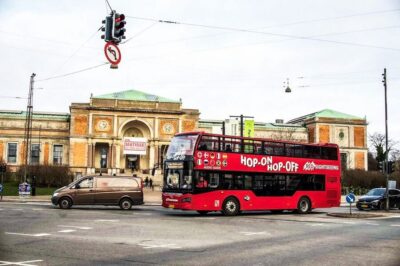
Hop-On Hop-Off Bus Tour with Boat Tour Option
Read our review →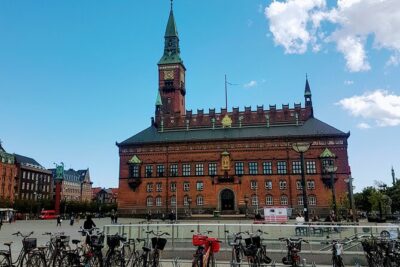

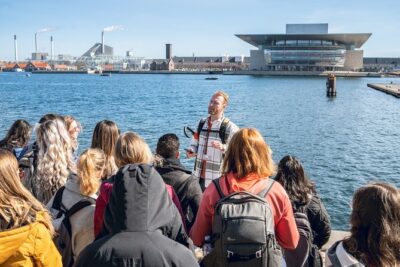
Highlights 3 Hour Bike Tour with a Local Guide
Read our review →
Hamlet and Sweden Tour – Two Countries in one day !
Read our review →
Browse the lists this tour appears in