
Reviewed · COPENHAGEN TOURS
Copenhagen Old Town Private Walking Tour
Copenhagen’s old center is compact, but its story is not. In about two hours, this private walk links City Hall Square, medieval marketplaces, the national cathedral, and Strøget, giving you a useful first look at the Danish capital without burying you in museum rooms or bus traffic.
I like the personal format, since your guide can focus on your group instead of following a fixed crowd. I also like the finish at Amagertorv, close to Christiansborg Palace and Nyhavn, so you can keep exploring after the tour. The main drawback is the price: at $352.19 per person, it makes the most sense for a small group that values private guiding.
Key points to know before booking
- Eight central stops in two hours: The route covers major squares, historic buildings, shopping streets, and the Round Tower.
- Private English-language guiding: Only your group participates, allowing a more personal pace and conversation.
- A useful first-day orientation: Start at Vesterbrogade and finish near Christiansborg Palace and Nyhavn.
- Mostly outdoor sightseeing: Admission is free at most stops, but the Round Tower entrance is not included.
- Cobblestones and all-weather walking: Wear comfortable shoes and bring clothing suited to Copenhagen’s changing weather.
- A strong record for guide quality: The experience carries a 4.8 rating from five published reviews, with praise for clear explanations, good humor, and an enjoyable family experience.
Why this private walk works well as a first look at Copenhagen
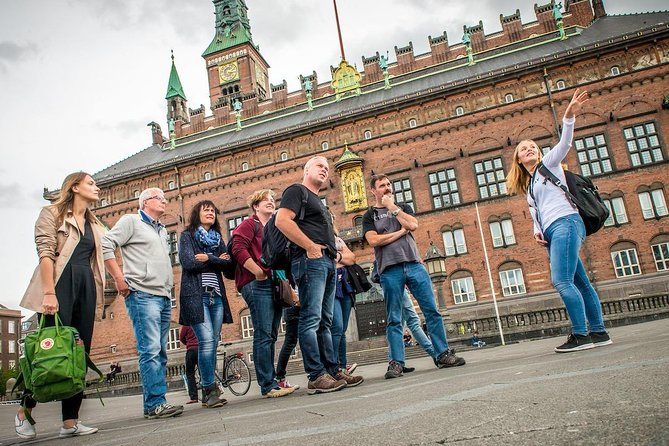
This tour follows a sensible path through the heart of Copenhagen rather than scattering you across distant sights. You begin at Vesterbrogade 4B, near the City Hall area, and move through old squares, the cathedral quarter, the Round Tower, Gråbrødretorv, and the pedestrian center.
That route gives you three useful things at once. You get a quick map of central Copenhagen, a basic timeline from medieval commerce to modern city life, and practical orientation for later wandering.
I especially like that the walk does not rely on admission-heavy attractions. You spend your time reading the city itself: squares, façades, churches, university buildings, statues, and streets where daily life continues around you.
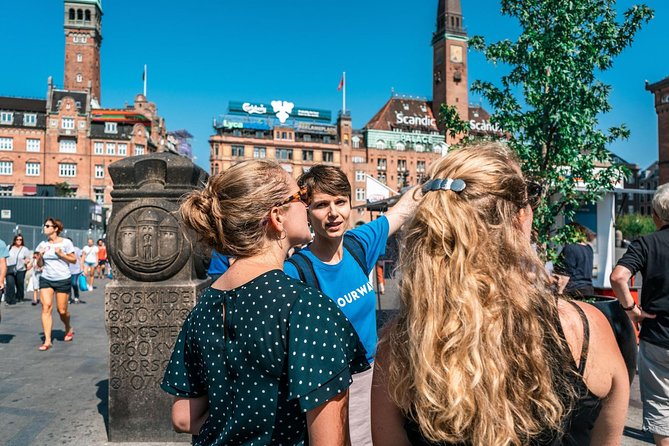
The private setup matters here. A good guide can explain why Gammeltorv and Nytorv sit beside one another, answer questions about the monarchy or city planning, and adjust the pace if your group wants more photographs. The available feedback points to guides who were friendly, well informed, and willing to make the walk enjoyable. One family specifically described the guide as a top-notch choice after visiting Copenhagen several times.
Still, keep the cost in view. Two hours passes quickly, and $352.19 per person is a serious outlay for a walking introduction. The value improves if you are traveling with family or friends and the private rate is shared across the group, but you should confirm the exact group pricing before booking.
More walking tours in Copenhagen:
- Private Walking Grand Tour of Copenhagen
★ 5.0 · 3,953 reviews - Copenhagen Highlights Walking Tour
★ 5.0 · 2,324 reviews - Politically Incorrect Private Highlights Walking Tour
★ 5.0 · 1,244 reviews
City Hall Square and the modern face of Copenhagen
The first stop is Copenhagen City Hall, at Rådhuspladsen. The Danish name means City Hall Square, and this broad public space is used for concerts, outdoor exhibitions, celebrations, political activity, and receptions for returning sports heroes.
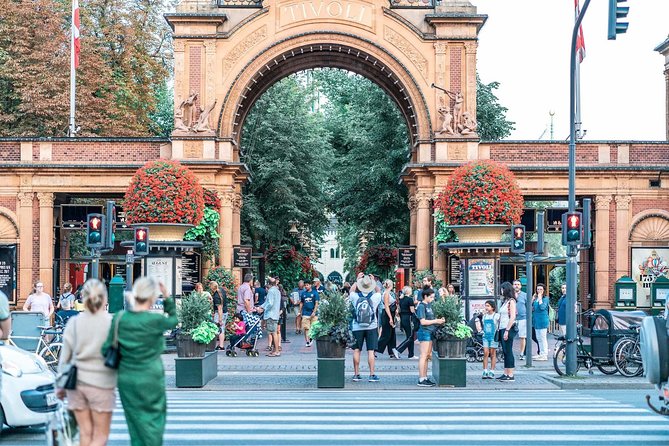
This is a useful opening because it shows Copenhagen as a living civic center, not only as an old European town. Your guide can place City Hall in relation to Tivoli and Strøget, the main pedestrian shopping street, so you quickly understand how several major parts of central Copenhagen fit together.
You have about ten minutes here. That is enough for an introduction and some photographs, but not for a detailed architectural study. If City Hall itself is your main interest, you may want to return later rather than expect this short stop to cover every feature.
The starting point near Vesterbrogade is practical for an arrival day. The route then moves toward the older part of town, creating a clear shift from the broad public square to Copenhagen’s tighter historic streets.
Gammeltorv and Nytorv, Copenhagen’s old commercial heart
Gammeltorv means Old Square, and its role reaches back to the 1100s, when it functioned as a marketplace. Ten minutes here may sound brief, but the square gives your guide a strong setting for explaining how trade helped shape the city.
The most useful detail is the relationship between Gammeltorv and nearby Nytorv. They are not simply two attractive plazas placed next to one another. Nytorv means New Square, and it developed a practical role in the old market system.
Butchers worked at Nytorv while sales took place at Gammeltorv. That separation gives you a small but memorable example of how city authorities organized commerce before modern food markets and zoning rules.
I like this part of the route because it turns an ordinary-looking square into a lesson in urban life. You are not just collecting names for photographs. You are learning why the spaces were built and how people used them.
The ten-minute timing also keeps the walk moving. If you prefer long pauses at every site, this tour may feel brisk. If you want a clear overview before exploring on your own, the pace should be useful.
The Church of Our Lady and Denmark’s national cathedral
The Church of Our Lady, or Vor Frue Kirke, is the National Cathedral of Denmark. The building has been rebuilt four times, and the church you see today is the fourth version.
That rebuilding story gives your guide a natural way to explain how Copenhagen has changed over time. The church is not presented simply as an old religious building. It also connects to national life and the Danish monarchy.
King Frederik and Queen Mary were married here on May 14, 2004. That detail adds a modern royal connection to a site that might otherwise seem primarily medieval or ecclesiastical.
The stop is listed as free, and the walk allows about ten minutes. You should think of this as a guided exterior and orientation stop rather than a guaranteed long interior visit. The supplied details do not promise entry or a special church program, so check the conditions on the day if seeing the inside is important to you.
For many people, this is one of the route’s most meaningful pauses. It adds ceremony and national identity to a walk that otherwise focuses heavily on streets and marketplaces.
A few more Copenhagen half-days to weigh up
- Copenhagen: Canal Cruise with Guide
★ 4.6 · 9,115 reviews - Copenhagen: Hop-On Hop-Off Bus Tour with Boat Tour Option
★ 3.9 · 4,122 reviews - From Copenhagen: Lund and Malmö 2-Country Tour
★ 4.7 · 2,772 reviews - Copenhagen: Highlights 3 Hour Bike Tour with a Local Guide
★ 4.8 · 2,312 reviews
University of Copenhagen and the city’s intellectual quarter
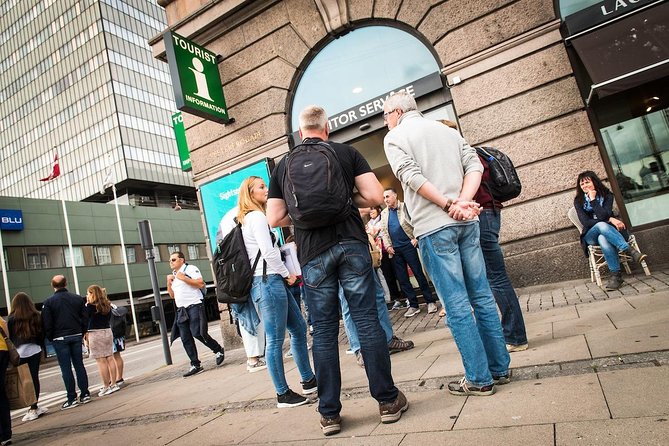
The University of Copenhagen is one of the oldest universities in northern Europe. Its original structure included four faculties: theology, law, medicine, and philosophy.
That list offers a simple way to understand what a university meant in earlier centuries. It was not merely a campus for a single specialty. It gathered the main fields of formal learning under one institution.
The university was Denmark’s largest educational institution at the beginning of the 2000s, with 37,000 students and more than 7,000 employees. Those figures help you see the institution as part of the city’s present life, not just an old foundation with a plaque.
Again, the planned stop lasts about ten minutes. You will not receive a full campus tour in that time, but the setting helps connect Copenhagen’s old center with its student and academic life.
I find this kind of stop valuable on a city walk because it widens the story. The tour is not only about kings, fires, and attractive buildings. It also shows the institutions that continue to shape Copenhagen.
The Round Tower and the choice to pay for entry
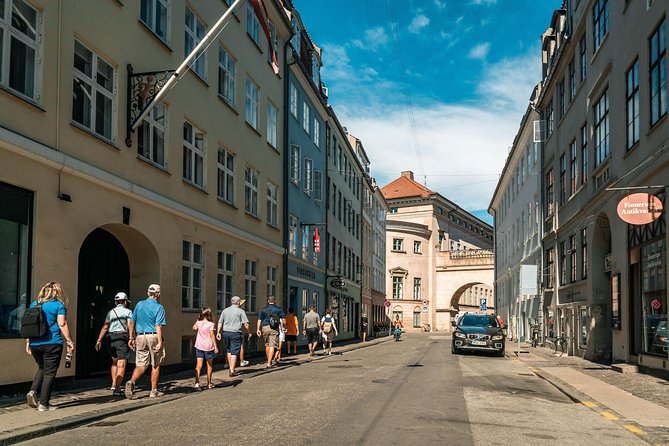
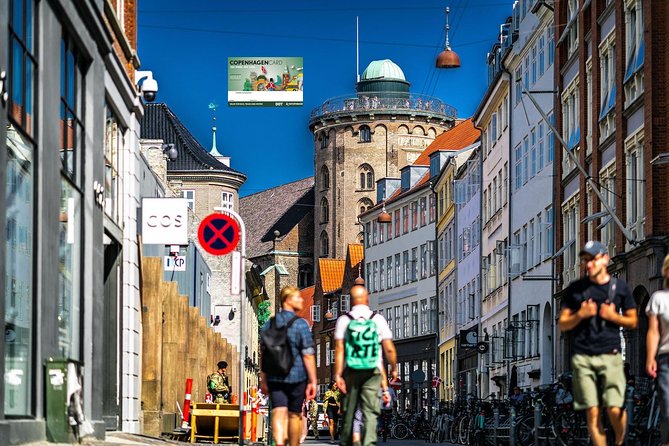
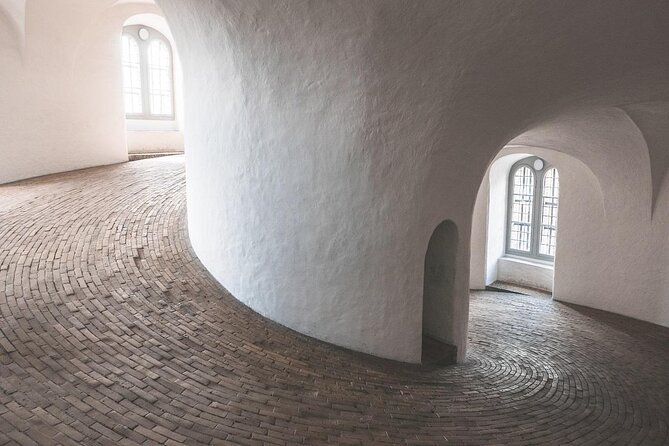
Rundetårn, or the Round Tower, is described as the oldest functioning European observatory. Its story is tied to Frederik II, the first Danish and Norwegian king to take a serious interest in astronomy, and to the work of the Danish astronomer Tycho Brahe.
This is one of the route’s clearest science and discovery stops. Copenhagen’s royal and religious landmarks can dominate a first visit, so the observatory adds another side of the city’s past.
Admission to the Round Tower is not included. That distinction matters because most other stops on the walk are free. You should budget separately if you want to go inside, and you may want to ask the guide whether the timing allows it.
The itinerary assigns ten minutes here, which suggests that the main tour focuses on the exterior and the story rather than a long climb or observatory visit. If the Round Tower is high on your list, treat this as an introduction and plan additional time on your own.
It is also worth remembering that a two-hour walking tour cannot give every landmark equal attention. The Round Tower receives a useful explanation, but the experience is designed as a city overview, not a dedicated tower visit.
Gråbrødretorv, the best photo pause on the route
Gråbrødretorv means Grey Friars Square, named for the Franciscan monastery that once occupied the site. Most of the houses were destroyed in the Great Fire of 1728, while the buildings that survived were later restored and painted in contemporary colors.
This is likely to be one of the most photogenic stops. The square’s colored façades create a calmer, more enclosed setting after the larger City Hall area and the commercial streets.
The history here is easy to remember because it links three elements: a religious order, a major city fire, and the later restoration of surviving homes. A good guide can turn those facts into a picture of how Copenhagen lost and repaired parts of its old center.
You have ten minutes for the stop. That is enough for photographs and a short explanation, though you may wish to return for a longer look if you enjoy architectural details.
One published experience specifically praised the fun of taking silly photographs with statues. That small detail tells you something useful about the tone: the walk is not meant to be stiff or overly formal. You can expect room for light moments along with the historical explanation.
Strøget and the route’s practical finish
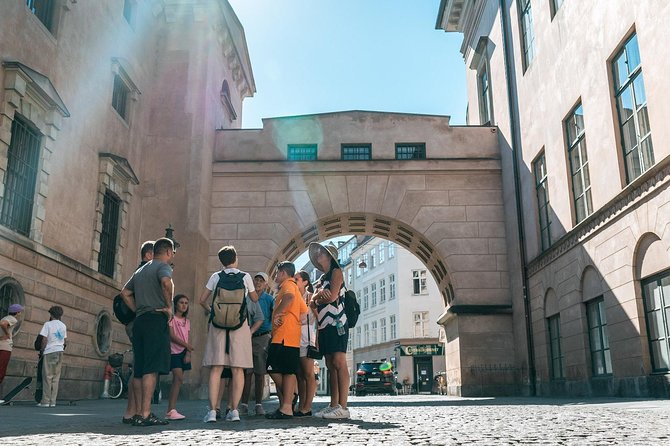
Strøget is Copenhagen’s main pedestrian street and one of the longest in Europe, stretching about 1.11 kilometers. It runs from the City Hall area toward Kongens Nytorv near Nyhavn and carries a large mix of shops.
The street is best understood as both a shopping route and a navigation tool. Your guide can help you see how the historic center connects with the newer retail side of the city, while you note places you may want to revisit for shopping, food, or further walking.
The tour finishes at Amagertorv, close to Christiansborg Palace and Nyhavn. This is a strong endpoint because you are not left at an isolated spot. You can continue into the palace area, walk toward the harbor, or use the central location to plan the rest of your day.
The ten-minute listing for Strøget should not be read as a complete tour of the street. It is a final orientation point. After the guide leaves, you can continue along the pedestrian route at your own pace.
What the two-hour format really gives you
Eight stops at roughly ten minutes each add up to about 80 minutes. The remaining time covers walking between sites, explanations, questions, and pauses for photographs. That makes the advertised two-hour duration believable, but it also means the tour is an overview rather than a slow architectural walk.
I like this format for your first day in Copenhagen. You get enough context to recognize the city’s main central areas, then you can choose which places deserve a longer return visit.
The pace favors active visitors. You will walk on cobblestones, spend most of the time outdoors, and need clothing suitable for the weather. The tour operates in all weather conditions, so comfortable shoes and a practical jacket are sensible choices.
Most people can participate, and service animals are allowed. The route is near public transportation, but the available details do not specify the number of stairs, the exact walking distance, or a step-free route. If mobility is a concern, ask the provider before booking.
Private guiding, group size, and guide style
Only your group participates, which is the central reason to choose this experience over a standard shared walk. You can ask questions without waiting for a large group, pause for photos, and request more or less detail when the route allows.
The published feedback gives the strongest praise to the guides. One family described learning a great deal about the city and appreciated a friendly, highly informed guide. Another short review praised the informative explanations and the fun of photographing statues.
The provider’s responses are signed by Natalie and Chris, but the supplied information does not identify which guide leads a particular departure. I would not book expecting one named person unless the company confirms that directly.
The 4.8 rating from five reviews is encouraging, though the sample is small. The consistent themes are clear explanations, a pleasant manner, coverage of important central sites, and a family-friendly tone.
Is $352.19 per person a fair price?
The price is high for a two-hour walk, especially since most stops have no admission charge and the Round Tower ticket is extra. You are paying mainly for privacy, a professional guide, and the ability to shape the experience around your own group.
That can be worthwhile for a family, a couple wanting focused attention, or friends who prefer not to join a large public walk. Group discounts may improve the calculation, so check how the price changes with your party size.
The value is weaker if you only want a low-cost introduction or plan to visit each landmark independently. Copenhagen’s center is compact, and you can see many exteriors without paying for a guide.
I would judge the price by how much you value context. A guide can explain the connection between Gammeltorv and Nytorv, place the cathedral in Denmark’s royal story, and give you a useful route from City Hall to Nyhavn. If those details will shape the rest of your visit, the private format has a clearer purpose.
Who should book this Copenhagen walk?
I would recommend it to first-time visitors who want a quick orientation, families who prefer a private pace, and active people who enjoy learning outdoors. It also suits anyone arriving in Copenhagen with only a short window and wanting to see several central landmarks without arranging separate visits.
You should think twice if you dislike walking, need long indoor stops, or want detailed entry visits at the cathedral and Round Tower. The route is also less appealing if you are seeking a food tour, museum visit, or harbor cruise, since none of those are included.
Book it early in your stay if possible. Finishing near Christiansborg Palace and Nyhavn gives you immediate options for the next part of the day, and the guide’s orientation can help you avoid wasting time later.
Free cancellation is available if you cancel at least 24 hours before the start time. Changes or cancellations made inside that window are not accepted for a refund.
Should you book the Copenhagen Old Town Private Walking Tour?
Book this tour if you want personal guiding and a broad historical introduction in a short period. The route covers the city’s essential central landmarks, the guide feedback is consistently positive, and the final location near Christiansborg Palace and Nyhavn is especially useful.
Skip it if the $352.19 price feels too steep for two hours or if you prefer to explore at your own pace. For the right group, though, this is a lively and practical way to get oriented, with enough history to make Copenhagen’s old streets mean more than they did when you first arrived.
FAQ
How long is the Copenhagen Old Town Private Walking Tour?
The tour lasts approximately two hours.
What language is the tour offered in?
The tour is offered in English.
Is this a private tour?
Yes. Only your group participates in the activity.
Where does the tour start?
The tour starts at Vesterbrogade 4B, 1620 København, Denmark.
Where does the tour end?
The tour ends at Amagertorv in Copenhagen, close to Christiansborg Palace and Nyhavn.
Is admission included at the Round Tower?
No. Admission to the Round Tower is not included.
Are most of the stops free to visit?
Yes. The listed stops have free admission, except that Round Tower admission is not included.
Is the tour suitable for active visitors?
Yes. It is a walking tour, and part of the route uses cobblestone areas.
Can I cancel for a full refund?
Yes, if you cancel at least 24 hours before the experience start time. Cancellations made less than 24 hours in advance are not refunded.
Just added around Copenhagen
- Copenhagen: Express Walk with a Local in 60 minutes★ 4.6 · 3 reviews
- Copenhagen: 3 Hour Extended Grand E-Bike Guided Tour★ 4.6 · 3 reviews
- The Forgotten Giants Private Tour★ 5.0 · 3 reviews
- Copenhagen: Self Guided Scavenger Hunt and Tour★ 4.0 · 3 reviews
- Castles of Kronborg and Frederiksborg from Copenhagen by Car★ 4.5 · 3 reviews
- Departure by Luxury Vehicule Copenhagen to Copenhagen airport CPH★ 5.0 · 3 reviews
- Private Transfer Copenhagen Airport CPH to Copenhagen by Sedan★ 4.5 · 3 reviews
- Copenhagen: Evening Gourmet Walk with Food & Drinks Tasting★ 5.0 · 3 reviews
Copenhagen Tours, compared.

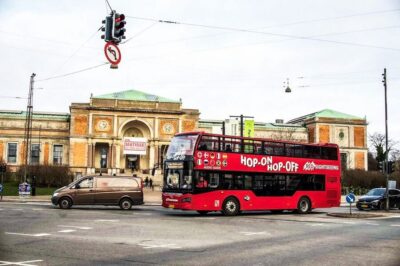
Hop-On Hop-Off Bus Tour with Boat Tour Option
Read our review →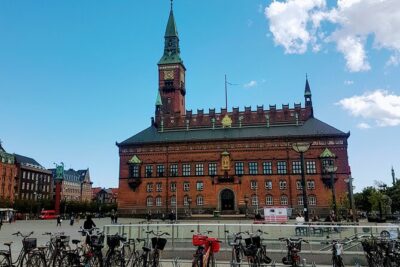

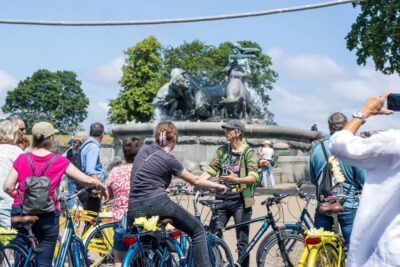
Highlights 3 Hour Bike Tour with a Local Guide
Read our review →
Hamlet and Sweden Tour – Two Countries in one day !
Read our review →
Browse the lists this tour appears in