
Reviewed · CANAL & HARBOUR CRUISES
Walk & Canal Tour: Copenhagen Highlights + Changing of the Guards
The clever part of this Copenhagen tour is its finish: you cross the city on foot, see the harbor from a public electric ferry, and arrive at Amalienborg Palace in time for the Changing of the Guards on selected morning departures. It gives you both a useful city orientation and a classic royal ceremony.
I like the small group, capped at 15 people, and the way the route links major sights with local stories rather than treating Copenhagen as a parade of photo stops. I also like the ferry ride, which offers views of the Opera House, Nyhavn, and waterfront buildings without adding another separate boat trip to your plans.
The main consideration is the amount of walking. Expect about 5 kilometers when the ferry runs, or 6 to 7 kilometers if the harbor bus is full or canceled. The ferry cannot be reserved, so the water portion is not guaranteed, especially on weekends.
Key points to know before booking
- A practical first-day orientation: The route connects Central Station, Tivoli, Christiansborg, the harbor, The Little Mermaid, Kastellet, and Amalienborg.
- A public ferry, not a private cruise: The electric harbor bus is part of Copenhagen’s regular transport system, so it can be full or canceled.
- Small groups capped at 15: This makes it easier to hear guides such as Michael, Maybritt, Mia, Signe, Eric, or Otto and ask questions.
- Morning tours can end with the full ceremony: The 9:00 AM and 9:30 AM departures aim to reach Amalienborg for the noon guard change.
- The route covers serious ground: Comfortable shoes and weather-ready clothing matter more here than fancy sightseeing gear.
- A strong value for a compact visit: At $77.39 per person, you get a three-hour guided walk, a ferry segment when available, and a broad introduction to Copenhagen.
Why this route works as a first look at Copenhagen
Copenhagen is easy to walk, but its sights are spread across several districts. This tour solves that problem by creating a line through the city, beginning at Central Station and ending beside the royal palaces. You see the center, the harbor, and the eastern waterfront in one outing.
I think the route is especially useful if you have just arrived and want to understand where things are. The walk helps connect places you might otherwise visit separately, while the guide fills in the political, royal, artistic, and everyday background.
The experience is offered in English and runs for about three hours. It is not an inside tour of every monument. Instead, you usually stop outside, hear the story, take in the building, and keep moving. That makes it efficient, but you should not book it expecting long museum visits or palace interiors.
The group size is limited to 15. That is small enough for a guide to keep the walk together and respond to questions. Guides named in the feedback include Michael, Maybritt, Mia, Signe, Eric, Otto, Andreas, Line, Amalie, and Andy. Individual styles will differ, but the strongest pattern is clear: the tour depends heavily on guides who explain Denmark through stories, myths, politics, and useful local context.
More canal and harbour cruises:
- Copenhagen: Canal Cruise with Guide
★ 4.6 · 9,115 reviews - Copenhagen Sightseeing Classic Canal Tour With Live Guide
★ 4.5 · 1,906 reviews - Social Sailing – Copenhagen Canal Tour – Captain’s Favorite
★ 5.0 · 1,610 reviews
Starting under the clock at Central Station
The meeting point is inside Copenhagen Central Station, in the main hall beneath the large round analog clock beside the 7-Eleven. There are two 7-Elevens in the station, so use the clock as your main landmark and choose the one next to it.
This is a sensible starting point. The station is central, familiar, and connected to the city’s transport network. Your guide begins with the station’s role in Copenhagen, then uses it as a doorway into the city rather than rushing straight to the famous monuments.
The first stop is short, only about five minutes, so arrive ready to leave. The precise meeting address is listed as Bernstorffsgade near København H, but the instructions point you inside the station hall. Follow the clock and 7-Eleven directions.
Tivoli and the Glyptotek, two quick cultural clues
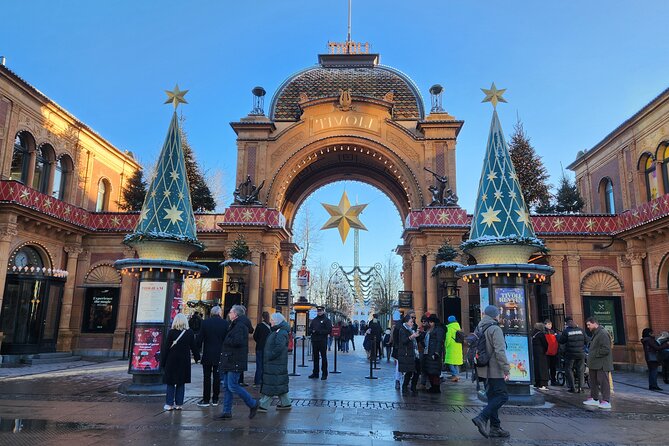
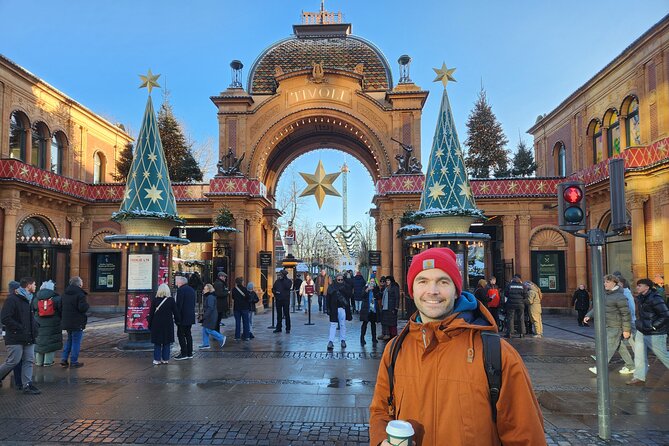
The walk soon reaches Tivoli Gardens. You stop outside the entrance, not inside the amusement park, and admission is not included. The guide explains Tivoli’s long history, its decorative style, and its connection with Danish hygge, the national fondness for warmth, comfort, and shared pleasure.
The Walt Disney connection adds a useful bit of context. Tivoli helped inspire Disney after his visit in the 1950s, and the comparison helps explain why this old amusement park matters beyond its rides. It is part entertainment venue, part garden, part cultural institution.
Do not expect time to enter Tivoli during this tour. The stop lasts around five minutes and works best as an introduction. If the park interests you, return later with a separate ticket.
Nearby, the Ny Carlsberg Glyptotek receives another short outside stop. Founded by Carl Jacobsen of Carlsberg fame, the museum is known for its art collections, elegant architecture, and glass-domed winter garden. You can admire the façade and dome, but museum admission is not included.
These early stops are brief, yet they show two sides of Copenhagen: playful design at Tivoli and private wealth turned into public art at the Glyptotek. They also set expectations for the rest of the walk. You will see many important places, but the tour favors range over long visits.
Christiansborg, where royal power meets Danish democracy
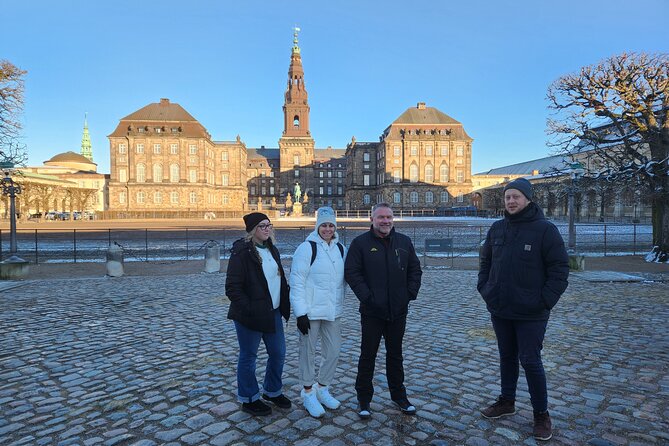
Christiansborg Palace is one of the more substantial stops, lasting about 10 minutes. The site has served kings and queens, and today it contains the Danish Parliament, the Supreme Court, and royal reception rooms.
The guide explains that the palace has burned down three times and been rebuilt in different styles. That fact gives the building more meaning than a quick photograph can. Christiansborg is not just an old palace. It represents Denmark’s shift from royal rule toward a modern constitutional democracy.
I find this one of the most useful stops for understanding Copenhagen. The city’s royal identity is visible everywhere, but Denmark is also a parliamentary democracy with a strong public role in government. At Christiansborg, those two parts of national life occupy the same address.
Admission to the palace is not included, and the tour does not provide a full interior visit. If the Royal Reception Rooms, Parliament, or palace ruins are high on your list, plan a return visit.
More walking tours in Copenhagen:
- Private Walking Grand Tour of Copenhagen
★ 5.0 · 3,953 reviews - Copenhagen Highlights Walking Tour
★ 5.0 · 2,324 reviews - Politically Incorrect Private Highlights Walking Tour
★ 5.0 · 1,244 reviews - Copenhagen: Group Walking Tour – City Highlights – 2 Hours
★ 4.7 · 1,088 reviews
The Black Diamond and the change from street to water
At the Royal Danish Library, known as the Black Diamond, the tour pauses beside one of Copenhagen’s boldest modern buildings. Its dark granite façade reflects the harbor, while inside, the library hosts study spaces, cultural events, concerts, and cafés.
This is an effective transition point. The earlier sights speak to monarchy, art, and older Copenhagen. The Black Diamond brings you into the city’s modern design culture, then the route shifts to the water.
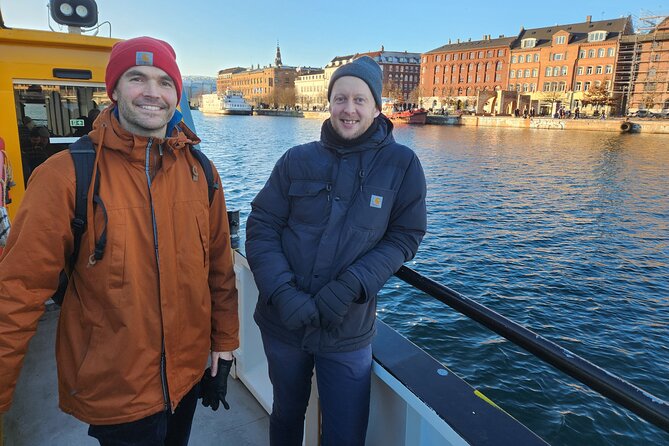
The next section uses the electric harbor ferry, also called the harbor bus. It is part of the public transport network rather than a private sightseeing boat. That distinction matters: you get a more local ride, but you cannot reserve a seat.
On weekdays, the ferry may be quiet. On weekends, it can be full, and the service may also be canceled. If the boat is unavailable, the guide follows a scenic walking route through the same general waterfront area. The total distance then rises from about 5 kilometers to roughly 6 or 7 kilometers.
This is the tour’s biggest uncertainty, but the operator has a workable alternative. Still, if the ferry is the main reason you are booking, treat it as a valuable possibility rather than a promise.
Copenhagen from the harbor: Børsen, the Opera House, and Nyhavn
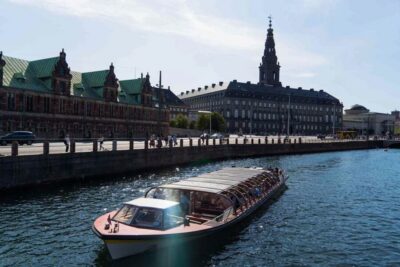
From the ferry, you get a different view of Copenhagen’s architecture. The Old Stock Exchange, or Børsen, is one of the key sights along the water. Its famous dragon-tail spire once made it instantly recognizable.
A major fire severely damaged the building in April 2024, and restoration work is underway. Seeing it from the harbor gives you a chance to understand both its former design and the city’s continuing effort to preserve it. The guide can place the building in Copenhagen’s commercial past while acknowledging its present condition.
The Royal Danish Opera House provides a sharp contrast. Designed by Henning Larsen, it has broad modern lines and a dramatic roof beside the water. From the ferry, you see how the building relates to the harbor and to Amalienborg across the channel.
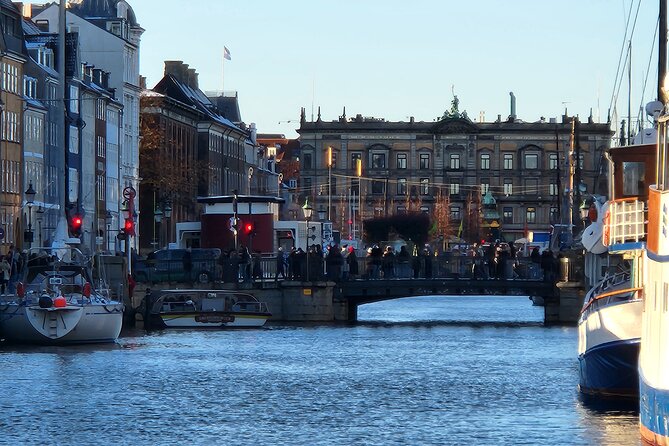
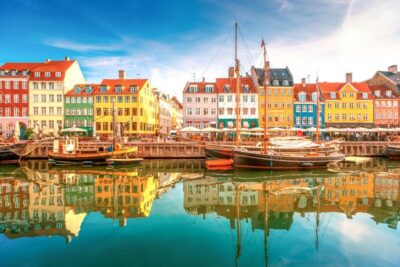
Nyhavn is the short, picture-perfect pass by. Its painted houses, old wooden ships, and waterfront cafés are best known from the quay, but the canal view gives you the classic row of façades from a new angle. The boat stop here is brief, about a minute, so save a return visit for a meal, coffee, or an unhurried walk.
The ferry section lasts around 25 minutes. It is not a full harbor cruise with a long commentary program, but it is an efficient way to rest your feet while seeing several major sights.
The Little Mermaid and Gefion’s dramatic fountain
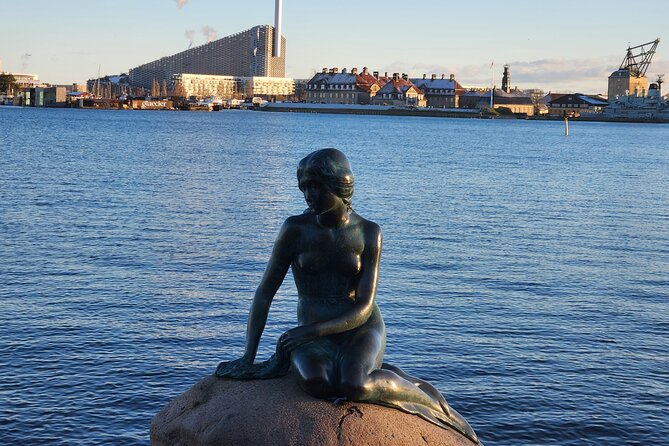
After leaving the harbor ferry, the tour continues toward The Little Mermaid. The statue is modest in size, which surprises some first-time visitors, but its importance comes from the story and the city’s connection to Hans Christian Andersen.
You get about 10 minutes here. That is enough to see the statue, hear the background, and take photographs, though the area can be crowded. The location beside the water also helps explain why the mermaid has become such a lasting symbol of Copenhagen.
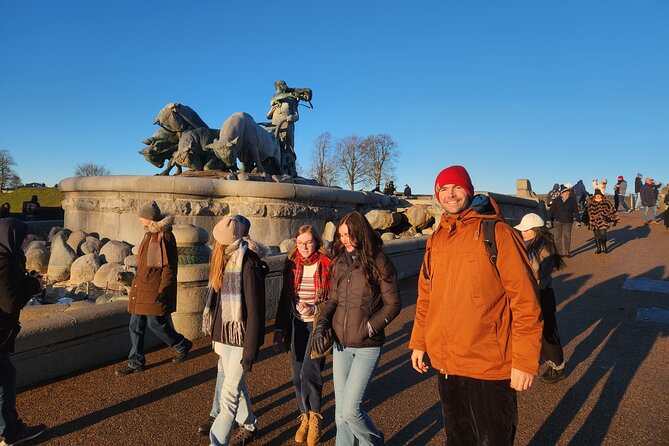
The route then reaches the Gefion Fountain. The monument shows the Norse goddess Gefion plowing the island of Zealand from Sweden with four oxen. Its large bronze figures and rushing water make it more dramatic than many visitors expect.
This stop adds mythology to the tour’s mix of politics, design, and royal tradition. It also sits in a pleasant position near the harbor, Kastellet, and the promenade leading to The Little Mermaid.
Kastellet and Churchill Park at a gentler pace
Kastellet is one of the best-preserved star fortresses in Northern Europe. Its grassy ramparts, red-brick buildings, cobbled paths, moat, and old windmill create one of Copenhagen’s most peaceful stretches.
The fortress remains an active military area, but it is also an open green space. You may see swans near the moat, and the setting feels less like a formal monument than a place used by local people. That mix of working history and ordinary city life is one reason I like this part of the route.
The visit is short, around five minutes at several points, including Kastellet and the windmill. You will walk along the ramparts rather than tour every building. The uneven paths and cobbles are manageable for many people, but this is not a good tour for anyone hoping to avoid walking or standing.
Churchill Park lies beside Kastellet. It honors Danish resistance fighters from World War II and includes memorials and a statue of Winston Churchill. The park provides a quiet pause after the more theatrical sights, with space to consider Denmark’s wartime experience and the idea of national freedom.
The Marble Church and Amalienborg’s royal square
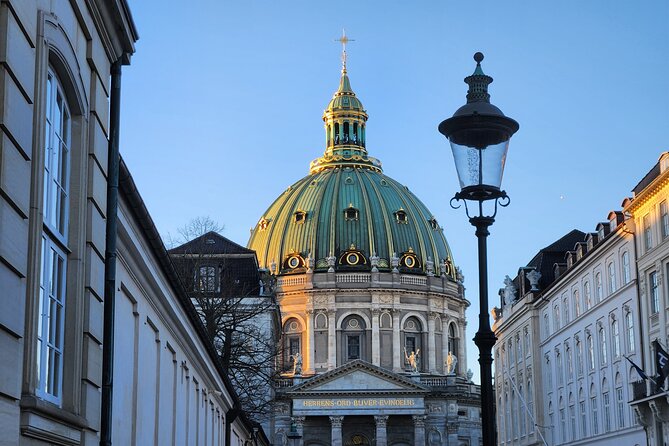
Frederik’s Church, usually called the Marble Church, is one of the city’s most impressive buildings. Its large dome was inspired by St. Peter’s Basilica in Rome, and the church took more than 150 years to complete, finally opening in 1894.
The guide uses the church to explain an ambitious building project that nearly ruined its finances before it was revived. From the surrounding square, you also get a strong view toward Amalienborg Palace, with the dome and royal district aligned in a grand urban composition.
Amalienborg consists of four matching Rococo palaces arranged around an octagonal courtyard. It has been the Danish royal family’s official residence since 1794. The tour focuses on the courtyard and exterior setting. Admission to the Amalienborg Palace Museum is not included.
The guide explains royal routines and the meaning of the guard ceremony. This is where the timing of your departure matters most.
Choosing the right departure for the guards
The 9:00 AM and 9:30 AM departures aim to finish at Amalienborg in time for the full Changing of the Guards at noon. This is the most ceremonial version, and the soldiers may be accompanied by the Royal Danish Band.
The 11:00 AM and 1:00 PM departures also end at Amalienborg, but they do not line up with the full noon event. Instead, you may see a smaller shift change as one guard detail relieves another. It is less formal, but it can offer a quieter look at the working routine around the palace.
If the ceremony is your priority, choose 9:00 or 9:30. If you mainly want the walk and city orientation, any departure can work.
The tour ends near the Amalienborg metro station, about a 10-minute walk from Kongens Nytorv and Nyhavn. That makes it easy to continue sightseeing, find lunch, or return to the harbor district.
Price, pace, and who gets the best value
At $77.39 per person, this is not the cheapest way to see Copenhagen. Its value comes from combining several services and ideas in one three-hour route: a small-group guide, a broad walking orientation, the public harbor ferry when available, and access to the Changing of the Guards on the right morning departure.
You are paying for interpretation as much as transport. Guides such as Maybritt, Michael, Mia, and Otto have been praised for clear explanations, friendly conversation, good pacing, and useful answers to questions. One guide even continued the social connection over coffee after the ceremony, although that should be treated as a personal extra, not a promised part of the tour.
I would consider the price fair for a first day in Copenhagen, especially if you have limited time or do not want to plan a route yourself. It is less attractive if you already know the city, plan to visit several museums inside, or mainly want a boat ride.
The pace has worked for older people who can manage moderate walking, but weather can change the feel of the day. Rain, snow, and cold have not stopped the tour from operating, yet you should bring waterproof layers, comfortable shoes, and clothing suitable for standing outdoors.
Should you book Walk and Canal Tour: Copenhagen Highlights plus Changing of the Guards?
Book it if you want a broad first look at Copenhagen with a guide who can connect the monarchy, Parliament, Danish myths, modern architecture, and daily city life. The combination of walking and public ferry travel keeps the experience varied, and the small group makes the storytelling more personal.
Choose an early departure if the full guard ceremony matters. Book with realistic expectations about the ferry, since seats cannot be reserved and weekend service may not work out.
Skip it if you want extensive interior visits, a slow museum day, or a guaranteed private boat cruise. For most first-time visitors who can handle 5 to 7 kilometers on foot, this is a useful and well-paced way to get your bearings before exploring Copenhagen on your own.
FAQ
How long does the Copenhagen highlights tour last?
The experience lasts about three hours.
What is the price per person?
The listed price is $77.39 per person.
Where does the tour begin?
It begins inside Copenhagen Central Station, in the main hall beneath the large round clock beside the 7-Eleven.
Where does the tour end?
It ends at Amalienborg Palace, near the metro and about a 10-minute walk from Kongens Nytorv and Nyhavn.
Is the harbor ferry ride guaranteed?
No. The electric harbor ferry has no reserved seats and may be full or canceled, particularly on weekends. The tour follows a scenic walking route if the ferry cannot be used.
How much walking is involved?
The route covers about 5 kilometers when the ferry operates. If the ferry is unavailable, the walking distance can increase to about 6 or 7 kilometers.
Which departure should I choose for the full Changing of the Guards?
Choose the 9:00 AM or 9:30 AM departure. These tours aim to arrive at Amalienborg in time for the noon ceremony, which may include the Royal Danish Band.
Are entrance tickets included?
The tour includes outside stops at places such as Tivoli Gardens, the Ny Carlsberg Glyptotek, Christiansborg Palace, and Amalienborg. Admission to these attractions is not included.
Can I cancel for a full refund?
Yes. You can cancel at least 24 hours before the local start time for a full refund. Cancellations or changes made less than 24 hours in advance are not accepted for a refund.
Just added around Copenhagen
- Copenhagen: Express Walk with a Local in 60 minutes★ 4.6 · 3 reviews
- Copenhagen: 3 Hour Extended Grand E-Bike Guided Tour★ 4.6 · 3 reviews
- The Forgotten Giants Private Tour★ 5.0 · 3 reviews
- Castles of Kronborg and Frederiksborg from Copenhagen by Car★ 4.5 · 3 reviews
- Departure by Luxury Vehicule Copenhagen to Copenhagen airport CPH★ 5.0 · 3 reviews
- Copenhagen: Self Guided Scavenger Hunt and Tour★ 4.0 · 3 reviews
- Private Transfer Copenhagen Airport CPH to Copenhagen by Sedan★ 4.5 · 3 reviews
- Copenhagen Craft BeerWalk City Center★ 4.4 · 3 reviews
Canal & Harbour Cruises, compared.

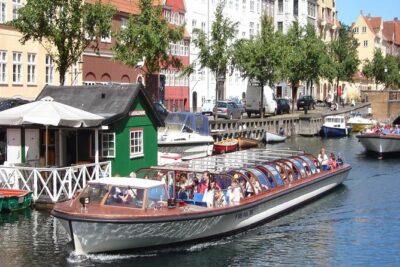
Copenhagen Sightseeing Classic Canal Tour With Live Guide
Read our review →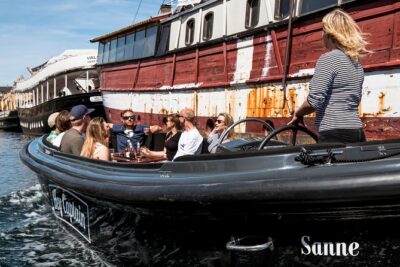
Social Sailing – Copenhagen Canal Tour – Captain’s Favorite
Read our review →

Browse the lists this tour appears in