
Reviewed · COPENHAGEN TOURS
Copenhagen Card – DISCOVER 80+ attractions and public transport
The Copenhagen Card turns Copenhagen into a large, easy-to-use sightseeing menu. One digital pass covers more than 80 attractions and public transport, from the Metro and S-trains to regional trains reaching Kronborg, Louisiana, Roskilde, and Frederiksborg Castle.
I especially like the transport coverage, since it removes the worry of buying separate tickets for every bus, train, Metro ride, and harbor bus. I also like the range of included sights: you can mix royal interiors, Viking ships, modern art, science exhibits, and a canal cruise without paying at each door.
The catch is simple: you need to plan around opening hours and reservations. Many attractions open around 10 a.m. and close in the late afternoon, several places close on Mondays, and popular spots such as the tower at Our Saviour’s Church can require advance booking.
Key points to know before buying

- 80-plus attractions included: Visit palaces, castles, museums, gardens, churches, science centers, and historic ships.
- Public transport is covered: Use Copenhagen’s buses, Metro, trains, S-trains, and harbor buses throughout the covered region.
- Five validity choices: Pick 24, 48, 72, 96, or 120 hours, starting when you first use the activated card.
- Excellent for day trips: The pass includes major sights outside central Copenhagen, including Kronborg, Louisiana, Roskilde, and Frederiksborg.
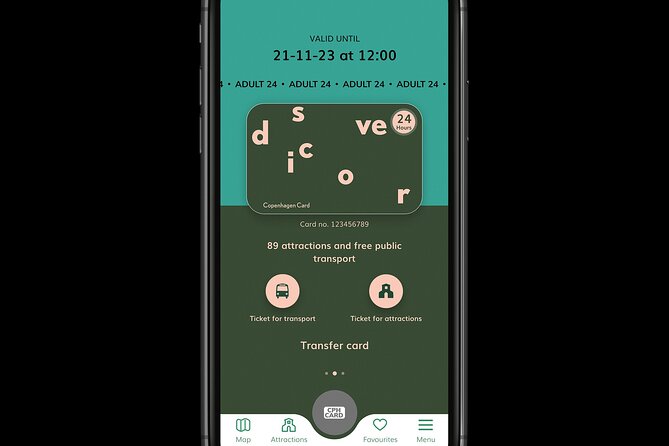
- Digital only: You redeem the barcode in the Copenhagen Card app, and there is no physical card.
- Children can be added free: Each adult can bring two children aged 3 to 11 at no charge, but the free children’s cards must be added during purchase.
How the Copenhagen Card works in real life

You choose the card length when booking: 24, 48, 72, 96, or 120 hours. The card is valid for one year before activation, so you can buy it ahead of time without starting the clock immediately.
The pass is entirely digital. Download the Copenhagen Card app, enter the barcode number supplied with your booking, and activate it when you are ready to begin sightseeing. Your validity period runs by the hour, not just by calendar day. A 48-hour card started at 1 p.m. on Sunday can remain useful until roughly 1 p.m. on Tuesday.
That hourly system is valuable for short visits. You can arrive in the afternoon, visit one or two sights, use the pass all the next day, then fit in a final attraction before the card expires. I would activate it only when you are ready to use an included attraction or covered transport.
The card is personal once activated. It is also non-refundable after activation, and there is no replacement if your phone is lost or broken. Make sure your phone is charged and that the card appears correctly in the app before you head out.
A few more Copenhagen half-days to weigh up
- Copenhagen: Canal Cruise with Guide
★ 4.6 · 9,115 reviews - Copenhagen: Hop-On Hop-Off Bus Tour with Boat Tour Option
★ 3.9 · 4,122 reviews - Private Walking Grand Tour of Copenhagen
★ 5.0 · 3,953 reviews
Is $95.96 a good price?
At $95.96 per person, this is not an automatic bargain for every Copenhagen visit. The value depends on how many paid attractions you visit and how much transport you use.
A useful target is three or four substantial admissions, plus several train or Metro trips. A palace, canal cruise, Tivoli Gardens admission, and a museum can make the 24-hour card worthwhile. Add a trip to Kronborg, Louisiana, Roskilde, or Frederiksborg, and the longer cards become easier to justify.
The strongest savings come from combining expensive attractions with transport. One practical 24-hour plan could include a canal tour, Rosenborg Castle, Christiansborg Palace, Tivoli Gardens, and several rides across the city. A 48-hour or 72-hour pass gives you more room to include a day trip without paying a separate regional fare.
Do your own arithmetic before buying. The card’s app and website include a savings calculator, and the attractions list lets you check what is open. This matters because a 24-hour pass can be poor value if you visit only two low-cost sights or find one of your chosen attractions closed.
Children aged 3 to 11 can be added free, with a limit of two children per adult. Since children under 16 may already have free or reduced admission at some places, compare the transport cost and attraction rules for your family before adding cards automatically.
Royal Copenhagen in four grand stops
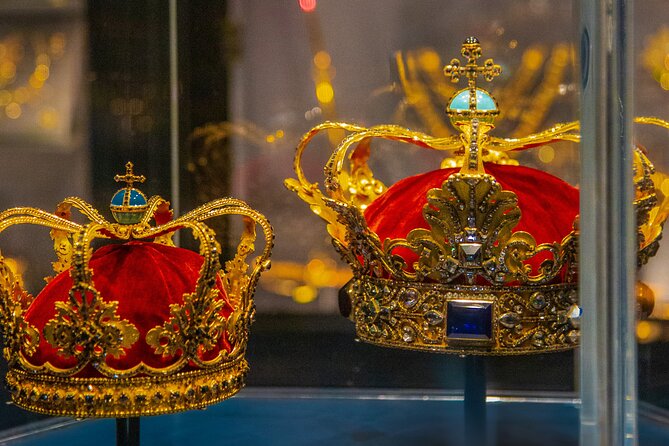
Rosenborg Castle is one of the easiest major sights to pair with other central attractions. Built by King Christian IV in the 1600s, it contains lavish royal rooms and the Danish Crown Jewels. Allow about an hour, though the ornate interiors can easily hold your attention longer.
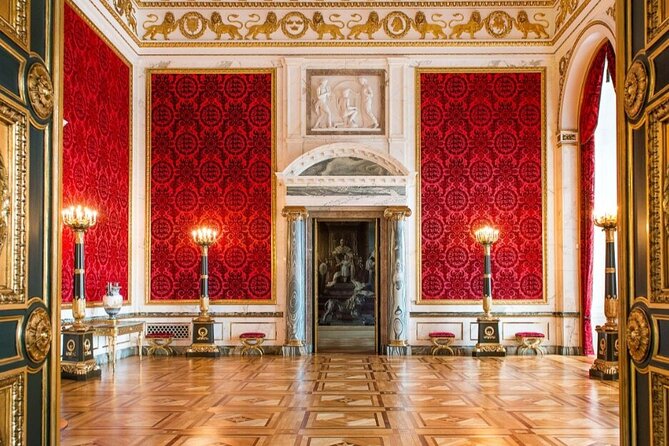
Christiansborg Palace introduces you to the official seat of the Danish monarch. Its rooms offer a different royal experience from Rosenborg, with a more formal government setting. Check reservation requirements during busy periods, since timed entry may be needed.
At Amalienborg Palace Museum, you see recreated royal interiors and learn how the royal family’s home has been arranged. It is a good choice for understanding the living side of Danish monarchy, especially after visiting the older rooms at Rosenborg.
Frederiksborg Castle requires a trip to Hillerød, but the journey is part of the card’s appeal. Christian IV built this Renaissance castle in the early 1600s, and the Museum of National History now fills its decorated rooms with portraits, furniture, history paintings, and decorative art from the late Middle Ages to today.
These four royal sites are not interchangeable. Rosenborg is compact and treasure-focused. Christiansborg feels official. Amalienborg is tied to the present royal family. Frederiksborg gives you the grandest setting and the broadest historical collection.
Tivoli Gardens and the Copenhagen canal boat
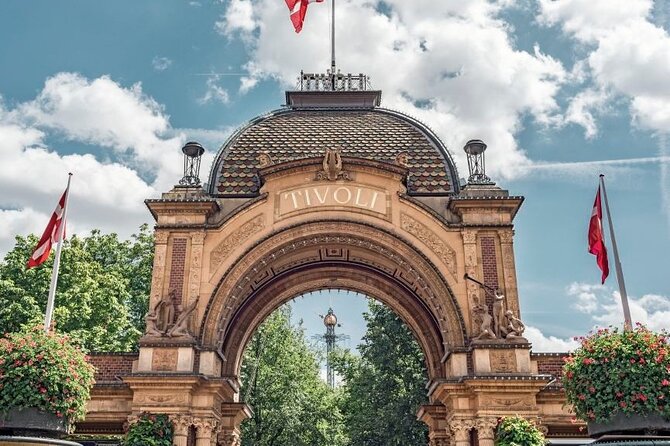
Tivoli Gardens is one of Europe’s oldest amusement parks and one of Copenhagen’s signature sights. The card includes admission, which can make a major difference in your calculation. The information provided does not state that rides are included, so check the current park terms if you plan to use attractions beyond the entrance.
Give Tivoli enough time to feel like more than a quick photo stop. A one-hour visit may cover the grounds at a brisk pace, but weather and park schedules matter. One useful warning from the supplied experience details is that Tivoli can be closed on a day you might expect it to be open, so check the schedule before activating your card around it.
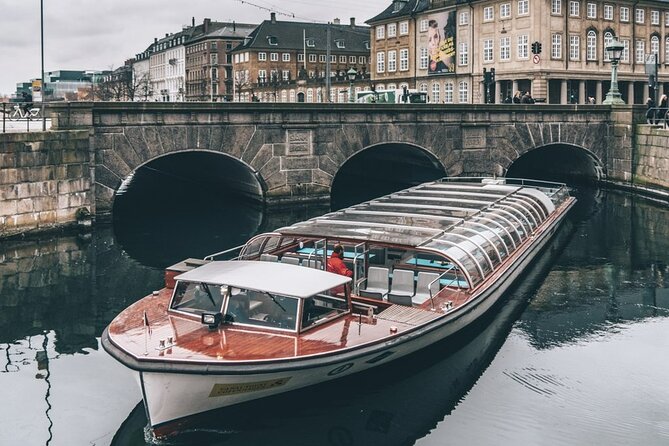
The Stromma canal tour is one of the easiest wins with this pass. The boat gives you a different view of Copenhagen’s waterfront, bridges, historic buildings, and modern districts, while saving your feet for the museums and palaces. It is also a useful choice on a rainy or tiring day, though boat schedules and capacity can affect your timing.
The harbor bus is another practical benefit. It is public transport rather than a sightseeing cruise, but it can be a pleasant way to move around the waterfront while keeping your transport costs covered.
Same neighbourhood, a completely different afternoon:
- From Copenhagen: Lund and Malmö 2-Country Tour
★ 4.7 · 2,772 reviews - Copenhagen Highlights Walking Tour
★ 5.0 · 2,324 reviews - Copenhagen: Highlights 3 Hour Bike Tour with a Local Guide
★ 4.8 · 2,312 reviews - Hamlet and Sweden Tour – Two Countries in one day !
★ 5.0 · 2,223 reviews
Churches, museums, and central culture
Our Saviour’s Church is free to enter for everyone, but the famous tower climb is the reason many people visit. The serpentine spire was completed in 1752, and the climb involves about 400 steps. The tower requires advance booking, and busy periods can produce long waits. If this is a priority, reserve a time before building your day around it.
The National Museum of Denmark is the place to build a broad picture of Danish history. It works well early in a visit because it gives context to the castles, churches, Viking sites, and city streets you will see later.
The National Gallery of Denmark, known as SMK, covers seven centuries of Danish and international art. Its collection ranges from Renaissance masters to modern and contemporary artists. It is near Nørreport station, making it easy to combine with central sightseeing and public transport.
Ny Carlsberg Glyptotek brings together ancient Egyptian, Greek, Roman, and Etruscan objects with Danish and French art from the 19th century. The combination is unusual enough to merit a place on your list, particularly if you want art and archaeology in one visit.
The Museum of Copenhagen follows the capital from the Viking Age through fires, plague, building booms, wartime destruction, and Christiania. An interactive city model helps you understand Copenhagen’s growth before you explore more neighborhoods in person.
Thorvaldsen’s Museum is smaller and more focused. Its colorful rooms and bold architecture house the work of Danish sculptor Bertel Thorvaldsen. You can see it in about 45 minutes, making it useful between larger attractions.
Modern art, design, and unusual museums
Louisiana Museum of Modern Art is about 40 kilometers north of central Copenhagen in Humlebæk. The trip takes time, but the setting is a major part of the experience. Art, architecture, a sculpture park, and views across the Sound come together in a way that feels very different from an indoor city museum.
The collection includes major modern art, with permanent highlights such as the Giacometti Hall and Jorn Room, along with changing exhibitions. Plan this as a half-day outing rather than trying to squeeze it between two central Copenhagen stops.
Ordrupgaard, about 10 kilometers north of the city, offers French Impressionism by artists such as Monet, Degas, and Gauguin, along with Danish art centered on Vilhelm Hammershøi and his contemporaries. Its park also contains art and architecture, giving you another reason to allow a relaxed hour or more.
The Hirschsprung Collection focuses on Danish art from the Golden Age through the Skagen painters and the Modern Breakthrough. Works by Eckersberg, Købke, Krøyer, and Hammershøi give you a more concentrated look at Danish painting than the larger national gallery.
Designmuseum Danmark explains why Danish design has such a strong international reputation. You will find furniture, glass, ceramics, fashion, textiles, posters, and work by Finn Juhl, Arne Jacobsen, Poul Kjærholm, Verner Panton, and Hans Wegner.
At Danish Architecture Center, exhibitions and events in the BLOX building explore historic buildings, new Danish architecture, and design. Copenhagen Contemporary takes a different approach, using a former welding hall for large installation works, performances, and video art. These two stops are best for visitors who enjoy seeing how Copenhagen thinks about space, materials, and public life.
Castles and Viking sites beyond the city
Kronborg Castle in Elsinore is one of the best reasons to choose the card for more than one day. Built between 1574 and 1585 at the entrance to the Øresund, it is a powerful Renaissance fortress with a famous literary connection to Shakespeare’s Hamlet.
The card information lists Kronborg as included, but do not confuse it with nearby attractions that may have changed their participation. One supplied account specifically notes that the Round Tower was no longer included after April 1, 2024. Check the current app before counting any attraction toward your savings.
Roskilde offers two very different major sights. Roskilde Cathedral is a UNESCO World Heritage site and the burial place of 40 Danish kings and queens. Its vaults, chapels, and crypts make it an important stop for anyone interested in Danish monarchy and church architecture.
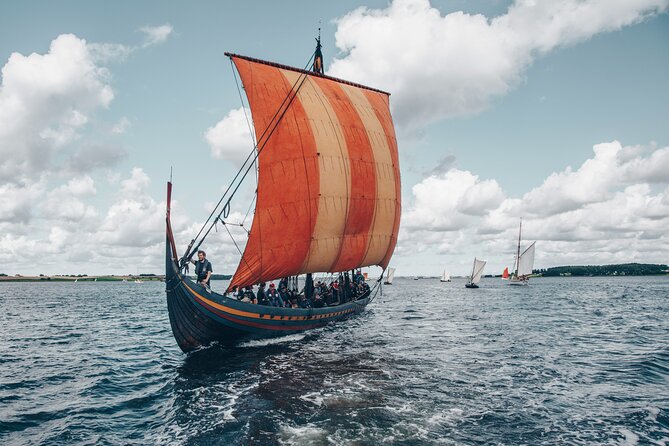
The Viking Ship Museum sits by Roskilde Fjord and displays five original 1,000-year-old ships from the Skuldelev finds. Reconstructions, boatbuilding workshops, maritime crafts, and seasonal sailing activities add a hands-on side. Allow more than an hour if you want time for the waterfront and working areas.
Lejre Land of Legends is an open-air museum where reconstructed Stone Age, Iron Age, and Viking settlements bring early Danish life closer to the ground. Its reconstructed Viking royal hall is a major feature. This is a strong family choice, but the two-hour visit and transport time mean it belongs in a full-day plan.
Science, music, war, and life underground
Experimentarium in Hellerup is a hands-on science center designed for all ages and nationalities. You can expect interactive exhibits rather than quiet display cases, making it a useful break from palaces and art museums, especially with children.
The Planetarium offers access to its exhibitions and one film in the Dome. Its tilted dome, 8K visualization, and advanced sound system make this a good rainy-day choice or an evening anchor if film times suit your schedule.
Ragnarock in Roskilde covers pop, rock, and youth culture from 1950s rock and roll through 1980s pop and current music. It pairs naturally with a Roskilde day, though you should check how much time remains after the cathedral and Viking Ship Museum.
The Danish War Museum traces Danish military history from the 1500s to today. Its collection includes armor, samurai swords, ship models, and modern drones, with attention to how wars shaped Denmark’s borders and culture.
At the Museum of Danish Resistance, you go underground into the story of occupation-era resistance. The exhibits use sabotage, illegal newspapers, codebreaking, and intercepted calls to place you inside the choices people faced during World War II.
Cisternerne is another underground experience, but its subject is contemporary art. The former water reservoir is cold, dark, humid, and lightly lit, creating a setting that can feel more like a cavern than a normal gallery. It is a short visit, yet one of the more unusual stops on the pass.
Medical Museion occupies a former Royal Academy for Surgeons dating from 1787. Exhibits examine the body, disease, and medical treatment from antiquity to the genomic age. It is not designed for delicate sensibilities, so choose it for its subject matter, not as a casual filler stop.
Ships, cars, books, and contemporary Copenhagen
The submarine Sælen is a compact but memorable museum visit. Commissioned into the Royal Danish Navy in 1990, it was the final submarine in Danish service and the only Danish submarine to take part in hostilities.
At Holmen, the frigate Peder Skram and fast attack craft Sehested explain Denmark’s naval role during the Cold War. Peder Skram used a gas turbine and diesel engine combination, while Sehested served with Denmark’s NATO-era coastal defense fleet.
Classic Car House treats 20th-century cars as industrial and cultural objects. You can focus on design, engineering, craftsmanship, and the way cars reflect changing ideas about modern life.
The Black Diamond, home to the Royal Danish Library’s cultural center, presents exhibitions linked to literature, photography, cultural heritage, and Danish figures such as Søren Kierkegaard. The building itself sits on Copenhagen Harbour and offers a strong contrast to the city’s older museums.
Nikolaj Kunsthal uses a former church, one of Copenhagen’s oldest, for Danish and international contemporary art. Kunsthal Charlottenborg offers another major contemporary art setting, with exhibitions, talks, performances, concerts, and film programs. Check schedules carefully because special events can shape the best time to visit.
Home of Carlsberg tells the story of the brewery from its beginning in 1847. You must pre-book this visit, and your card must already be active because the card number is needed during booking.
Planning a 24-hour or multi-day visit
For one day, avoid trying to cross the entire region. A sensible central plan could combine Rosenborg Castle, a canal cruise, one palace, Tivoli Gardens, and covered public transport. Add Our Saviour’s Church only if you secure the tower time in advance.
For 48 hours, use one day for central Copenhagen and another for a regional outing. Kronborg is the obvious choice for castle lovers. Louisiana is better for modern art, while Roskilde suits Viking history, the cathedral, and the museum combination.
With 72 hours or more, you can slow down. Add Frederiksborg, Ordrupgaard, Experimentarium, the National Gallery, or several smaller museums. The 96-hour and 120-hour cards suit visitors who want day trips and do not want to watch every individual fare.
Keep Monday in mind. Many attractions are closed that day, so use the app or website filters before choosing your activation time. The best pass strategy is not to collect sights at random. Group central sites together, reserve timed attractions first, and use the regional trains on a day when you can visit one area properly.
Who should buy it?
I would buy the Copenhagen Card if you plan to visit at least three major paid sights, use public transport often, or include one or more regional day trips. Families can gain extra value from the free child cards, while older visitors may appreciate the freedom to use buses, trains, Metro, and harbor transport without repeated ticket decisions.
I would skip it for a slow one-day visit built around strolling, free churches, and one museum. It may also disappoint you if Tivoli, the church tower, or another top choice is closed or fully booked. Before purchase, list your likely attractions, check opening days, confirm reservations, and compare the total with the card price.
FAQ
How long can I use the Copenhagen Card?
You can choose a 24, 48, 72, 96, or 120-hour card. The validity period begins when you first activate and use it.
Is the Copenhagen Card physical or digital?
It is 100 percent digital. You must download the Copenhagen Card app and enter the barcode number supplied with your booking.
Does the card include public transport?
Yes. It includes public transport throughout the Copenhagen region, including buses, trains, Metro services, S-trains, and covered harbor transport.
Are children included?
Each adult can bring two children aged 3 to 11 free of charge. You must add the free children’s cards to your cart when buying the adult card.
Is Tivoli Gardens included?
Yes. Admission to Tivoli Gardens is included. The provided information does not confirm that rides are included, so check the current conditions if you plan to use them.
Is Our Saviour’s Church included?
Entrance to the church is free for everyone. The tower climb involves about 400 steps and requires advance booking during the stated booking process.
Does the card include Kronborg Castle and Louisiana Museum?
Yes. Both Kronborg Castle in Elsinore and Louisiana Museum of Modern Art in Humlebæk are included attractions.
Can I cancel the card?
You can receive a full refund if you cancel at least 24 hours before the experience start time. Cancellations within 24 hours are not refunded, and an activated card is personal and non-refundable.
Just added around Copenhagen
- Copenhagen: Express Walk with a Local in 60 minutes★ 4.6 · 3 reviews
- Copenhagen: 3 Hour Extended Grand E-Bike Guided Tour★ 4.6 · 3 reviews
- The Forgotten Giants Private Tour★ 5.0 · 3 reviews
- Castles of Kronborg and Frederiksborg from Copenhagen by Car★ 4.5 · 3 reviews
- Departure by Luxury Vehicule Copenhagen to Copenhagen airport CPH★ 5.0 · 3 reviews
- Copenhagen: Self Guided Scavenger Hunt and Tour★ 4.0 · 3 reviews
- Private Transfer Copenhagen Airport CPH to Copenhagen by Sedan★ 4.5 · 3 reviews
- Copenhagen: Evening Gourmet Walk with Food & Drinks Tasting★ 5.0 · 3 reviews
Copenhagen Tours, compared.

Hop-On Hop-Off Bus Tour with Boat Tour Option
Read our review →

Highlights 3 Hour Bike Tour with a Local Guide
Read our review →
Hamlet and Sweden Tour – Two Countries in one day !
Read our review →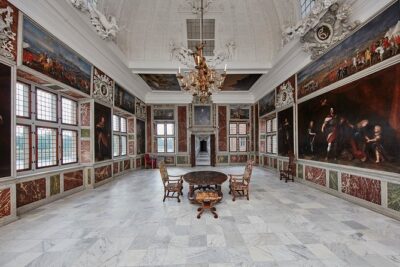
Browse the lists this tour appears in