
Reviewed · COPENHAGEN TOURS
Brew and Brunch Mastering the Perfect Espresso with Breakfast
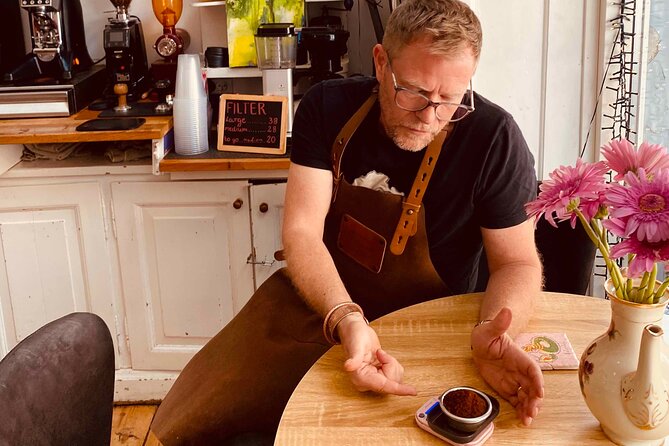
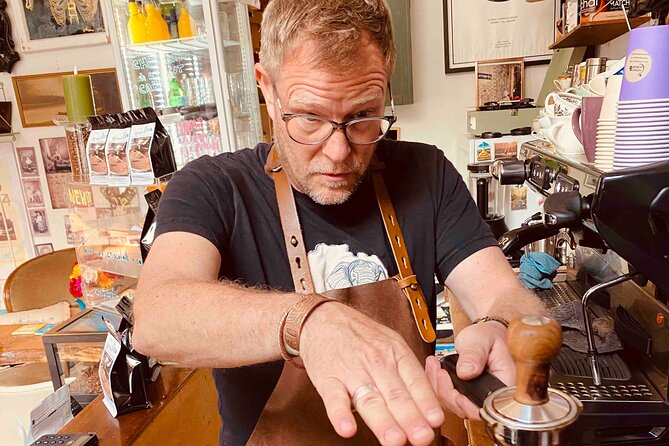
The best part of this Copenhagen experience is that you learn espresso in a real neighborhood cafe, not a staged cooking studio. Mark, the owner, is an experienced roaster and SCA-certified barista, and the 11:30 a.m. class runs during normal cafe hours. You may chat with regulars, and you might even prepare an espresso for a customer.
I like the hands-on finish, where each person makes an espresso, and the simple breakfast of egg, croissant, orange juice, and coffee. I also like the open format: you can ask as many coffee questions as you wish, with instruction in English, Portuguese, German, or French. The main consideration is that the class takes place during opening hours, so it is less private and polished than a dedicated workshop.
Key points to know before booking
- A real local cafe: The class takes place at Holmbladsgade 14, in the owner’s working neighborhood cafe.
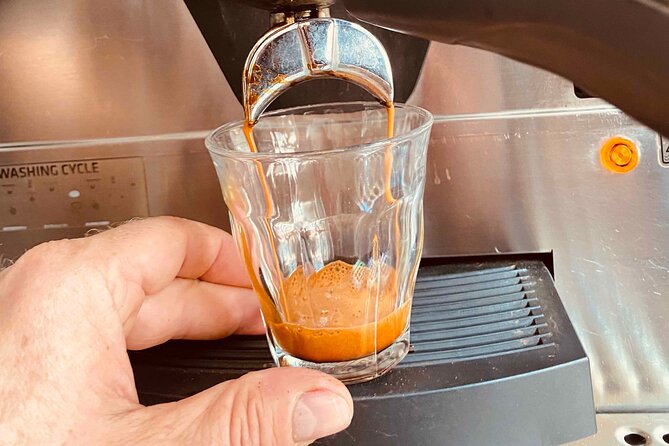
- You make the final espresso: The lesson ends with each participant preparing a shot, using the steps covered in class.
- Breakfast is included: Expect a boiled egg, croissant, fresh orange juice, and a coffee of your choice.
- Small group size: The class accepts no more than 10 people, which leaves room for questions and personal guidance.
- A social morning: The 11:30 a.m. session happens during cafe opening hours, so regular customers may be part of the scene.
Learning espresso in a working Copenhagen cafe
This is a coffee class with a useful difference: it happens in the cafe where the host actually works. That setting gives the morning a local feel and lets you see espresso as part of daily cafe life, rather than as a staged demonstration built only for tourists.
You meet Mark at Holmbladsgade 14 in Copenhagen. He owns the cafe and works as a roaster and barista. His SCA certification points to formal training, but the tone of the class is casual. You are encouraged to ask questions, and the purpose is to make the process clear enough for both a commercial machine and a home espresso machine.
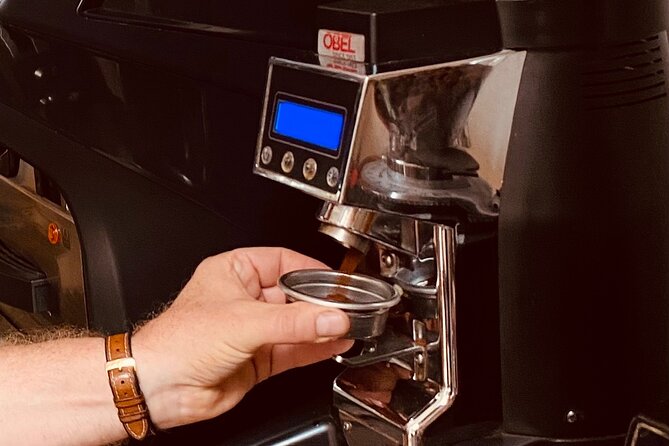
That practical focus matters. Espresso can look simple from the outside: grind coffee, lock in the portafilter, and press a button. In practice, the result depends on a chain of small steps. The class explains why each step matters and why skipping one can lead to a weak, bitter, thin, or uneven cup.
I would choose this activity for someone who wants more than a tasting. You will not just hear about coffee origins or sample several drinks. You will learn a repeatable method, then use it yourself before the class ends.
More baking and pastry classes:
- Copenhagen: Best of Danish Pastry Tasting Tour
★ 4.8 · 414 reviews - The Art of Baking Danish Pastry
★ 5.0 · 276 reviews - Copenhagen: Danish Pastry Crawl with Private Guide
★ 4.9 · 46 reviews
What happens during the 90-minute morning
The experience lasts about one hour and 30 minutes. The schedule is long enough to cover the espresso process and enjoy breakfast, but short enough to fit neatly into a Copenhagen sightseeing day.
The class begins with the coffee lesson and breakfast together. Your meal includes a coffee of your choice, fresh orange juice, one boiled egg, and a croissant. You can have the egg soft or hard, which is a small but helpful detail for a morning activity.
The breakfast is not meant to be a large Danish meal. Think of it as a well-timed mini-breakfast while you learn. The coffee gives you something to enjoy right away, while the egg and croissant provide enough food for a morning start without taking over the class.
As the instruction develops, Mark walks you through the steps needed for a good espresso. The supplied information does not give a minute-by-minute lesson plan, so I would not expect a fixed lecture followed by a rigid test. Instead, the class is designed around questions, explanation, and practice.
The final stage is the most useful. Each participant makes an espresso. This gives you a chance to connect the instructions with the physical work of preparing a shot. It also helps you see which parts of the process feel easy and which require more care.
At the 11:30 a.m. start time, the cafe is open to its regular customers. That can add an authentic touch, since you are watching a real cafe function around you. It also means the room is not reserved only for your group. If you prefer a quiet, private lesson, this setup may feel less ideal.
The espresso lesson is built around repeatable steps
The class centers on one clear idea: a good espresso depends on following the steps in the right order. That is valuable for a home coffee maker because it replaces guesswork with a method you can repeat.
You will learn about the full process of making espresso, with attention to the details that affect the final cup. The information provided does not list every technical topic, such as a specific dose, grind setting, or extraction time, so you should not book expecting a printed formula that works for every machine and coffee.
Instead, the benefit is learning how to think about espresso. You can carry that approach to a commercial cafe machine or a home model. If your equipment, beans, or grinder changes, the basic sequence still gives you a way to adjust.
The class also suits people who already know a fair amount about coffee. One couple who booked the session expected to know quite a bit but still found new things to learn. That is a good sign for experienced hobbyists, though the experience is likely most useful if you come with specific questions.
Bring questions about your own espresso habits if you have them. The atmosphere welcomes questions, and the class is designed to let you ask as many as you want. You can use that freedom to focus on the problems you actually face at home.
Breakfast keeps the lesson relaxed
Coffee instruction can become technical quickly. The breakfast helps keep the class from feeling like a formal certification course.
Your coffee of choice arrives with fresh orange juice, a boiled egg, and a croissant. You can choose a soft or hard egg. The meal is modest, but it fits the 90-minute format and gives the experience a pleasant brunch character.
I like that the food is tied to the timing of the class. You are not adding a separate restaurant stop before or after the lesson. The activity begins in the morning, so you can eat while learning and still have most of the day ahead for Copenhagen.
There are limits. The information does not list alternatives for dietary restrictions, so you should not assume that the breakfast can be changed. If you need a specific meal, contact the provider before booking. The listed breakfast is a boiled egg, croissant, orange juice, and coffee.
The coffee is the main event, and the food supports it. If you want a long brunch with several courses, this will feel too small. If you want a light breakfast paired with a useful skill, the format makes sense.
A few more Copenhagen half-days to weigh up
- Copenhagen: Canal Cruise with Guide
★ 4.6 · 9,115 reviews - Copenhagen: Hop-On Hop-Off Bus Tour with Boat Tour Option
★ 3.9 · 4,122 reviews - Private Walking Grand Tour of Copenhagen
★ 5.0 · 3,953 reviews - From Copenhagen: Lund and Malmö 2-Country Tour
★ 4.7 · 2,772 reviews
A small group with a social cafe setting
The maximum group size is 10 people. That is not a private lesson, but it is small enough to make questions practical. Since everyone makes an espresso at the end, a large group could make the final stage slow. The limit helps keep the hands-on portion manageable.
The atmosphere is intentionally open. Mark has been praised for being friendly, passionate, and willing to answer questions. The class is not presented as a stiff technical seminar. You can expect a direct, conversational session where the host’s interest in coffee shapes the morning.
The regular cafe customers add another layer. You may find yourself chatting with people who use the cafe as part of their normal routine. There is even a chance you could prepare an espresso for a customer. That is a memorable detail, but it also confirms that this is a working cafe rather than a private classroom.
I see this as a good match for solo visitors and couples who enjoy talking with local people. It may be less suitable for someone who wants a fully controlled setting, professional photography space, or complete silence while learning.
Mark’s approach and language options
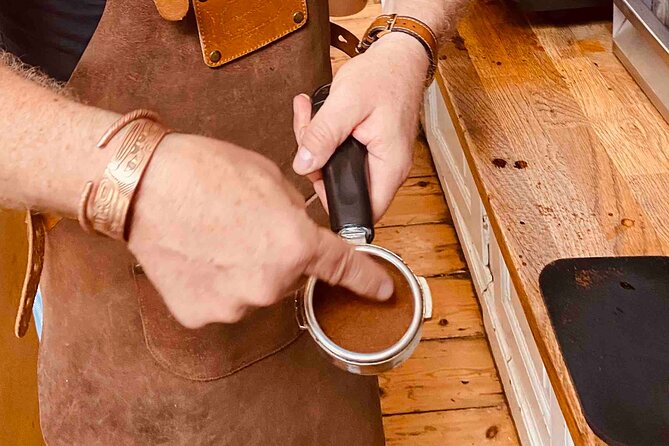
Mark leads the class and is the cafe owner. He is an experienced roaster and barista with SCA certification. That combination gives you both a connection to the cafe itself and a formal specialty coffee background.
The class can be conducted in English, Portuguese, German, or French. That is useful for mixed-language groups and for anyone who can follow technical instruction more easily in one of those languages.
The tone is personal. Mark’s responses to written feedback are warm and appreciative, which fits the friendly character described by people who attended. The strongest praise centers on his passion, his ability to answer questions, and the open atmosphere.
You should still keep the class in perspective. It is a 90-minute introduction, not a professional barista course. You will leave with a clearer picture of espresso preparation and a chance to make your own drink, but the experience does not promise a certificate or advanced professional training.
Is $38.99 a fair price?
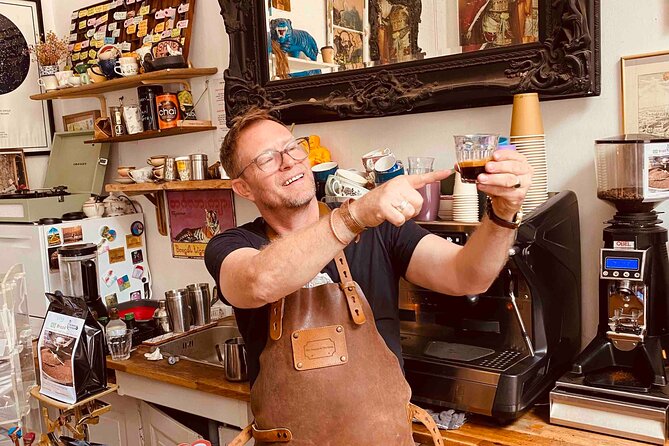
At $38.99 per person, the price covers a 90-minute class, breakfast, drinks, and hands-on espresso practice. You are also paying for access to Mark’s experience as an SCA-certified roaster and barista.
The value is strongest if you would otherwise pay for breakfast and are genuinely interested in improving your coffee skills. A coffee, orange juice, egg, and croissant would already form a basic morning meal. The added value comes from the lesson, the questions, and your own espresso attempt.
The price is less compelling if you only want a quick coffee and pastry. You will spend the full class learning the process, so someone with no interest in espresso may find the technical focus too narrow.
This experience is booked about 27 days ahead on average. That suggests you should not leave it until the last morning of your trip, especially if your dates are fixed. The small maximum group also limits the number of available places.
Location, timing, and useful planning details
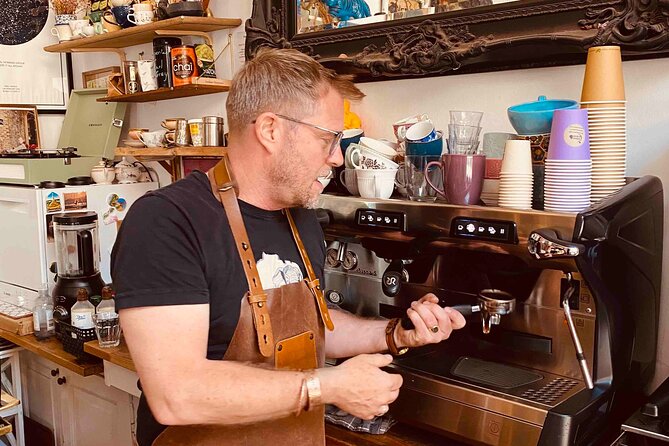
The meeting point is Holmbladsgade 14, 2300 København, Denmark. The activity ends at the same address, so you do not need to arrange a separate return transfer.
The cafe is near public transportation. That makes the location easier to reach within Copenhagen, though the supplied information does not identify a specific station or route. Check your route on the day and allow enough time to arrive before the 11:30 a.m. start.
A mobile ticket is provided, and confirmation arrives at booking. You can keep the ticket on your phone rather than needing a printed voucher.
Service animals are allowed. The activity has a maximum of 10 participants. The supplied information does not give details about wheelchair access, seating arrangements, or other mobility needs, so ask the provider directly if those points affect your booking.
The provider is Nomad. The experience also has a weather-related condition, even though the class takes place at a cafe. If poor weather causes cancellation, you are offered another date or a full refund. The same choice applies if the minimum number of participants is not reached.
You can cancel for a full refund up to 24 hours before the local start time. Cancellations or changes within 24 hours are not accepted for a refund.
Who will enjoy this coffee morning most?
I would recommend it first to coffee lovers who want to understand espresso rather than simply drink it. The class gives you a practical framework and a chance to prepare the final shot yourself.
It also suits:
- Couples looking for a short, low-key morning activity
- Home espresso makers who want a clearer process
- Visitors who like meeting people in ordinary local settings
- Beginners who want direct instruction without a formal classroom
- Experienced coffee fans who arrive with detailed questions
I would think twice if your schedule is tight around 11:30 a.m., since the class lasts about 90 minutes and begins during cafe opening hours. I would also skip it if you want a large brunch, a private workshop, or a broad lesson covering every coffee drink.
The language choices make it accessible to a wider range of participants, but you should select the language you can follow best when booking. Technical coffee instruction is much more useful when you can ask precise questions and understand the answers.
The final espresso makes the class worthwhile
The closing hands-on session is what turns this from a talk into a skill-based activity. You get to use the steps rather than simply hear them.
Making your own espresso also gives you a better sense of the work behind the drink you order every day. You may leave with a sharper eye for the sequence, the care, and the consistency needed to make a good shot.
The cafe setting adds a little unpredictability. A regular customer may be ordering coffee while you are learning, and you might even make an espresso for someone outside your group. That can make the morning feel more like a visit to a local business than a packaged class.
I appreciate that the experience does not pretend coffee needs to be mysterious. It focuses on clear steps, questions, and practice. Those are the parts you can use later, especially if you own an espresso machine at home.
Should you book Brew and Brunch?
Book this class if you want a friendly, hands-on introduction to espresso in a real Copenhagen cafe. The strongest reasons are Mark’s experience, the open question format, the breakfast, and the chance to make your own shot.
At $38.99, the experience offers fair value for coffee enthusiasts who would enjoy both the lesson and the meal. Skip it if you want a private workshop, a full brunch, or a broad tour of Danish cafe culture.
For the right person, this is a smart 90-minute stop: small group, practical instruction, local setting, and enough breakfast to get your day moving.
FAQ
How much does the espresso and brunch class cost?
The price is $38.99 per person.
How long does the experience last?
The class lasts approximately 1 hour and 30 minutes.
Where does the class meet?
The meeting point is Holmbladsgade 14, 2300 København, Denmark.
Where does the activity end?
The activity ends back at the meeting point.
What breakfast is included?
Breakfast includes a boiled egg, a croissant, fresh orange juice, and a coffee of your choice. The egg can be soft or hard.
Who leads the class?
The class is led by Mark, the cafe owner. He is an experienced roaster and an SCA-certified barista.
Which languages are available?
The guide is available in English, Portuguese, German, and French.
How many people can join?
The activity has a maximum of 10 participants.
Can I cancel for a full refund?
Yes. You can cancel at least 24 hours before the local start time for a full refund. Cancellations or changes made within 24 hours are not refunded. If the activity is canceled because of poor weather or because the minimum number of participants is not met, you are offered another date or a full refund.
Just added around Copenhagen
- Copenhagen: Express Walk with a Local in 60 minutes★ 4.6 · 3 reviews
- Copenhagen: 3 Hour Extended Grand E-Bike Guided Tour★ 4.6 · 3 reviews
- The Forgotten Giants Private Tour★ 5.0 · 3 reviews
- Copenhagen: Self Guided Scavenger Hunt and Tour★ 4.0 · 3 reviews
- Castles of Kronborg and Frederiksborg from Copenhagen by Car★ 4.5 · 3 reviews
- Departure by Luxury Vehicule Copenhagen to Copenhagen airport CPH★ 5.0 · 3 reviews
- Private Transfer Copenhagen Airport CPH to Copenhagen by Sedan★ 4.5 · 3 reviews
- Copenhagen: Evening Gourmet Walk with Food & Drinks Tasting★ 5.0 · 3 reviews
Copenhagen Tours, compared.
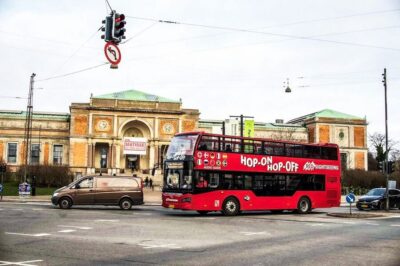
Hop-On Hop-Off Bus Tour with Boat Tour Option
Read our review →

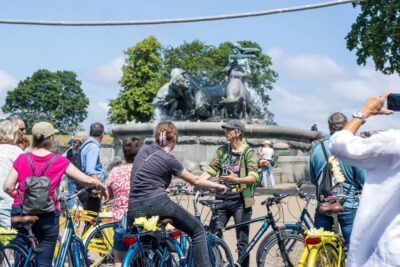
Highlights 3 Hour Bike Tour with a Local Guide
Read our review →
Hamlet and Sweden Tour – Two Countries in one day !
Read our review →
Browse the lists this tour appears in